
Read First
Step out of the crowd, and step in for the people closest to you.
Before you read another word, settle one thing: this article is for you. Not your spouse, not your kid, not the friend you wish had been in church that Sunday.
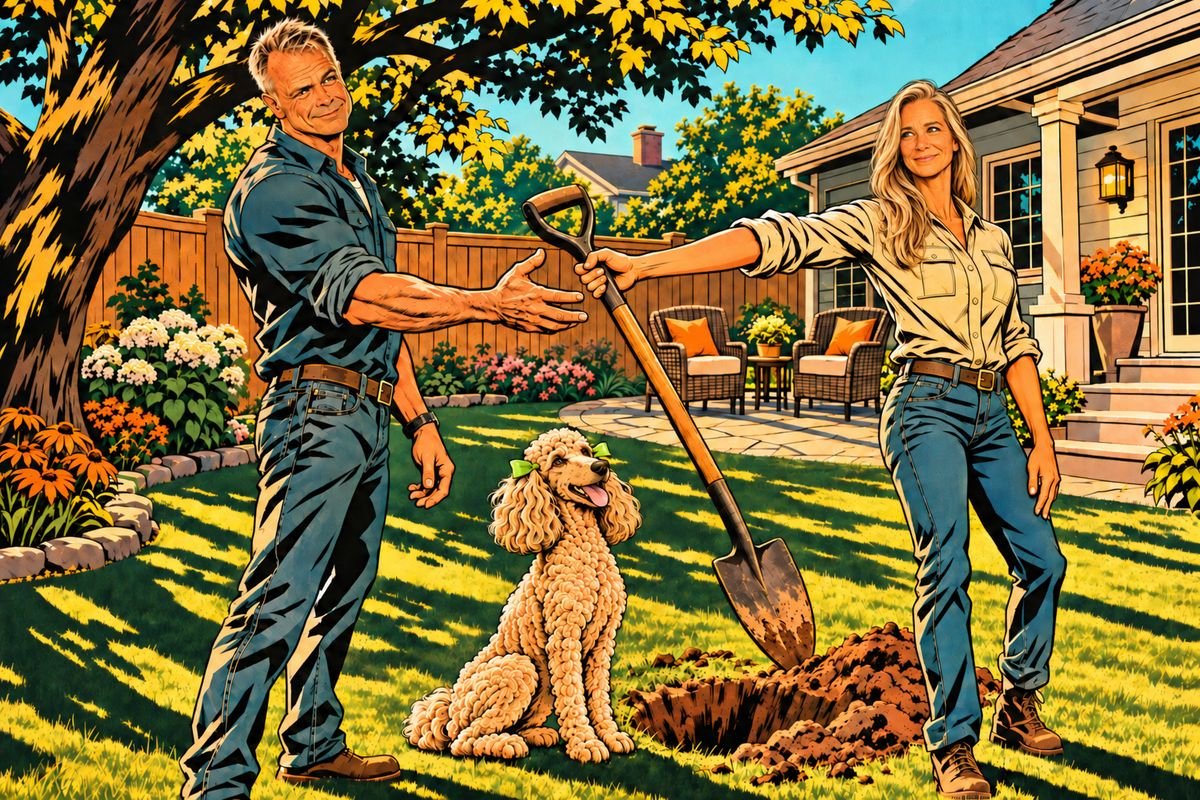
Who needs the shovel?
Joy and I walked in the door one afternoon, and she called out, “Baxter pooped again.” Our house rule is that whoever finds it cleans it up, so I pretended not to hear. Then she said, “It’s not poop.” It was a baby bunny. Out back stood Daisy, our prim and proper standard poodle, right in the middle of four more, smiling like she’d done something worth doing.
Joy asked if I had a shovel. I said I’d be happy to get her one. She said, “I don’t need a shovel. You need the shovel.”
Don’t sit there thinking somebody else needs the shovel right now. Let God’s Word land on you. Pick it up and do the work.
Real history, real choices
Daniel’s story isn’t make-believe. Around the same time, Aesop was telling his fables, the Maya were rising, and Phoenician sailors were rounding Africa. Nebuchadnezzar was real and terrifying. As a prince, he once raced an army five hundred miles in fourteen days to claim his father’s throne. Babylon had fifty miles of walls and a hundred bronze gates.
From Judah he took somewhere between a dozen and two hundred promising young men. We know the names of only four. Faithfulness begins with a choice. Choices become patterns, patterns become character, and character fulfills your purpose. Then one day you close your eyes here, open them in heaven, and hear, “Welcome home. You were good and faithful.”
The rope again
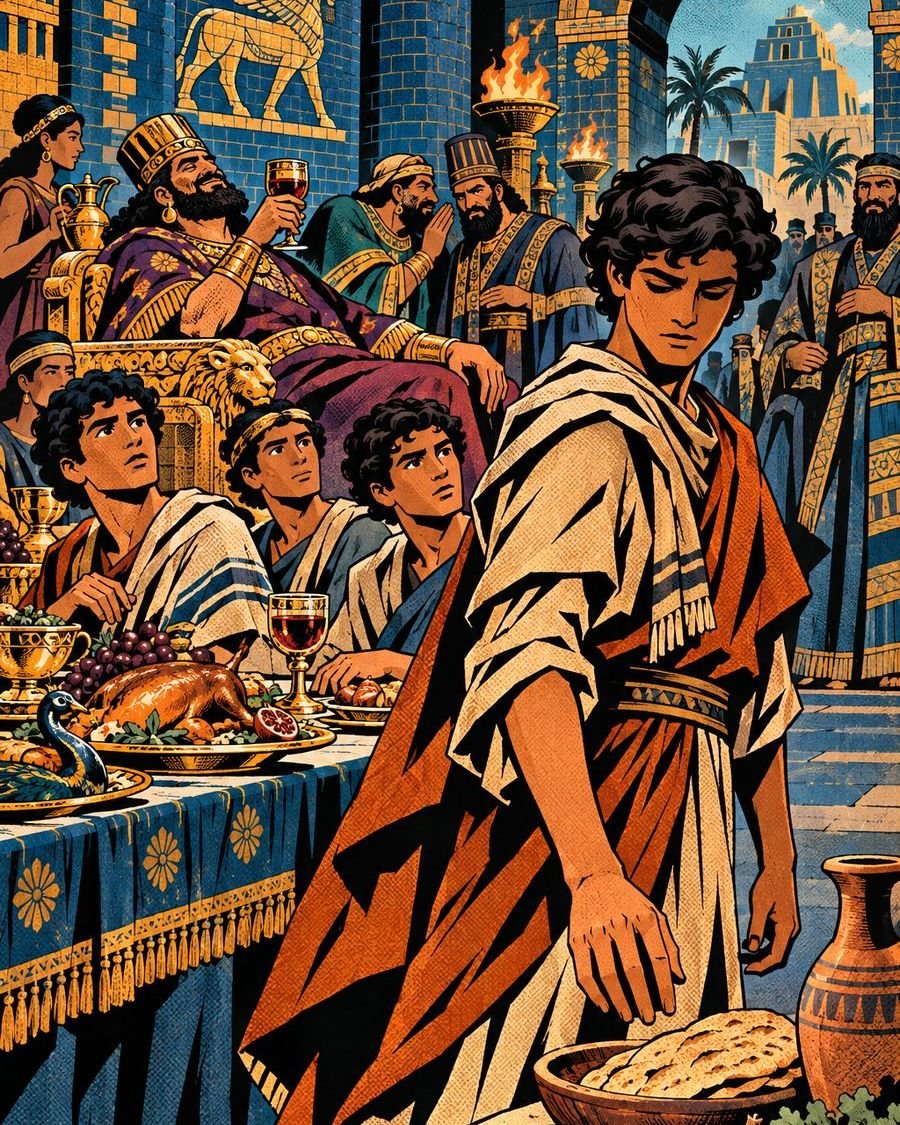
“Daniel resolved,” and that word still means weaving a rope. The rope you end up with shows who you really are. Why refuse the king’s food? First, it had been offered to idols. Second, sharing someone’s table meant identifying with them, in this case with the gods of Babylon. Faithfulness is taught, but it’s also caught.
At the end of the ten days they looked healthier and better nourished than any of the young men who ate the royal food.
One step out: leave the crowd
Most of the captured boys apparently took the king’s food. Daniel stepped away from that crowd, the guys he grew up with, his people. That was unpopular, probably unwise, and definitely scary.
The crowd is almost always wrong. It shouted “Hosanna” and, within a week, “Crucify him.” In Mark 6, Jesus taught in his hometown synagogue, and the people there said, “Isn’t this the carpenter? Isn’t this Mary’s son?” They took offense. Jesus left, and as far as we know he never went back. A life of faithfulness sets you apart. You serve a different master and spend your time and money differently, and people won’t always understand.
I think we need two kinds of relationships. The first is with people who don’t know Jesus. We love them, befriend them, pray for them, and gently nudge them toward him, without being obnoxious or religious. The second is with people of faithfulness. They aren’t perfect, but they genuinely want to walk with God. If there’s no room for those friends, make room. Joy calls it the friendship Lego: you only have so many holes. The most confusing friends are the ones who say they follow Christ but don’t back it up.
One step in: carry your inner circle
Then Daniel spoke up for Shadrach, Meshach, and Abednego. One of our pastors joked about what they might have said: Shadrach is still praying about it, Meshach isn’t sure, and Abednego needs to text his mom. Daniel said, “No, we’re doing this.” He did what he could with the people God had put closest to him.
And God showed up, as he always does for people who step out in faith. Your closest circle comes first. If you’re married, that’s your spouse, whether or not they’re doing their part. If kids are at home, it’s them. If your adult kids have wandered, it’s your responsibility and your privilege to stay present and keep building the bridge.
How would you blow it up?
Here’s an exercise I use. Think about how you could wreck a relationship, then do the opposite on purpose. With Joy, I’d ruin things by asking her to get to the point and skip the fluff. So I tell myself, my time is not more important, and I listen until she’s done. With my grown sons, I’d ruin things with too much advice. So before every call I remind myself: listen, encourage, and offer help if they want it.
You can’t cause an outcome, but you can create an environment for God to bless.
This Week
Choose one person in your inner circle. Write down two ways you could hurt that relationship, flip each one into a positive habit, and put those habits on your calendar so you can look back on Friday and call it a win.
Talk It Over
- Who do you catch yourself wishing had heard a sermon? What would it look like to pick up the shovel yourself?
- Name a time your crowd was wrong. What did stepping away cost, or what would it cost?
- Count your “Lego holes.” Who fills them, and who’s missing?
- Who is your Shadrach, Meshach, and Abednego? Who do you speak up for?
- Pick one close relationship. What are two ways you could blow it up, and what are the opposites?
 Next in the seriesDaniel’s Ditch: How to Find God’s Will for Your LifePicking a Plan · Part 5Read it →
 The entire series · Free bookSticking AroundFaithfulness that lasts, from Daniel 1–6Read it free →
 Capitol City Store · Everything is freeBooks, Bible studies, kids’ comics and short readsDozens of short reads like this one, plus free books, City Group studies, sermon notes, and kids’ comics and games. Read on your phone, print or share with a friend.Explore the store →
© 2026 Rick Melick. All rights reserved. Free to read and share for personal use. Not for resale.
Scripture quotations taken from The Holy Bible, New International Version®, NIV®. Copyright © 1973, 1978, 1984, 2011 by Biblica, Inc.™ Used by permission. All rights reserved worldwide.