
Read First
Stop telling the story that broke you. Decide to live as if God really is in control.
I meant to preach one Sunday on Daniel in the lions’ den. But every time I looked for the application in chapter 6, I ended up back in chapter 1. The faithfulness we see at the end started somewhere. So we started at the beginning.
Here’s the theme of the entire series, and especially of Daniel 1: it may be time to stop telling the story that broke you and start living the story that will transform you.

The God you serve threw rocks at me
One Wednesday afternoon, Joy and I got caught in a hailstorm in Johnston and pulled over until it passed. When we got home, Baxter, my thirteen-pound dog, would not go outside. He’d stick his head out the dog door, look at the sky, and shake. We finally figured out he’d been hailed on.
I sat him down. “Bax, it happened. Hailstorms come and go.” He looked right at me, and this is what he said: “The God you serve threw rocks at me. I’m going on the carpet. You deal with it.”
Maybe you feel that way. Maybe you feel like God threw rocks at you, and you’re not going any further. Daniel had every reason to feel that way too.
Four boys in Babylon
Around 605 B.C., Babylon was the center of the world, with massive walls, the best schools, and the law that went back to Hammurabi. Its new king, Nebuchadnezzar, was brilliant and ruthless. He brought Judah under his control, and when Judah later rebelled, he crushed it and scattered its people.
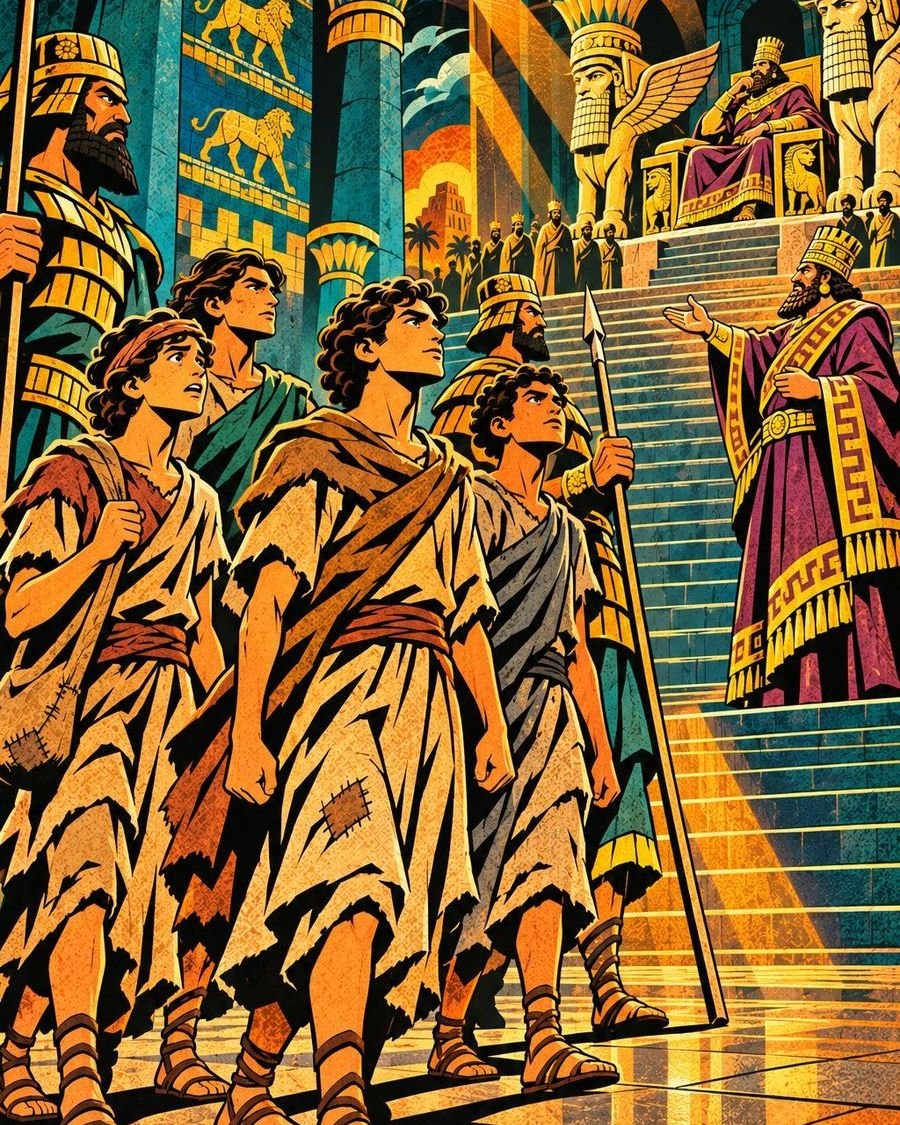
From the captives he ordered his chief official to pick the best young men: no defects, handsome, quick to learn. They would get three years of training in the language and literature of Babylon, including its astrology and magic, and then serve the king. Daniel, Hananiah, Mishael, and Azariah were probably thirteen or fourteen years old. Picture a middle schooler. They had been pulled out of their homes, their hopes, and their future. They would likely never see their families again.
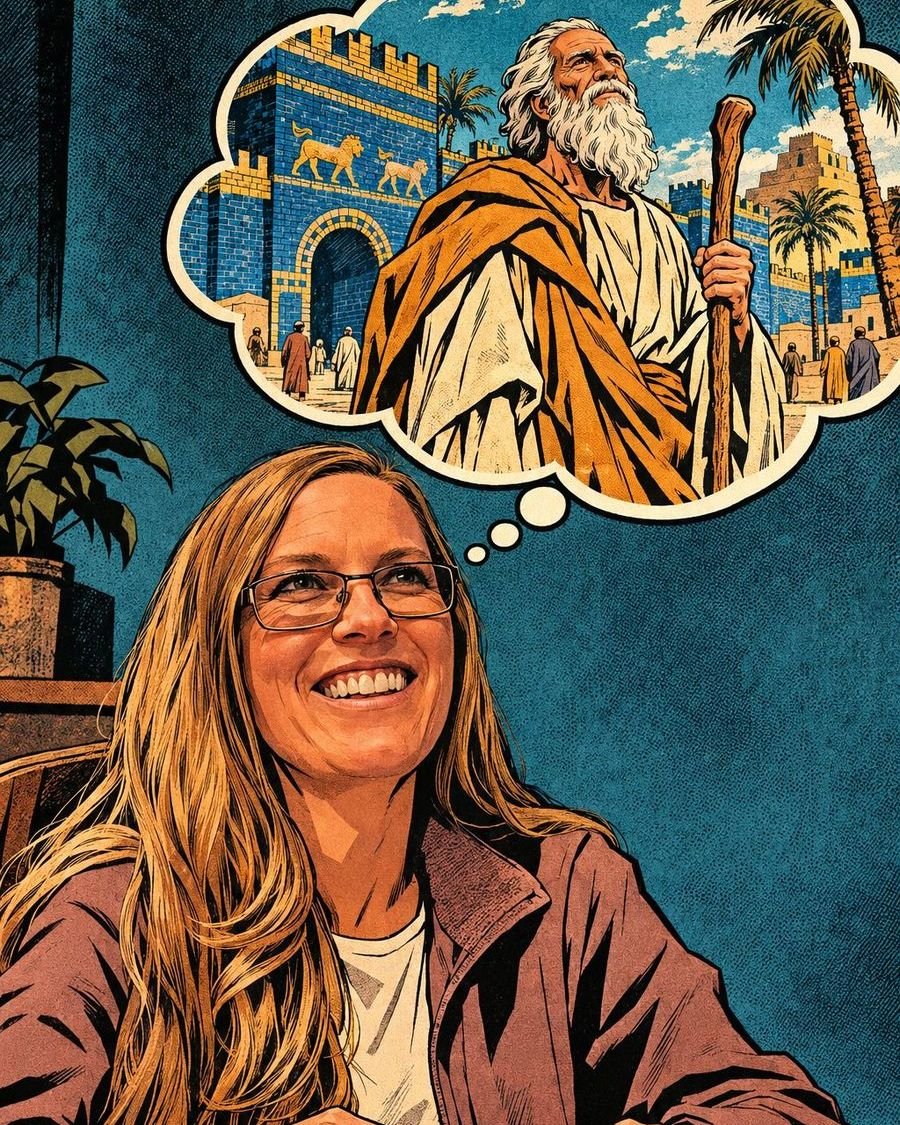
When I was working on this series, I had coffee with one of our staff members. She told me she had always pictured Daniel, Shadrach, Meshach, and Abednego as old men with beards and robes. They did grow old. By the time Daniel faced the lions he was probably in his eighties. But when this story starts, they’re kids.
Then Babylon took their names. Hananiah became Shadrach, Mishael became Meshach, and Azariah became Abednego, each name honoring a Babylonian god. Daniel got the worst one: Belteshazzar, a name tied to Bel, the chief of all Babylon’s gods.
Circle one detail in verse 2: Nebuchadnezzar carried off articles from God’s temple. They come back later, in chapter 5.
Who is really in control?
Three times in this chapter it looks like Nebuchadnezzar is calling the shots, and three times the text tells us who really is. In verse 2, the Lord delivered Jehoiakim into his hand. In verse 9, God caused the official to show favor. In verse 17, God gave the young men knowledge. Even when things looked terrible, God was working all things together for good.
The decision
Then comes verse 8: “But Daniel resolved...”
But Daniel resolved not to defile himself with the royal food and wine, and he asked the chief official for permission not to defile himself this way.
Daniel had to decide whether he simply believed in God, or whether he really believed God and his promises. He couldn’t put the choice off. The decision had found him.
When life looks bleak, you have to answer the same question Daniel did: how would I live if I really believed God was in control? How would it change the way I spend my time, what I think about, and what I do with what I have?
Weaving a rope
The Hebrew word behind “resolved” pictures making a rope. You take separate strands and weave them together. Daniel took the strands of his past (what his parents taught him, the Scriptures, the stories of faith he’d grown up on) and wove them into something strong enough to hold.
Resolve has nothing to do with emotion. You can be freaking out and still be faithful. Daniel simply decided to live as if God really was in control.
One thing
Later that week I told Baxter to go potty and go get his mom. He did both at once, on the bedroom carpet. So I’m not asking you to do two things or three. Pick one thing that will build faithfulness in you, and do it well.
Grace can inspire you, or it can enable you. When we lean on God’s forgiveness as a reason never to move forward, grace becomes one of the worst things in our spiritual life. When grace inspires and transforms us, it’s the best thing the Holy Spirit can use.
This Week
Add one thing to your life that will grow faithfulness in you. Just one. Ask the Holy Spirit to help you follow through, and tell someone what it is.
Talk It Over
- What “story that broke you” are you tempted to keep telling?
- List everything that was taken from these four boys. What do you think they had left?
- Find verses 2, 9, and 17. How does each one show God at work behind the scenes?
- What strands are woven into your rope? Where did they come from?
- Finish this sentence honestly: “If I really believed God was in control, I would...”
 Next in the seriesLight a Candle: What to Do When the World Feels DarkDoing What You Can · Part 3Read it →
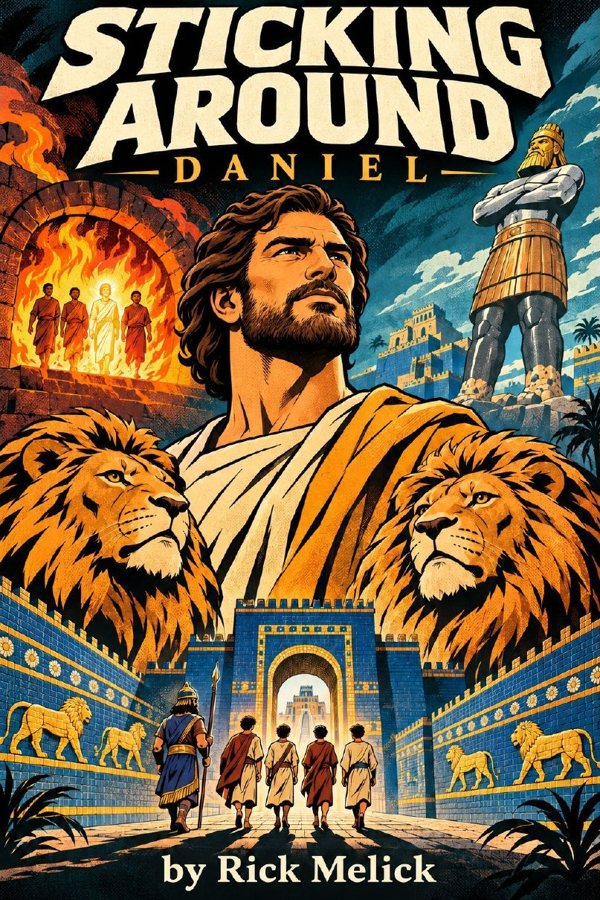 The entire series · Free bookSticking AroundFaithfulness that lasts, from Daniel 1–6Read it free →
 Capitol City Store · Everything is freeBooks, Bible studies, kids’ comics and short readsDozens of short reads like this one, plus free books, City Group studies, sermon notes, and kids’ comics and games. Read on your phone, print or share with a friend.Explore the store →
© 2026 Rick Melick. All rights reserved. Free to read and share for personal use. Not for resale.
Scripture quotations taken from The Holy Bible, New International Version®, NIV®. Copyright © 1973, 1978, 1984, 2011 by Biblica, Inc.™ Used by permission. All rights reserved worldwide.