
Read First
God’s will starts where you are: look for his hand, make a plan, and pray.
On the road of life, things run out in front of you. You swerve, and you don’t know how long to swerve or when to swerve back. The time to know God’s voice is before the dog hits the road.

Good reflexes
Joy and I drove home from Arkansas after her dad’s spine surgery (he’s doing fine). I like the scenic route, so we cut through the Ozarks, where the brush grows right up to the pavement. A big husky came flying out of the weeds with almost no time to react. I swerved as far as I could, swerved back, and heard his nose tap the side of the truck. In the mirror he was trotting along, happy as could be, with no idea how close he’d come.
Joy said, “Sweetheart, your reflexes are really good.” That doesn’t happen often while I’m driving.
Many of us wait until something runs out in front of us to ask, “All right, God, what’s your plan?” You don’t want to start from scratch in a crisis. That’s why we’re building a life of faithfulness now.
Three stages of God’s will
I believe God has a specific will for your life. He created you on purpose and for a purpose. There are three ways to think about his will, and they come in order. You can’t skip to the third.
1. God’s providential will. This is what God decides, and it’s above our pay grade: when to send the flood, or when to send Jesus. Here we decide whether we simply believe in God or actually believe him, trusting that even what doesn’t make sense to us has a point.
2. God’s moral will. These are the commands he’s already given us, the thou shalts and thou shalt nots. Jesus talks so much about forgiveness that we know it’s part of God’s will for us. If you’re holding a grudge, holding back your giving, or refusing to make peace when you know you should, you’re out of step. You won’t hear his personal will while you’re ignoring what he’s already said. God doesn’t wait for perfection, but he does want a body in motion.
3. God’s personal will. This is his plan that’s unique to you. It starts where you are right now, with the people closest to you.
Abram’s restlessness, Daniel’s ditch
In Genesis 12, God called Abram from Ur, not far from where Babylon would rise. Abram was seventy-five, with a family, a career, a savings account, and a retirement plan. He also had a restlessness in his soul he couldn’t name. God said, “Go,” and Abram went. Maybe nothing is wrong in your life, yet something is stirring. That’s an exciting place to be.
Daniel’s life was the opposite. Something ran in front of his truck that he didn’t cause, and he ended up in the ditch. Read only verses 1 to 14 and it looks like tragedy. God’s will reads a lot like Hebrew, which reads right to left: it’s much easier to see looking back.
I dare you to find one hint of bitterness in Daniel.
“God gave”
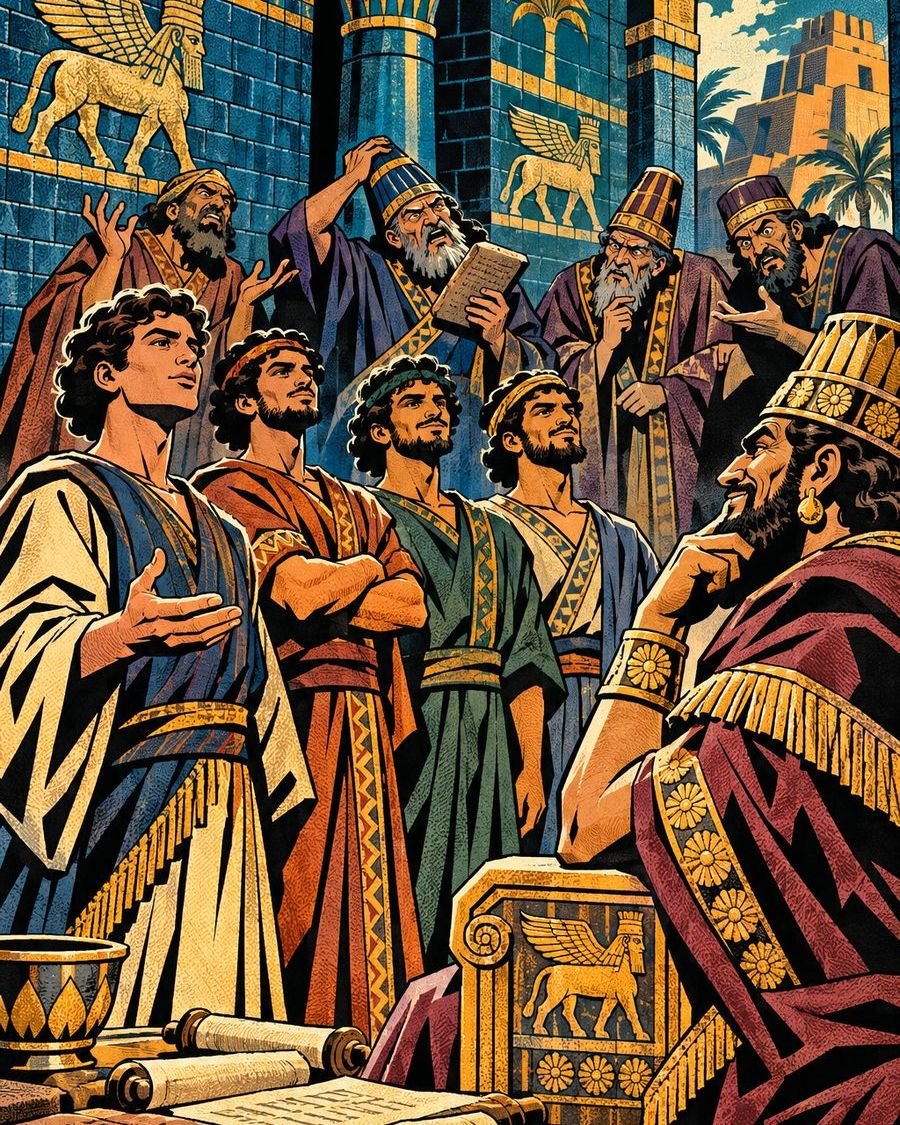
To these four young men God gave knowledge and understanding of all kinds of literature and learning. And Daniel could understand visions and dreams of all kinds.
Circle “God gave.” He gave these boys mastery of subjects they never wanted to learn, taught by people who couldn’t care less about God, because God had a plan.
Babylon’s dream experts used a kind of code book. Dream about a ghost carrying salt, and it means somebody’s going to die. Dream about barley in a field, and it means prosperity. If your dream wasn’t in the book, they added it. Daniel didn’t need the book. He had the Spirit of God.
At their final exam, the king found them ten times better than all his magicians. God made them thrive right where they were: not where they wanted to be, not where they demanded to be, and not where they felt entitled to be. Some of us wait, bitter, for God to move us somewhere better, and we miss the point.
How to find God’s personal will
Look for his providence. God uses ordinary things to bring about supernatural results: a person you don’t know today and will meet tomorrow, or a door that isn’t there yet.
Make a plan. Daniel couldn’t do everything, but he could do something, so he made a plan. You can’t get in shape without one, and you won’t get a better marriage or better parenting without one either. If you don’t have a plan, it isn’t really important to you. Any plan is better than the one you don’t have.
Pray powerfully. I’m less concerned about how long I pray than about how much time goes by between my prayers. At 9:00 every morning my phone reminds me: This is the day the Lord has made.
This Week
Write a simple plan for one area that matters to you, such as your marriage, your kids, or your walk with God. Then set a recurring phone reminder to stop and pray at least once a day.
Talk It Over
- When something “ran out in front of your truck,” were you prepared spiritually, or starting from scratch?
- Is there a step of God’s moral will (forgiveness, giving, making peace) you’ve been avoiding?
- Do you relate more to Abram’s restlessness or Daniel’s ditch right now?
- Looking back, where can you now read God’s will “right to left”?
- What’s one area where you need an actual plan, not just good intentions?
 Next in the series“I Waited, and I Waited”: What to Do While You Wait on GodFear’less · Part 6Read it →
 The entire series · Free bookSticking AroundFaithfulness that lasts, from Daniel 1–6Read it free →
 Capitol City Store · Everything is freeBooks, Bible studies, kids’ comics and short readsDozens of short reads like this one, plus free books, City Group studies, sermon notes, and kids’ comics and games. Read on your phone, print or share with a friend.Explore the store →
© 2026 Rick Melick. All rights reserved. Free to read and share for personal use. Not for resale.
Scripture quotations taken from The Holy Bible, New International Version®, NIV®. Copyright © 1973, 1978, 1984, 2011 by Biblica, Inc.™ Used by permission. All rights reserved worldwide.