
My Fourth Ring
Well, I’m on my fourth wedding ring, but my first wife. I’m sure glad it ended up that way.
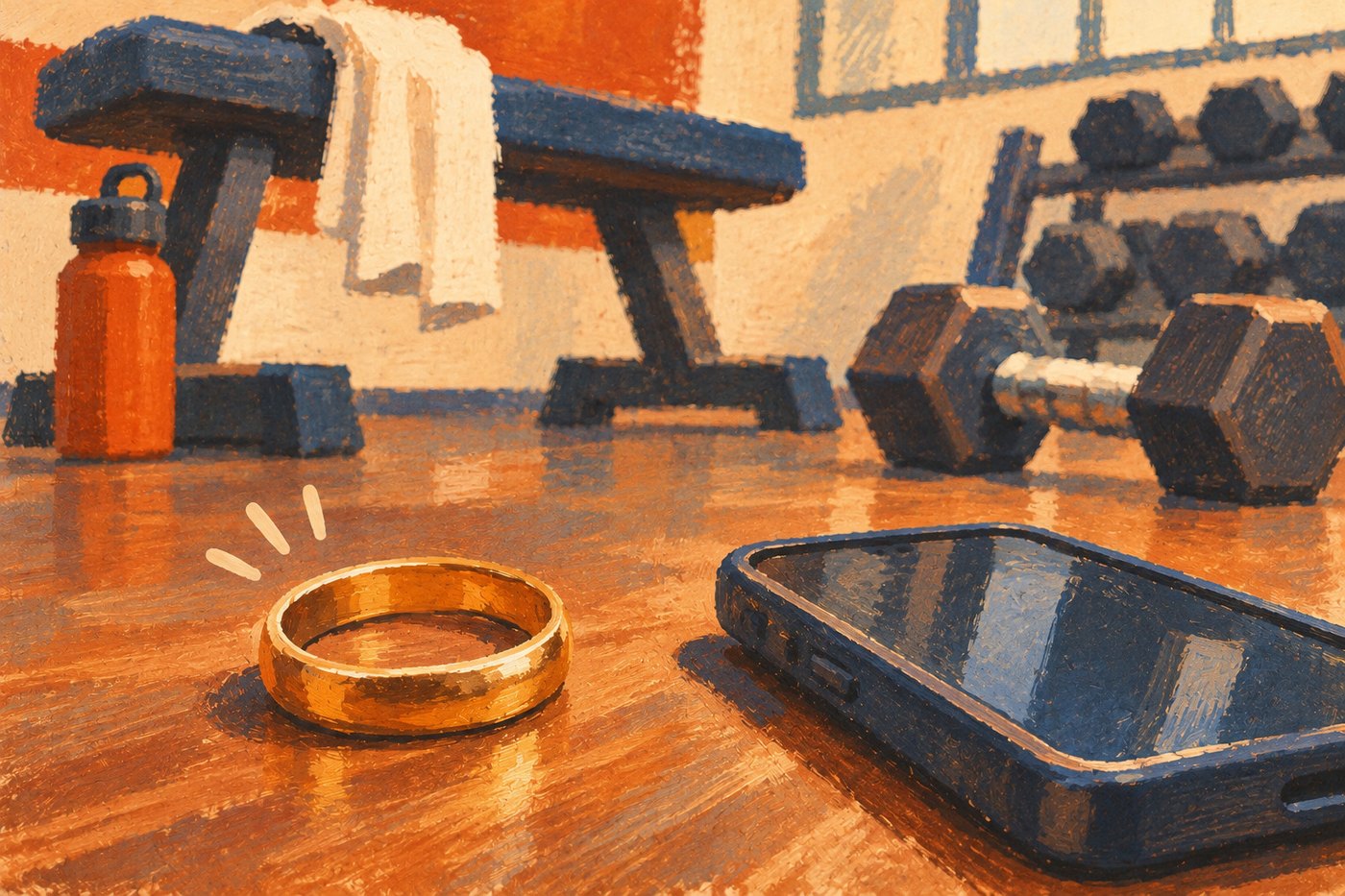
I’ve lost four wedding rings. Joy and I recently tried to figure out if there was another one I’d lost along the way. We don’t think so. I lost one in a locker room, one on a golf course and one at the lake. I’m on number four.
The other day at the gym, Joy walked up to me and said, “I just saw a new guy.”
I wasn’t quite following. “What do you mean, a new guy?”
“A newlywed,” she said.
Now we were making progress. “How do you know he’s a newlywed?”
“He was on one of the machines, messing with his finger. Then he took his ring off and set it on the ground next to his cell phone.” “He’s going to lose that. New guy mistake.”
If you’re married, think back to when you first got married. Wearing a ring felt weird. You weren’t used to it. But I wear mine because it matters. It’s a symbol. It stands for one of the most important commitments I’ve ever made.
The most important commitment of my life was the one I made to Jesus Christ. The second was the one I made to my wife. There have been other big days, like the days my kids were born. But if you follow Jesus, the day you were saved was the biggest day of your life.
And one of the things Jesus asked us to do is to remember it. We remember it with a symbol, just like a wedding ring. We remember it at a table.
Communion Can Be Confusing
The bread and the cup represent Jesus’ body and Jesus’ blood. But depending on how you were raised, you may have been taught something very different about what happens at the Lord’s table.
On Sunday we asked our church family a simple question: What faith tradition did you grow up in? The answers came from all over the map. Some of you may think nobody here is like you. That’s not true. Some of you may think everybody here is like you. That’s not true either. We come from different backgrounds, and many of us were taught different things about something as important as Communion.
You may have grown up in a Catholic tradition. Catholics believe the bread and the wine actually become Jesus’ body and blood, and they have a lot of teaching on that.
Another view is that Jesus is truly present in, with and under the bread and wine, but they don’t become him. That’s more of a Lutheran perspective. If you’re from a Lutheran background, or one of the churches close to it, that may be what you were taught.
If you come from a Methodist background, you may have been taught that the Holy Spirit is present and at work at the Lord’s table. I don’t believe that’s far off from where we are, because the Holy Spirit is present at Communion just like he is in worship. He lives in us, connects us and teaches us.
But we believe the bread and the cup are symbols. They represent Jesus’ body and Jesus’ blood. That’s mostly a Baptist conclusion, and it’s where many non-denominational and some Pentecostal churches land too. I believe it’s what the Bible teaches. If you want to follow the thread as deep as it goes, I’ve put a deeper study together that walks through each view and why we’ve come to our conclusion.
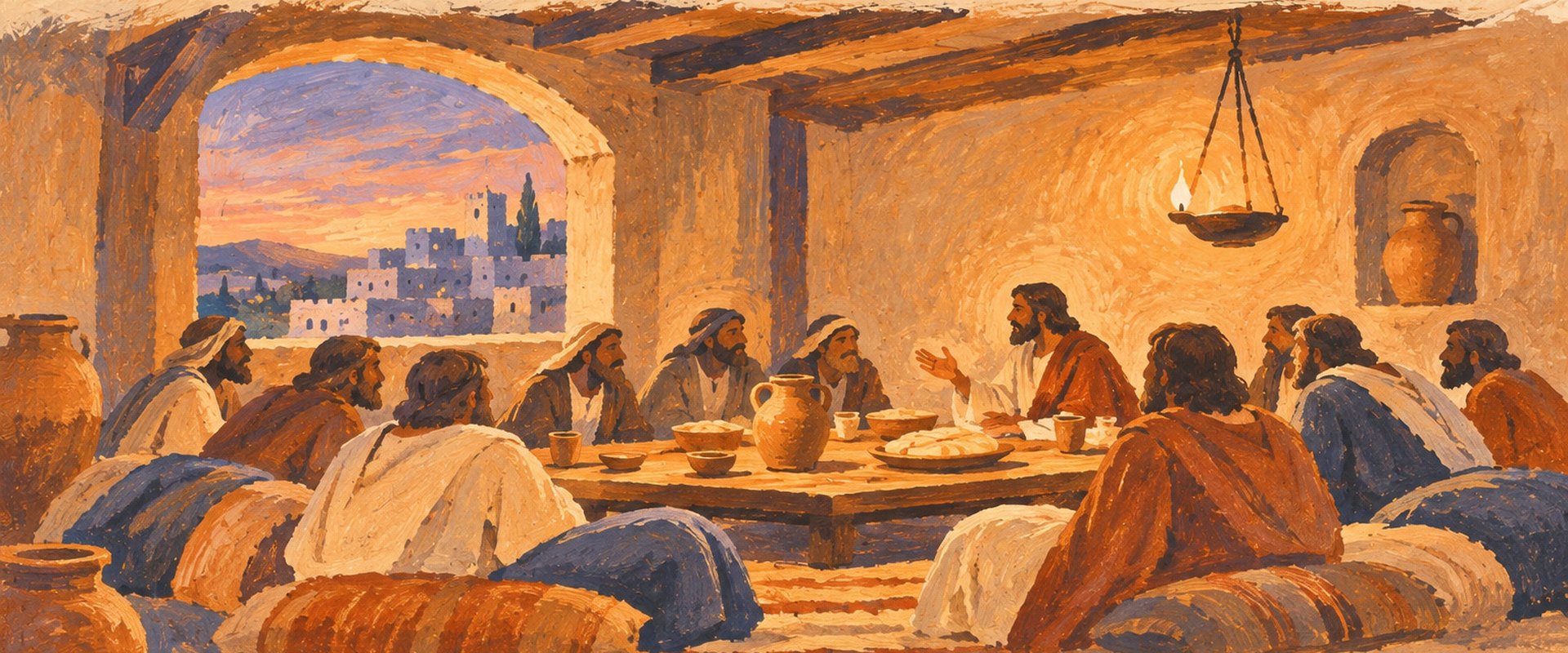
Communion can be confusing, and I want to clear it up. So let’s go to the room where it started.
A Room Upstairs
Jesus sent Peter and John ahead with some very specific instructions: look for a man carrying a jar of water, follow him home, say these words. And everything happened just the way Jesus said it would. That’s a miracle all by itself, and I don’t want that mystery to be lost on you. But we’re not going to spend our time there.
They were there to celebrate Passover. Now, what’s the big deal? The Passover was about being thankful for the past.
Thankful for the Past
Every spring, Jewish families celebrated Passover. Parents and grandparents told their children the story of how God delivered his people from slavery in Egypt. You remember the story of Moses and Let my people go, the plagues and Pharaoh, and the great deliverance when God’s people had to leave Egypt in a hurry. Every part of that meal was a symbol of the deliverance God gave them from slavery, captivity and hopelessness.
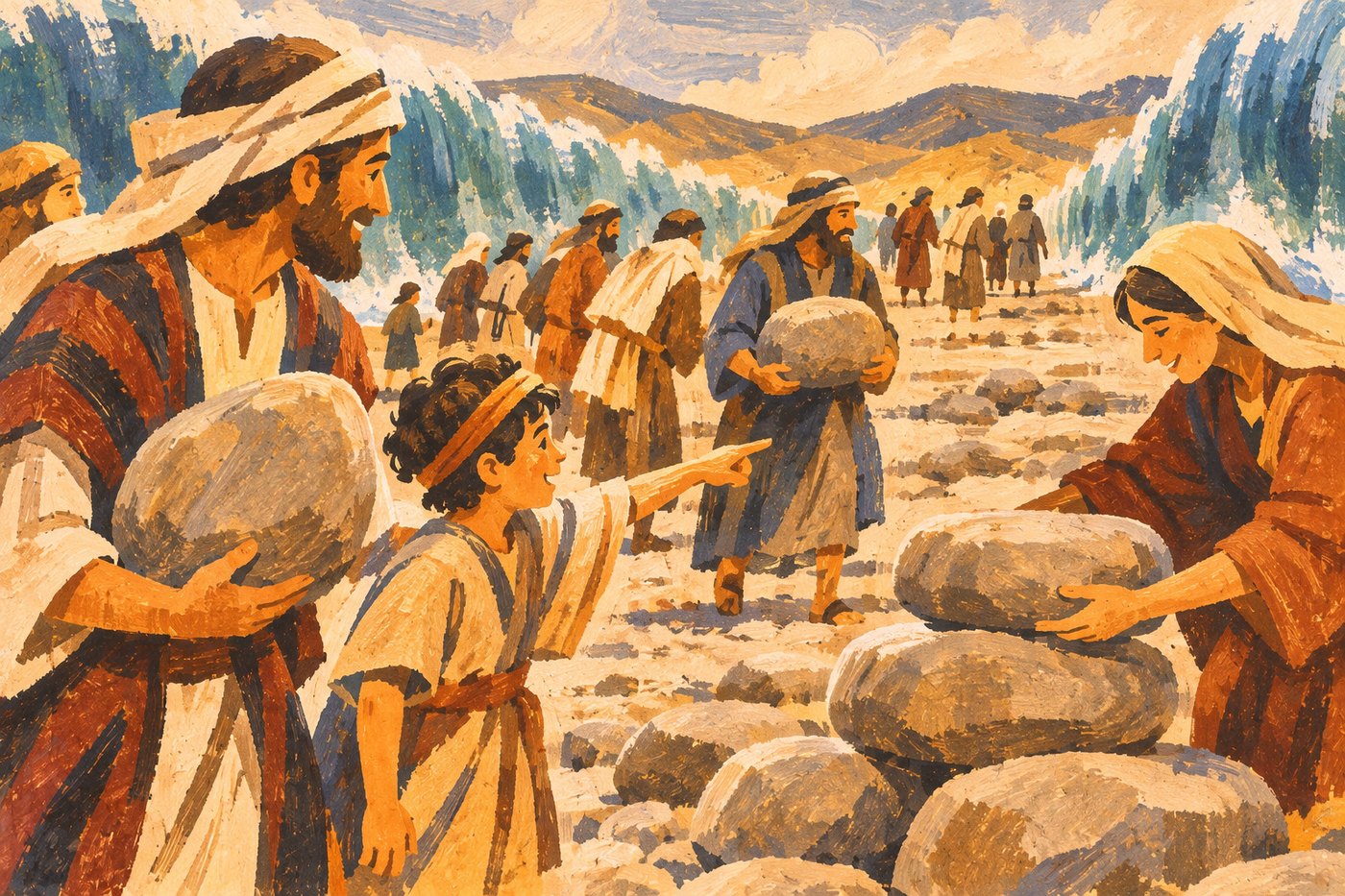
There was another story they would have passed down. After forty years in the wilderness, the children of the generation that refused to trust God stood on the banks of the Jordan River. They had to decide whether to trust God and cross into a land full of giants, the land he had promised them.
This time they got it right. God stopped the Jordan, and they walked across on dry ground. On the way, they picked up twelve stones and built a memorial.
Every generation that walked by could ask, What’s the deal with the twelve rocks? And somebody would get to tell the story of God’s power and his faithfulness.
Once they camped in the new land, the first meal they ate was Passover. The next day the manna stopped (Joshua 5:10–12). God’s provision from the new land had begun.
And for the disciples, there was one more memory. Three years earlier, Jesus had looked at a fisherman and a tax collector and said, in effect, I see something in you that’s far greater than you’ve ever seen in yourself. Follow me. They did. Their lives were changed forever, and so was the world.
When you look back on your past, what are you thankful for? I’m thankful for grandparents and parents who taught me the truth about Scripture as best they could and pointed me in the right direction. Maybe you didn’t have people like that. But looking back, you can probably see times when God protected you, walked you into the right circumstances, introduced you to the right people, or kept you from something that would have wrecked your life. You may not have seen his hand at the time. You can see it now.
Looking back is an important part of who we are as Christians. It’s a big part of Communion.
Thankful in the Present
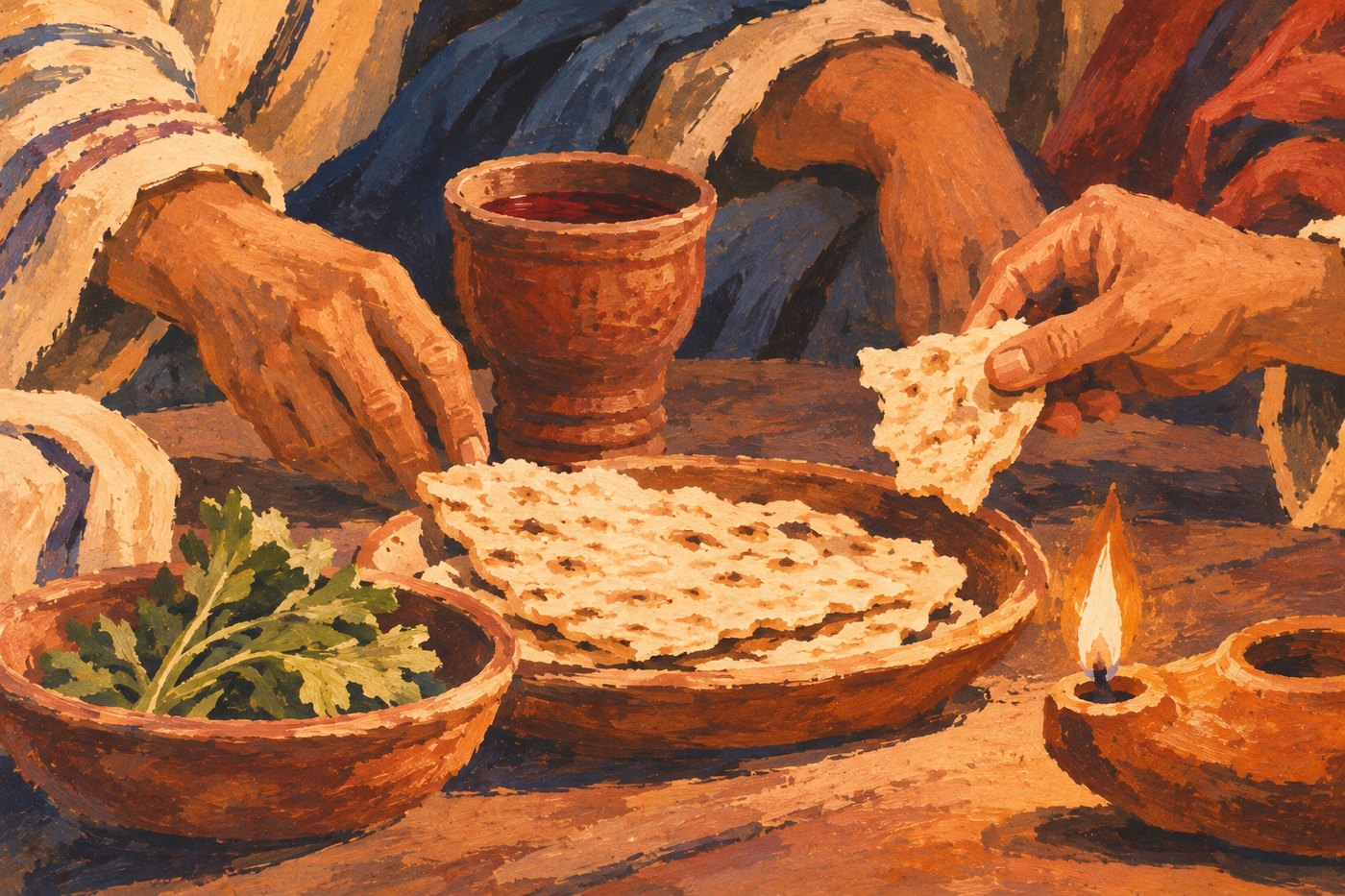
When it was time to eat, they reclined at the table. That’s how people ate in Jesus’ day: lying on one arm, feet sticking out away from the table like spokes on a wagon wheel.
“This is my body given for you.” That’s one of the statements that can cause confusion. I believe the Bible clearly teaches that Jesus was saying the bread represents his body, offered as a sacrifice to pay the penalty for our sins. It’s a symbol, but a powerful one. It points to an event that’s as current and relevant today as it was that night.
Now think about what was going on around that room. Death threats. Conspiracies. The disciples expected to be arrested at any moment. And Jesus said, “I have eagerly desired to eat this Passover with you.”
I think they were thankful for three things in that moment.
They were together. You never really know when the last time you’ll be with someone is, until it’s over. They didn’t know either. Over three years, they had become a family they chose, not the one they were born into. In a lot of ways, that’s us.
They were safe. The world outside was actively looking for a way to destroy them. One of the men at the table was about to sell Jesus out, and Jesus knew it. But in that room, in that moment, they were safe.
I want to let that land. Everything in your life might not be okay. That doesn’t mean you’re not safe. Jesus is in control. The hour had come for Passover, but the hour for his arrest had not come yet. So Jesus made the most of the moment he had.
They were with Jesus. They had left everything to follow him. Their futures, their fortunes and their families all hinged on this man they had come to believe was God.
We know he is.
Descending Into Greatness
Then, with everything else going on, the disciples started arguing about which of them was the greatest.
I’m sure Jesus wanted to throw his hands up. Instead, he answered with compassion. Just a little while earlier, when no one else would wash anyone’s feet, Jesus did it himself (John 13).
The word gentleness has been in my mind all week. Last week we said gentleness is being willing to accept less in life than we think we deserve. I haven’t lived it perfectly. But that’s the attitude Jesus is talking about. I’m not more important. Taking on the form of a servant really is how you become great in God’s kingdom. In a sense, it’s descending into greatness.
Thankful for the Promise
If you were with us this fall for See You on the Other Side, you know exactly what Jesus is talking about. He was speaking to Jewish men in a very Jewish way. And he wasn’t just telling them he’s in control. He was giving them gifts.
He promised them his presence, that he would be with them and never leave them. The Holy Spirit would come and live in them, not just to guide them through life, but to give them the power to live for Jesus.
He promised them his peace, the kind of peace that stands guard over our hearts and minds in Christ Jesus (Philippians 4:7).
He promised them a purpose that goes far beyond any purpose we’d choose for ourselves, once we start to see ourselves as servants.
And I think they were pretty thankful for the promise of a place. They were hanging on to the conversation from John 14. Thomas didn’t know where Jesus was going, and none of them knew how this would all work out.
I’m going to prepare a place for you. I’m not going to leave you. I’m coming back to get you. So we’re thankful for the past, we’re thankful for the present, but we’re also thankful for the promise.
How to Get Ready for the Table
The Bible doesn’t give us everything about the Lord’s Supper in one place. We get pieces in the Gospels and in Paul’s letters, especially 1 Corinthians 11. When you piece them together, you see a process of preparation before we come to the table as a church family. In my mind, this is what it looks like.
1. Examine your heart.
When we take the bread and the cup, we’re saying to God, My heart is in the same condition it was when I first believed. I’m not holding anything back. So ask God to bring to mind any thought, action or attitude that doesn’t please him, and confess it.
Don’t get me wrong. When you became a Christian, God forgave your sin and sealed your salvation. But along the way we do things that damage us and our relationships, and they cloud our relationship with God. When we confess, he forgives us, and we’re clean. We can come just like we did the first time.
It’s like renewing your wedding vows. Imagine if I renewed my vows with Joy and said, I’d do it all over again, but this time I’m going to do it a little differently. You don’t come with conditions, with things behind your back. You come with an open heart and open hands. Paul warns that coming with something hidden behind your back is a dangerous thing to do (1 Corinthians 11:27–29).
2. Tell God what you’re thankful for.
Gratitude was built into the Passover meal. It was in the stories and in the order of the meal itself. So thank God for your past. If you can’t think of anything, thank him for the people in the Bible who were just like you and me, and whom God used anyway. Then thank him for right now. And don’t just feel thankful. Tell him. Why are you thankful for your salvation?
3. Then participate.
Communion is something we do together, as a church family.
I love that we celebrate it on Thanksgiving week, because I’m thankful for you. I’m thankful we’re on this journey together. We’re together. We’re safe, even though the world’s not okay. And Jesus is in charge.
If you want a simple checklist for preparing your heart, it’s in the interactive listening notes. It isn’t straight from Scripture. It’s my own process, from my own heart. Take a quiet minute with it. Close your eyes, open your mind, and say, God, speak to me. I’m listening.
Talk It Over
- What tradition, if any, did you grow up in? What were you taught about Communion?
- What symbol in your life (a ring, a photo, a keepsake) reminds you of a commitment? Why do symbols matter?
- Looking back, where can you see God’s hand in your past that you couldn’t see at the time?
- Jesus’ disciples were safe, even though everything wasn’t okay. Where do you need to hear that right now?
- Which of Jesus’ promises (presence, peace, purpose, a place) means the most to you this week? Why?
- Before your next Communion, what do you need to bring into the open with God?
---
 Next short readThankful: Paul’s SecretWhat Paul learned in chains, just in time for ThanksgivingRead it →
© 2026 Rick Melick. All rights reserved. Free to read and share for personal use. Not for resale.
Scripture quotations taken from The Holy Bible, New International Version®, NIV®. Copyright © 1973, 1978, 1984, 2011 by Biblica, Inc.™ Used by permission. All rights reserved worldwide.