
A Life Worth a Movie
Some people’s lives are worth writing a book about. The apostle Paul’s life got both a book and a movie.
He was born into privilege. He studied in the best schools of his day, excelled, and caught the eye of the religious leaders. They put him on the fast track, and he became one of the big names while he was still young. He had energy and fire, and he used it to try to stamp out a new movement that followed Jesus.
Then Jesus stopped him in his tracks. Paul’s life was turned around. He walked away from his career, his reputation and everything he had worked for, and he spent the rest of his life telling people about Jesus.
You’d think life would get easier after that. It didn’t. Paul was beaten so many times for his faith that it’s hard to keep count. He lived with death threats. He was run out of town after town. He was falsely accused and thrown in jail. Friends who said they were Christians turned their backs on him. He was shipwrecked. He was even bitten by a snake.
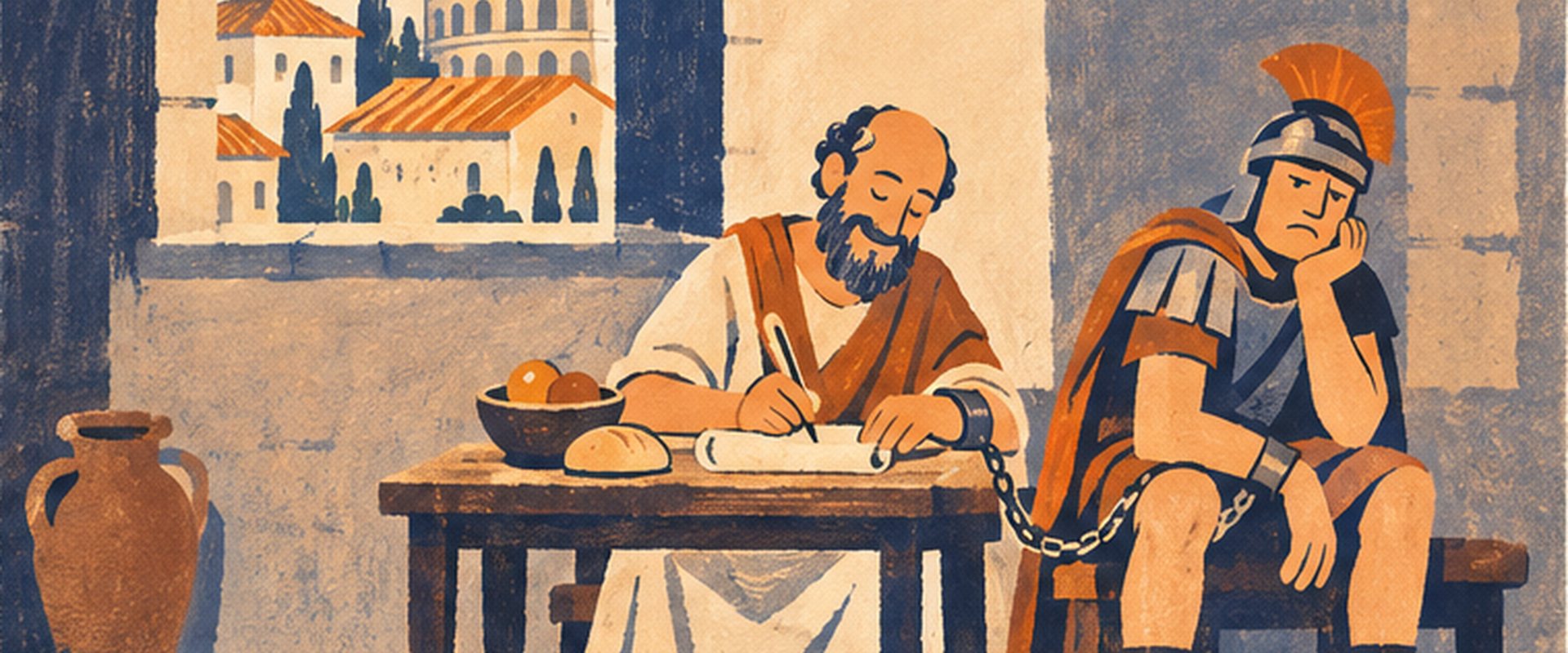
When he wrote the letter we call Philippians, he was under house arrest, chained to a Roman guard. His crime? Telling people that Jesus is the way. For all he knew, he could lose his life any day.
And yet he wrote, “I have learned the secret.”
Whenever somebody tells me there’s a secret to living the Christian life, I’m in. I want to know.
The Very First Sin

One of the big themes of Philippians is that discontentment is dangerous. It’s a sin that damages who we are, wrecks our closest relationships and keeps us from ever finding our purpose.
Have you ever thought of discontentment as a sin? It may have been the very first one.
Go all the way back to the garden. God gave Adam and Eve everything, and he gave them one tree they weren’t to eat from. Then the serpent showed up with the first lie. Eve looked at the tree and saw that it was good for food, pleasing to the eye, and that it could make her wise like God (Genesis 3:6).
She became discontent with who God had made her to be. She reached for something she wasn’t supposed to have. We’re still living with what happened next.
Paul shows us a better way. And he walks us through it one step at a time.
Step One: Gentleness
“Gentleness” sounds soft to most of us. It’s what you tell a kindergartner who’s playing too rough. But the word Paul uses is hard to put into one English word. Here’s the best way I know to say it:
Gentleness is being willing to accept less in life than we think we deserve.
Are you willing to accept less in life than you think you deserve? For many people, that’s a deal killer right there.
We live in a world that teaches discontentment. We live in the world of “what’s next.” We look at the people closest to us, our kids, our spouse, our family, and think we deserve different. We look at our job, our house, our bank account, and think we deserve more. We spend our whole lives feeling a little ripped off, and we slowly become cynical and negative.
Now, I’m not talking about complacency. Complacency is as much a sin as discontentment. Here’s the difference: when God opens a door, you walk through it. When we kick a door open because we’re discontent, it brings consequences that can wreck our lives.
Paul adds four words: “The Lord is near.” He’s coming back, and it could be any day. But even more than that, he’s near right now. If you follow Jesus, his Spirit lives in you. He has a purpose for the people and the places he’s put you. Where you are today is part of his plan.
This is the day the Lord has made. I will rejoice and be glad in it.
Step Two: Thank Him Before He Answers
Paul knows we already worry. We all live with that restless feeling that we aren’t in control, because we aren’t. (Some people carry anxiety so heavy that it needs real help, and getting that help is a good and wise thing to do.) Paul says when you feel it, bring every situation to God, and do it with thanksgiving.
Notice the order. You thank him before he answers.
That seems backward, doesn’t it? I want God to answer my prayers first. Then I’ll say thanks. To be honest, I sometimes get frustrated because I’ve asked for the same things for a long time and God still doesn’t agree with me.
But Paul is saying that sometimes we thank God because he doesn’t do what we want. If I’m the one calling the shots, I’ve put myself in God’s place.
So what can we thank him for when we don’t know how things will turn out? We can thank him for what’s true no matter what:
- Heaven is real. When we breathe our last, we’ll open our eyes and see Jesus.
- God is in control. He works all things together for good for those who love him (Romans 8:28), even when we only understand it on the other side.
- God loves the people we’re praying for even more than we do. He’s not letting them go.
And here’s the promise: the peace of God, which is bigger than our minds can understand, will stand guard over our hearts and minds. Jesus himself keeps the peace in and keeps the worry out.
Thank him first, not because of what he gives, but because of who he is.
Step Three: Contentment Is Learned
Paul says he has learned to be content when he had plenty and when he didn’t have enough. Both are harder than they look.
Is there ever enough? A friend told me that when he orders something from Amazon, he always picks the fastest shipping. But half the time, when the package shows up, he doesn’t even go get it. He’s already moved on to the next thing.
Plenty didn’t make King David content. He had riches, power, position and many wives. He was a man after God’s own heart. And still he decided he deserved one more, and he took what wasn’t his. It led to more sin, to murder and to heartbreak in his own family. When God confronted him through the prophet Nathan, he said, in effect, I gave you everything. If that had been too little, I would have given you even more (2 Samuel 12:8).
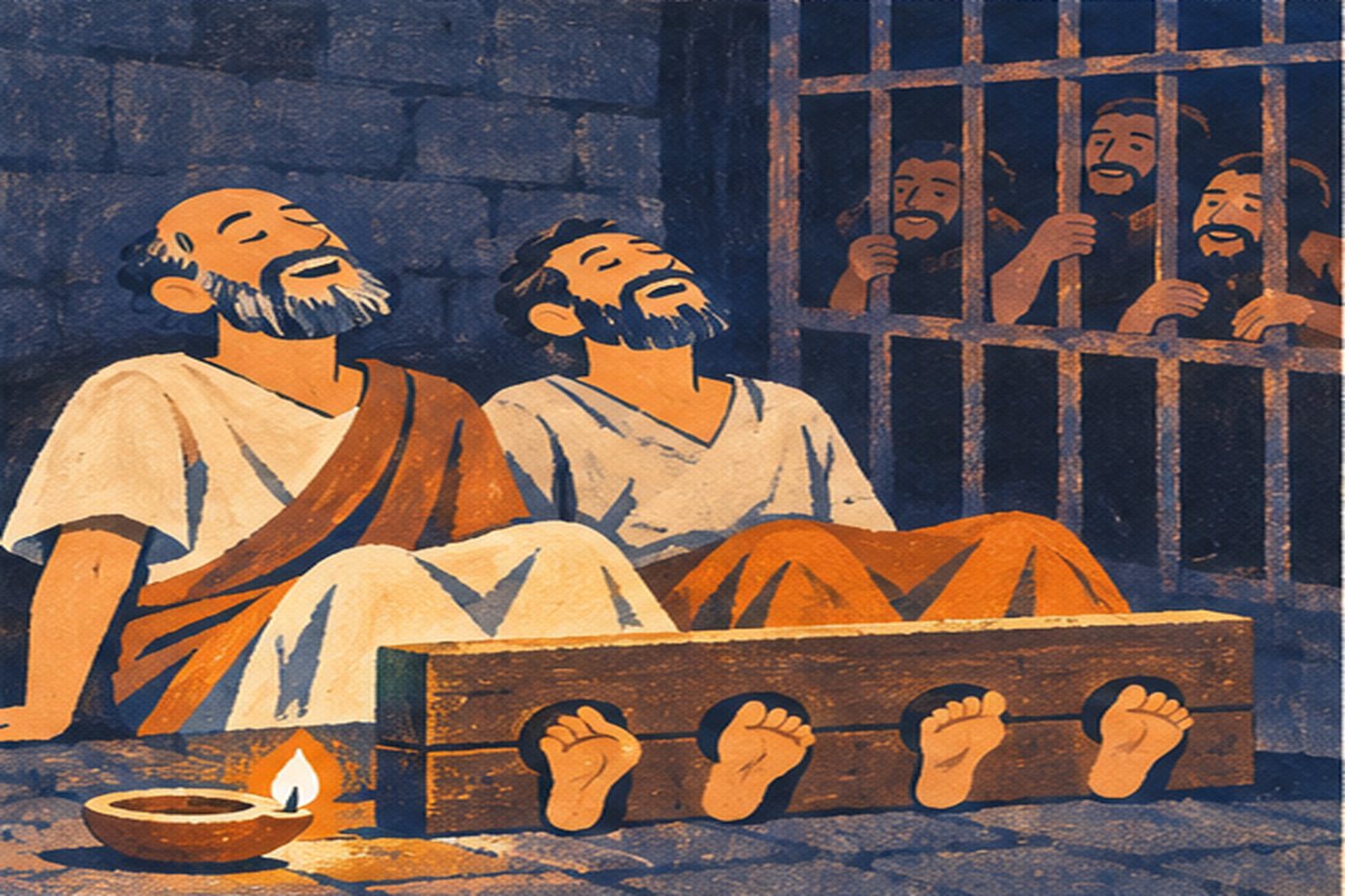
Not having enough didn’t keep Paul and Silas from singing. The church Paul was writing to was in Philippi, the same city where, years earlier, he and Silas had been beaten, thrown into the inner cell and locked in stocks. Around midnight, they were praying and singing hymns to God (Acts 16:25). They had no safety, no comfort and no idea how God would answer. And they thanked him anyway.
That’s contentment. It doesn’t come naturally. It’s learned.
Step Four: All These Things

You’ve probably seen this verse on a T-shirt at the gym. “I can do all things through Christ.” And you look at the guy and think, Buddy, you are not benching 350, whether Jesus helps you or not.
That verse has been misused so often it’s almost dangerous. In context, Paul isn’t promising we can do anything we want. He’s talking about these things.
If you’re like me, by now you might be thinking, I can’t do this, Paul.
I can’t live with less than I think I deserve.
I can’t be thankful in every situation when I don’t know how it will turn out.
I can’t find the balance between too much and not enough.
Many Christians get to that point, throw up their hands and quit. But Paul says, Of course you can’t. Here’s the secret. “I can do all this through him who gives me strength.”
You can’t do it on your own. A life lived depending on Jesus gives you the strength to do all these things. You can be gentle. You can be thankful. You can be content.
Not “I can do anything.” I can do all these things, through Christ.
Think About Such Things
Right in the middle of this passage, Paul gives us a list: whatever is true, noble, right, pure, lovely and admirable, think about such things (Philippians 4:8). People are naturally pessimistic. Tell me something good, and I can usually find something bad to say back.
But what we think about shapes how we see the world. So count your blessings. Joy and I often reframe hard things by saying, “We’re thankful it wasn’t worse.” Even in the hard times, we look for the good and choose to think about it.
Here’s a simple way to start. Write down three things you’re thankful for. Make them personal and specific. Then thank God for them three times a day this week. You can set up those reminders on your phone in the interactive listening notes.
How It Ended for Paul
You might wonder how it ended for Paul. He deserved a better ending than the middle part of his story.
He was let out of house arrest, and he went right back to what he’d always done: focusing on other people. That’s part of the secret too. We become less important to ourselves when others are more important.
For a few more years, he gave his life to people like you and me. Church history tells us he was arrested again, thrown into a worse prison, and killed for his faith.
That might sound like a sad ending. But in light of eternity, it isn’t. He made it. He’s home with Jesus. Well done, good and faithful servant.
Talk It Over
- Where do you feel like you deserve more than you’ve been given? How does that affect the people closest to you?
- What’s the difference between being content and being complacent?
- Why do you think Paul tells us to thank God before he answers?
- Which is harder for you to handle well: having plenty, or not having enough? Why?
- How does knowing “all things” means “all these things” change how you read Philippians 4:13?
- What are your three things? Who is one person you could thank this week?
Father, thank you that you are near. Teach us the secret Paul learned. Help us live with less than we think we deserve, thank you before we see the answers, and find our strength in you. Draw close to anyone who is struggling today, and remind them they are never alone. In Jesus’ name, amen.
---
 Next short readTwo Sons, One FatherThe oldest family feud, and the God who seesRead it →
Scripture quotations taken from The Holy Bible, New International Version®, NIV®. Copyright © 1973, 1978, 1984, 2011 by Biblica, Inc.™ Used by permission. All rights reserved worldwide.