1Start Here
Getting Started · Chapter 1 of 9
This is not a diet plan.
It isn’t a workout plan, either. Pastor Rick Melick won’t tell you what to eat or how many push-ups to do.
What he will tell you is that your choices matter. Your body is how you show up for your family, your friends, your church and the work God has given you. How you care for it shapes how much energy you bring, how long you’re here, and how ready you are when God calls.
The big idea
You’re living in a rented house. God owns it, His Spirit lives in it, and one day you’ll hand back the keys. What kind of tenant do you want to be?
How this book is laid out
The book has three sections. Read it straight through, or jump to any chapter.
Getting Started
- Start Here, the big idea and where this fits
- The Core Text, the verse behind it all
The Four Steps, Paul’s argument in 1 Corinthians 6:19–20
- Step 1: You Were Bought with a Price
- Step 2: Your Body Is Not Your Own
- Step 3: Your Body Is a Temple
- Step 4: Honor God with Your Body
Living It Out
- Myth vs. Truth
- The 7‑Day Challenge
- Talk It Over, questions and a closing prayer
Where this fits
These chapters come from two sermons that closed out a four-week January series. Each week built on the one before:
- Week 1 · Resolution. When we pursue God’s goals, in faith and for His glory, we can’t fail.
- Week 2 · Reconciliation. Jesus made the first move toward us. Now we carry that message to the people closest to us.
- Weeks 3 & 4 · Physical Fitness. This book. Watch Part 1 and Part 2.
Up next → Chapter 2: The Core Text
2The Core Text
Getting Started · Chapter 2 of 9
This whole study grows out of two verses:
“Do you not know that your bodies are temples of the Holy Spirit, who is in you, whom you have received from God? You are not your own; you were bought at a price. Therefore honor God with your bodies.”
Paul wrote these words to a church in Corinth that had mixed religion with prostitution. It’s easy to read the passage, nod, and think, “Well, that’s not me.”
But the Corinthians had a bigger problem underneath. They believed that as long as their spirit belonged to Jesus, it didn’t matter what they did with their bodies. Paul disagrees. Body and spirit both belong to God, and that truth reaches far beyond Corinth.
Paul’s argument in four steps
The next four chapters take these verses one step at a time. Each step comes with a question to ask yourself.
Step 1 · You were bought with a price. Who do I belong to?
Step 2 · You are not your own. Whose approval am I living for?
Step 3 · Your body is a temple of the Holy Spirit. Am I limiting what God can do through me?
Step 4 · Honor God with your body. Will I invite Him into this part of my life?
Memory verse
“You are not your own; you were bought at a price.” Write it on a sticky note and put it where you’ll see it every day.
Up next → Step 1: You Were Bought with a Price
3Step 1: You Were Bought with a Price
The Four Steps · Step 1 of 4 · From Sermon 1
The question: Who do I belong to?
Pastor Rick and his wife, Joy, own a house in Arkansas that their son Nate rents from them. One day the water heater started acting up. Nate called his dad and said, “If it were my house, I wouldn’t worry about it. But it’s your house. I want to give it back to you in better shape than when I moved in.”
That’s the heart of this whole study. Your body is a rented house, and God is the owner.
It’s also a house that ages. Rick once spent three hours helping a friend haul furniture and walked away thinking, “We’ve still got it!” The next morning, he couldn’t straighten his hand. Every one of us is getting a little older every day. So what do we do with the time we have?
What this verse does not mean
For many people, “your body is a temple” sounds like a rule book. When Rick was growing up, church leaders used the verse to control people: no tattoos, no long hair on boys, nothing that didn’t fit their picture of a Christian.
That isn’t what Paul meant. Some choices are plainly destructive, and Rick says so. But this passage isn’t a list of rules. It’s an invitation to freedom.
Under new ownership
When you follow Jesus, you come under new ownership, not just new management. Jesus paid for you with His own life. That purchase set you free from four things:
- God’s judgment. The penalty for sin has been paid. Romans 3:23–25
- Sin’s grip. You don’t have to stay stuck in the cycle of doing what you don’t want to do. Romans 7:15–25
- Your past. Your history, regrets and old ways of thinking no longer define you. 2 Corinthians 5:17
- Other people’s expectations. That includes the world’s idea of beauty and success, and church rules that aren’t in the Bible. 1 Corinthians 7:23
“You were bought at a price; do not become slaves of human beings.”
You don’t have to measure yourself against an influencer, a gym crowd or anyone’s opinion. You live for an audience of One.
In one sentence: You belong to God, which frees you from everyone else’s expectations.
Up next → Step 2: Your Body Is Not Your Own
4Step 2: Your Body Is Not Your Own
The Four Steps · Step 2 of 4 · From Sermon 1
The question: Whose approval am I living for?
The world has its own plan for your body, and it isn’t a good one. It pushes short-term goals: lose weight for the cruise, fit into the dress for the reunion, look good for the next photo. You lose 25 pounds, gain them back, and start over. That cycle leaves people frustrated and worn out.
Paul offers a different way.
“Therefore, I urge you, brothers and sisters, in view of God’s mercy, to offer your bodies as a living sacrifice, holy and pleasing to God—this is your true and proper worship. Do not conform to the pattern of this world, but be transformed by the renewing of your mind. Then you will be able to test and approve what God’s will is—his good, pleasing and perfect will.”
Notice the first thing Paul asks us to offer God: our bodies. Caring for them, for His sake, is an act of worship.
Motivation and discipline
Rick separates two things that often get confused:
- Motivation is wanting to do it. It grows when you find exercise you actually enjoy. Rick enjoys lifting weights, and he listens to sermons on the treadmill.
- Discipline is doing it anyway, on the days you don’t feel like it. Rick admits that about two days out of five, he doesn’t want to go to the gym. He goes anyway.
Your version won’t look like anyone else’s, and it doesn’t need to. Rick’s dad, in his 80s, walks laps at the mall. A friend from church runs Ironman triathlons. Rick celebrates both. As he puts it, if you aren’t walking to the mailbox right now, walking to the mailbox is a great start.
What finally changed for Rick
For years, Rick lost weight, gained it back, and bought new “church pants” again and again. When a staff member asked what finally made the difference, he thought about it and said:
“I was just done making excuses.”
Three reasons keep him going:
- He knows a body can fail. Rick once woke up feeling fine and learned he had cancer.
- He loves his family. When we neglect our health, he says, “we’re writing a check somebody else has to cash.” He wants to be a blessing to his kids as he ages, not an avoidable burden.
- He belongs to God. His greatest fear is that his own habits might cut short his usefulness to God.
Try this
Rick’s best time to exercise is mid-morning, when the gym is quiet. Look at your own week. When is your window? And what might you need to give up to make room for it?
In one sentence: Caring for your body is worship, done for God’s purposes and not the world’s.
Up next → Step 3: Your Body Is a Temple
5Step 3: Your Body Is a Temple
The Four Steps · Step 3 of 4 · From Sermon 2
The question: Am I limiting what God can do through me?
You can’t fake it
When Rick was in first grade, his dad told him that strong athletes get their build from hard work in the gym. Little Rick decided to skip the work and just walk like an athlete. A month later, his teacher called home to ask whether he needed physical therapy.
His dad set him straight: “You have to work for that. You can’t just show it.”
Faith works the same way. Some people start out excited and learn a lot. Then, slowly, they learn to say and do just enough to fit in at church, and they stop growing. Rick’s reminder: knowing more isn’t the same as growing deeper. “Depth is applying the information that you have.”
God lives in you
For the Jewish people, the temple was the place where God’s presence dwelled. Paul tells believers that now God’s presence lives in them.
Rick offers a simple way to picture the Trinity:
- The Father is the architect. He has the plan.
- The Son is the actor. He carried out the work of salvation.
- The Holy Spirit is the animator. He supplies the power that brings it to life in us.
Here’s what the Spirit does in every believer:
- Seals our salvation. Ephesians 1:13–14
- Prays for us when we have no words. Romans 8:26
- Guides us into truth. John 16:13
- Grows good fruit in our character. Galatians 5:22–23
- Convicts us where something needs to change. John 16:8
Jesus told His disciples it was better for them that He go away, because then He would send the Spirit (John 16:7). In His earthly body, Jesus could be in only one place at a time. The Spirit lives in every believer, everywhere.
Rick calls this next verse the heart of his whole argument:
“But you will receive power when the Holy Spirit comes on you; and you will be my witnesses in Jerusalem, and in all Judea and Samaria, and to the ends of the earth.”
“Where you are, God is. And where you go, God goes.”
That’s why this matters. If God works through your body, then the way you treat your body can open doors for His work, or close them.
From “Can I?” to “Should I?”
“Can I?” is a child’s question, and it’s a fine place to start. Growing believers learn to ask better ones:
- Not just “Can I?” but “Should I?”
- Not just “Is it okay?” but “Is it best?”
- Not just “Is it allowed?” but “Will it make me more useful to God and to others?”
Rick puts it this way: the Holy Spirit doesn’t usually meet us in the cans. He meets us in the shoulds.
He adds a sobering thought. We laugh about our weakness for donuts or fast food. If someone admitted a drug habit, no one would laugh. But both are ways of harming the body. One is just slower.
In one sentence: God’s Spirit lives in you, so your choices can widen or narrow what He does through you.
Up next → Step 4: Honor God with Your Body
6Step 4: Honor God with Your Body
The Four Steps · Step 4 of 4 · From Sermon 2
The question: Will I invite God into this part of my life?
No one forced you to follow Jesus. You said yes freely. Paul’s final step is simple: honor God with the body He has given you.
Not their business, but God’s
Here’s some freedom: what religious people think about your body is not their business.
But here’s the catch. It’s easy to slide from “not their business” to “not anyone’s business,” and that includes God. When we close a part of our life to Him, we stop growing there.
If you feel defensive
Some of us bristle at this subject: “Don’t tell me what to do with my body.” Rick’s advice is to pay attention to that feeling. The places we guard most closely are often where God most wants to work.
Made on purpose
Rick once watched a 6′7″, 400-pound lineman clear the way for a touchdown. That man was built for exactly that job. Imagine if he spent his career wishing he were small like his coach. He’d miss the point. Be who God made you to be, and invite Him in. God made you for a purpose only you can fulfill, and as Rick points out, you’re also the only one who can sabotage it.
“I praise you because I am fearfully and wonderfully made; your works are wonderful, I know that full well.”
“For we are God’s handiwork, created in Christ Jesus to do good works, which God prepared in advance for us to do.”
Grace for every body
Injury, illness, age, or a body you were born with: none of that puts you outside God’s care. He meets you exactly where you are. For some, getting up and walking to the mailbox is a real spiritual victory.
Try this
Is there an area you’ve quietly told God is off-limits? Food, drinking, sleep, your schedule? Name it, and invite Him in.
In one sentence: Honoring God with your body means letting Him into every part of your life.
You’ve finished the four steps. Now let’s put them to work. Up next → Myth vs. Truth
7Myth vs. Truth
Living It Out · Chapter 7 of 9
Here are some common things we tell ourselves, and what the four steps say instead.
Myth: “My body is my own business.”
Truth: It may be no one else’s business, but it is God’s.
Myth: “What matters is my heart. Caring about my body is just vanity.”
Truth: Body and spirit can’t be separated. Both belong to God.
Myth: “God will keep me here as long as He wants, so my habits don’t matter.”
Truth: Our choices affect our health and how long we’re able to serve.
Myth: “I just need to lose weight before the reunion.”
Truth: Short-term goals tend to bring short-term results. Aim to be useful to God.
Myth: “If I can’t do much, it doesn’t count.”
Truth: Small steps count. God meets you where you are.
Myth: “It’s just a donut.”
Truth: Small choices add up. As Rick says, “Sometimes a donut has eternal consequence.”
Words to remember
“Something has to die for something else to live.”
“It’s probably not my business, but it is God’s business.”
“A conclusion is the last thought you think when you’re done thinking.”
And one for a smile. Rick admits leg day doesn’t come easy: “I have to wear two wallets if I want to look like I have glutes.”
Up next → The 7‑Day Challenge
8The 7‑Day Challenge
Living It Out · Chapter 8 of 9
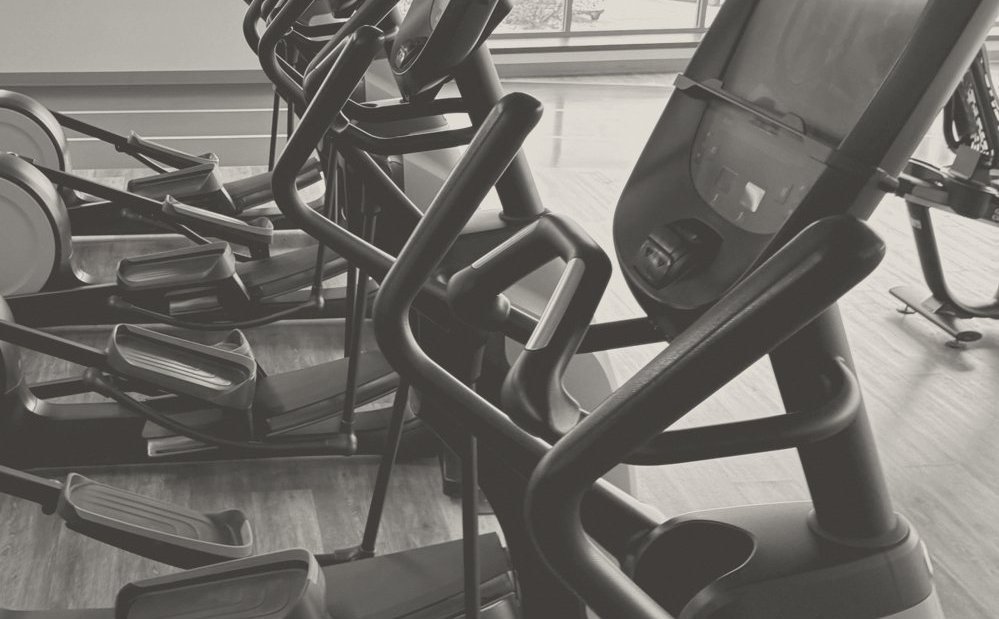
One small step each day. Check them off as you go.
☐ Day 1: Hand over the keys. Read 1 Corinthians 6:19–20 and pray, “Lord, this house is Yours.”
☐ Day 2: Name your why. Finish this sentence: “I want to take care of my body so that I can ____.”
☐ Day 3: Find your window. Look at your calendar and find 20 minutes. What can you set aside to make room?
☐ Day 4: Move in a way you enjoy. Take a walk, ride a bike, visit the gym. Don’t compare.
☐ Day 5: Ask “Should I?” Pick one food or drink you have often, and ask whether it helps you or holds you back.
☐ Day 6: Pair body and spirit. Listen to Scripture, a sermon or worship music while you move.
☐ Day 7: Open the door. Ask God where you’ve been guarded, and invite Him in. Then tell a friend what you’ve learned this week.
The squeeze test
Rick’s favorite experiment: take a donut, or a rolled-up slice of pizza, squeeze it, and watch what comes out. Then ask yourself whether you’d want that in your body.
His one warning: don’t try it at a restaurant.
Four questions before you choose
- Can I? Is it within the boundaries?
- Should I? Is it the best choice, not just an acceptable one?
- Will it help? Will it give me more energy, more years or more readiness for God’s purpose?
- Who am I doing this for? God, or the mirror?
Up next → Talk It Over
9Talk It Over
Living It Out · Chapter 9 of 9
Use these with a small group, or on your own with a cup of coffee. They follow the four steps in order.
Getting started
- Have you ever heard “your body is a temple” used to shame someone? How has that shaped the way you read this passage?
- If God walked through your “rented house” today, is there a room you’d rather He skip?
Step 1 · Bought with a price
- Judgment, sin, your past, or other people’s expectations: which do you most need freedom from right now?
Step 2 · Not your own
- Whose approval about your body or appearance have you been living for?
- What’s one healthy activity you genuinely enjoy?
Step 3 · A temple
- Where might you be looking the part spiritually without doing the work?
- Choose one everyday habit. How do “Can I?” and “Should I?” lead to different answers?
Step 4 · Honor God
- Why do you think this subject makes people defensive?
- Energy, longevity or purpose: which one motivates you most, and why?
- What’s one step the Holy Spirit may be nudging you toward this week?
A closing prayer
Father, my body is not my own. You bought it at a price, and Your Spirit lives here. Help me be honest about my excuses and gentle with myself where I’ve fallen short. Show me one step to take this week, and give me the strength to follow through. Not for my glory, but so I can be fully useful for Yours. In Jesus’ name, amen.
Go deeper
Read in the NIV: 1 Corinthians 6:12–20 · 1 Corinthians 7:23 · Romans 12:1–2 · Acts 1:8 · John 16:7–15 · Psalm 139 · Ephesians 2:10 · 2 Thessalonians 1:11–12
Watch the sermons: Rented House, Part 1 · Rented House, Part 2
Back to the start → How this book is laid out
Scripture quotations taken from The Holy Bible, New International Version®, NIV®. Copyright © 1973, 1978, 1984, 2011 by Biblica, Inc.™ Used by permission. All rights reserved worldwide.