Read First
Did You Plug It In?
I have a confession. I don’t embarrass easily, but this one got me.
Both of our sons have little camping trailers. If your kids are grown, you know how it goes: whatever they love to do, you want to do with them. So Joy and I bought one too. Not from a fancy dealership, but from Facebook Marketplace: a 2019 model from a sweet older couple in Kansas City. The first thing I did was order a box of assorted wood screws, because I knew I’d be putting things back together.
The second time I plugged the trailer into my truck, the lights stopped working right and the dash started flashing warnings about the trailer brake circuit. I called my younger son. He didn’t know. Next I turned to AI. I pay for the extra-thinking version, because I’m tired of calling my kids every time something breaks.
I unscrewed and re-screwed every ground wire on that camper. I removed the backup camera I’d just installed. Nothing. Then my son asked, “You put a tester in the truck’s plug to see if it’s the truck or the camper, right?” No! Why didn’t you tell me? “I didn’t think I’d have to. That’s pretty basic.” (That’s how gracious he was.)
So I bought a tester. The problem was the truck. I pulled every single fuse, one at a time. Finally, sitting in a Harbor Freight parking lot, I begged the AI for help. It said there was a 60 percent chance the problem was the connection between the wiring harness and the plug. “Have you checked to see if it’s plugged in?”
“Yes, of course!” Then I thought: how well did I check? I’d stuck my head under there and thought, “Yep, looks plugged in.” And it pushed back: “Did you actually, physically check it?”
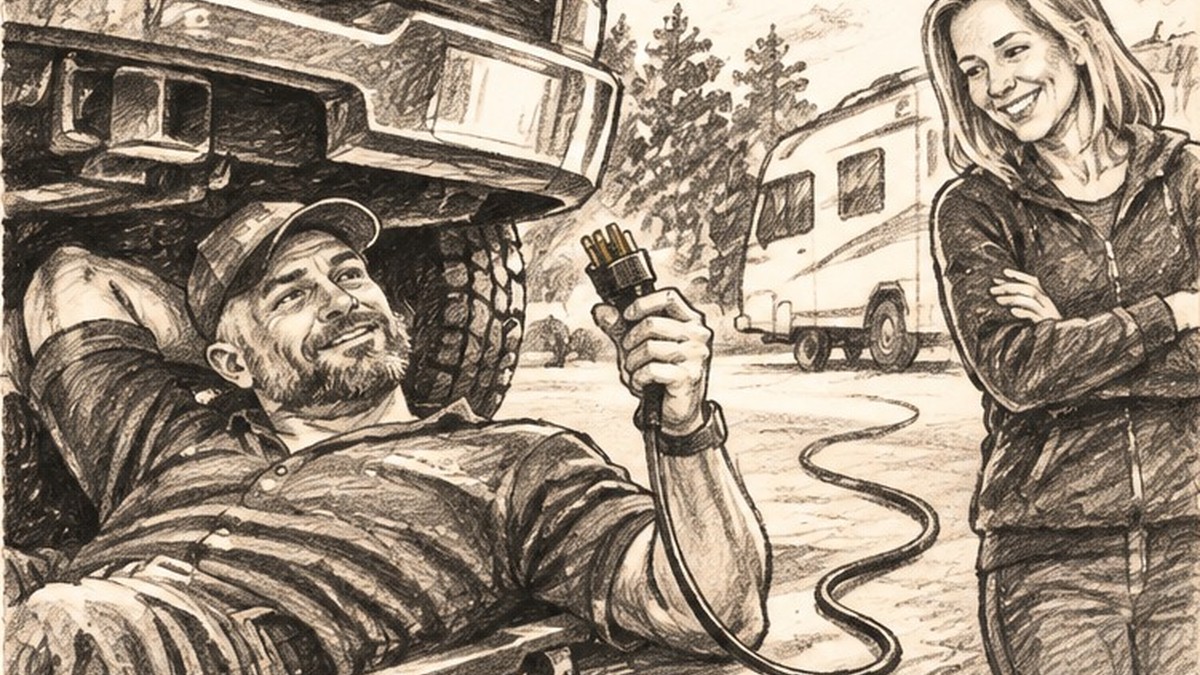
I got home, scooted under the truck on the garage floor, and grabbed it. It looked plugged in. It was not plugged in at all. One twist, and everything worked perfectly. And of course, Joy walked into the garage right as I did it. For the rest of my life, whenever anything goes wrong, she’s going to ask, “Did you plug it in?”
It’s easy to look plugged in without actually being plugged in.
So I won’t assume you know how to get connected. In Part 1 we said that God the Father speaks, because of what Jesus did, through the power of the Holy Spirit. The Holy Spirit comes to live in you when you give your life to Jesus. Until then, you’re not plugged in. Not because you aren’t wanted, but because you haven’t chosen it yet.
Getting plugged in involves three things:
- Confess that you’ve sinned and fallen short, and ask his forgiveness.
- Believe who Jesus is, as much as you know about him.
- Follow. Tell him, “I want to spend the rest of my life following you, even if I’m not sure where it goes.”
Say it in your own words. A thought and a prayer are the same thing to God. When you do, the Spirit moves in for good. He gives you the power to live for God and the ability to talk with him, and he makes Scripture come alive. Everything else in this series works best once you’re plugged in.
The Whisper on the Mountain
God spoke in the Old Testament in all kinds of ways. He walked with Adam and Eve. He spoke to Abraham, sent angels, spoke from a burning bush, and thundered around Mount Sinai. But here’s one of my favorite stories.
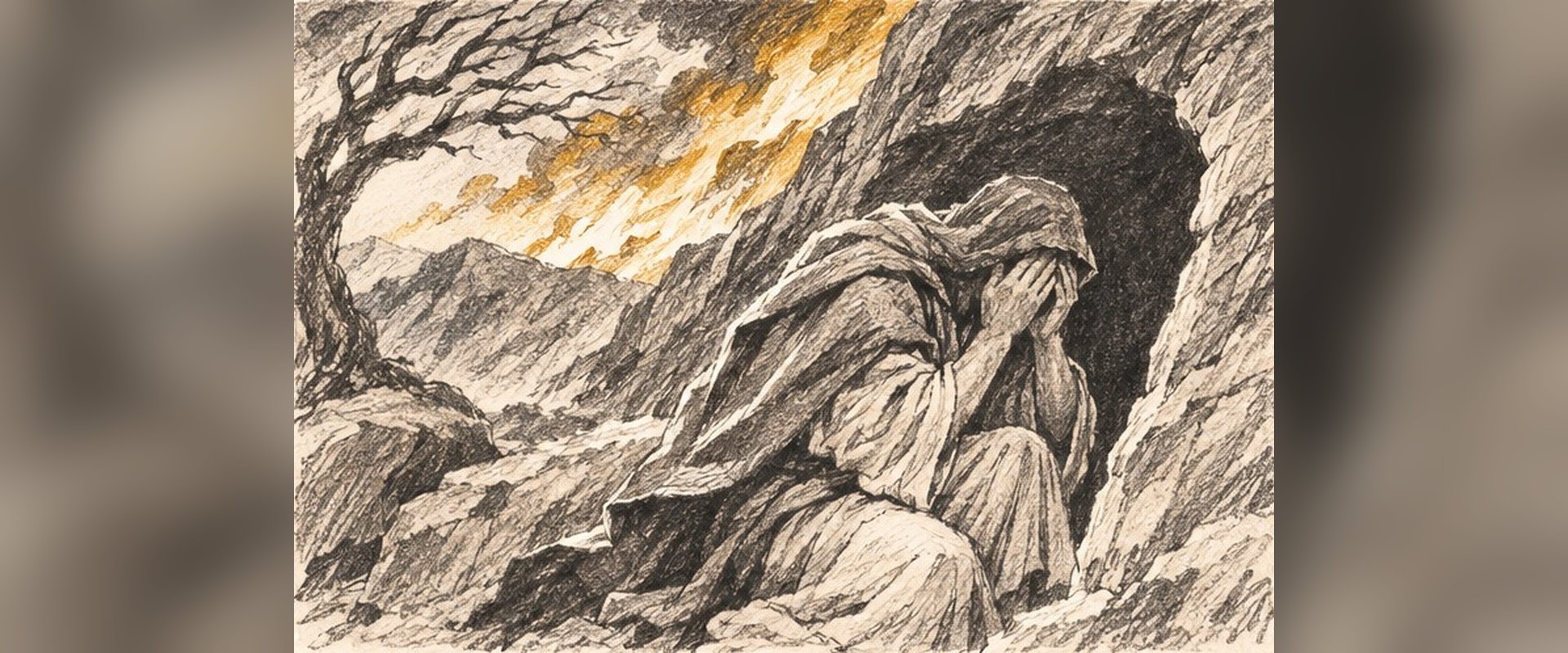
Elijah never wrote a book; his story is told in 1 and 2 Kings. At this point in his life, he was exhausted and depressed. I think he may even have wanted to die. He’d just seen God do a huge miracle in a showdown with some truly wicked people, and now he was running for his life. God told him to go stand on the mountain, because the Lord was about to pass by.
“The Lord said, ‘Go out and stand on the mountain in the presence of the Lord, for the Lord is about to pass by.’ Then a great and powerful wind tore the mountains apart and shattered the rocks before the Lord, but the Lord was not in the wind. After the wind there was an earthquake, but the Lord was not in the earthquake. After the earthquake came a fire, but the Lord was not in the fire. And after the fire came a gentle whisper. When Elijah heard it, he pulled his cloak over his face and went out and stood at the mouth of the cave.” (1 Kings 19:11–13)
Wind, earthquake, fire. That’s how God talks, right? But God wasn’t in any of it. He came in a whisper that drew Elijah to the edge of the cave to listen.
Not in the wind, the earthquake or the fire, but in a whisper.
Does God always whisper? No. He doesn’t speak the same way to everyone every time. Has he whispered before? Yes. Could he whisper again? Absolutely. You don’t need to go find a cave on a mountain, but you can clear out the noise. Showing up is 80 percent of the battle. The rest happens inside you, when you choose to lean in and listen.
Heir of All Things
God can seem so big and so abstract. I need something to hold on to, the low-hanging fruit. And God says, “Here it is: a person. My Son.”
Jesus was 100 percent human and 100 percent God. He voluntarily set aside some of his “superpowers,” like being everywhere at once, and I believe he looked to the Father for what to do next. Why? So we could see what God looks like with skin on.
The first thing Hebrews tells us about Jesus is that God “appointed him heir of all things.” It’s listed first, which suggests it may be the most significant. Everything is coming back to Jesus. He has authority over everyone and everything ever created. It all belongs to him.
That’s hard to square with the world we see, where plenty happens that Jesus would never approve of. When sin entered the world, God, in his mercy and love, let people choose whether they want a relationship with Jesus. And for reasons we don’t fully understand, evil has a wider fence than you and I would like. But it’s never outside his control. Paul teaches that God works even the bad things for good for those who love him (Romans 8:28). In the end, it all works out.
The Creator Keeps His Promises
The second thing Hebrews tells us: Jesus is the one “through whom also he made the universe.” Here’s a sentence worth writing down:
God the Father, through the Son, by the Holy Spirit, created all that was not God, out of nothing, by his spoken word.
“In the beginning was the Word, and the Word was with God, and the Word was God. He was with God in the beginning. Through him all things were made; without him nothing was made that has been made. In him was life, and that life was the light of all mankind. The light shines in the darkness, and the darkness has not overcome it.” (John 1:1–5)
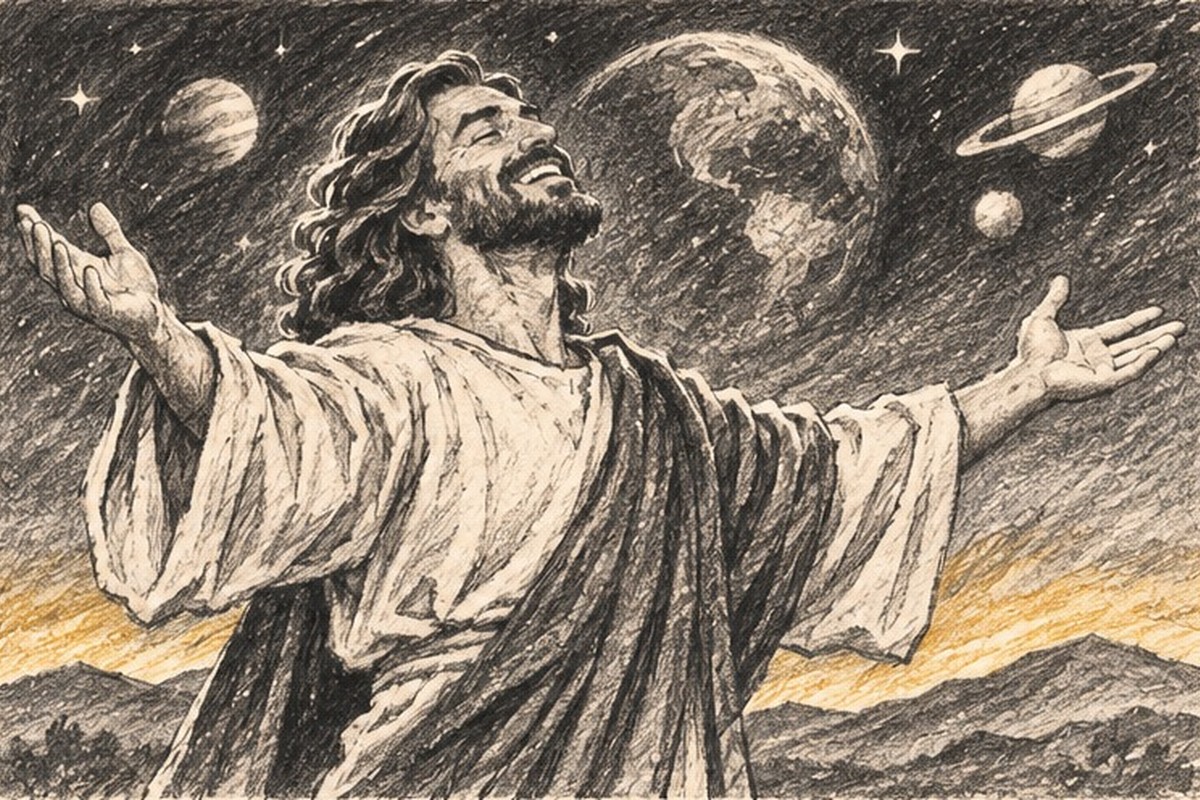
Why does that matter? Because a promise is only as good as the power to keep it. My intentions might be good, but I can still write a check I can’t cash. Jesus never does. He made it all, he owns it all, and he controls it all, even what looks like chaos in your life.
So when Jesus says, “Blessed are the meek, for they will inherit the earth” (Matthew 5:5), that’s not just some guy talking. That’s the Owner of the earth promising you a share in it. And when he says, “I am going there to prepare a place for you... I will come back and take you to be with me” (John 14:2–3), it isn’t wishful thinking from a nice teacher. It’s a promise from God, and he can keep it.
The Day Jesus Braided a Whip
In Part 1 we saw the Jesus who searches, finds, and rejoices. This story shows a side of him that surprises people. Jesus never sinned, but he did get angry.
Passover was a required, week-long festival in Jerusalem, and the city swelled to ten times its normal size. No hotels, old friends everywhere, merchants rolling in dough. Think Christmas at Walmart. Worshipers brought an animal to sacrifice, or bought one there, as a temporary covering for sin.
But it had become a racket. You had to pay the temple tax in temple money, and the money changers gave you maybe 30 cents on the dollar. If you brought your own animal, an inspector might say, “Sorry, there’s a blemish. Buy one of ours.” He’d pay you too little for yours, charge you too much for his, then walk your animal around back and sell it to the next person. They had made worship all about themselves.
“When it was almost time for the Jewish Passover, Jesus went up to Jerusalem. In the temple courts he found people selling cattle, sheep and doves, and others sitting at tables exchanging money. So he made a whip out of cords, and drove all from the temple courts, both sheep and cattle; he scattered the coins of the money changers and overturned their tables. To those who sold doves he said, ‘Get these out of here! Stop turning my Father’s house into a market!’ His disciples remembered that it is written: ‘Zeal for your house will consume me.’” (John 2:13–17)
Notice: he made a whip. The word means braided, or plaited. I’ve tried to braid my granddaughter’s hair. It’s harder than it looks! That took time, maybe ten minutes, maybe an hour. This was no impulse. Picture the brand-new disciples watching him sit off to the side, pulling vines and braiding, slowly realizing what he’s about to do. Whoa, whoa, Jesus! They were badly outnumbered, and Roman soldiers in the Fortress of Antonia looked right down into the temple courts, ready to crush any sign of trouble.
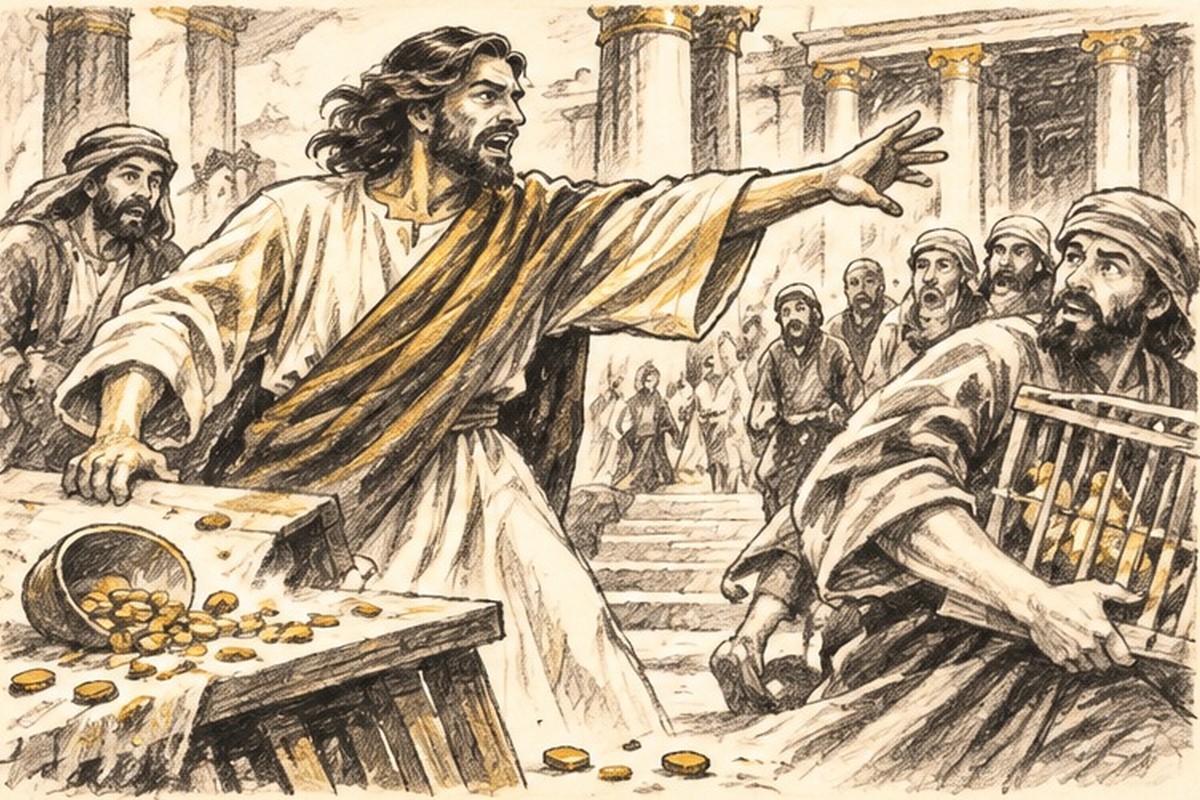
(I love that he couldn’t drive out the doves. Doves just do what they want. So he told the sellers to carry them out.)
Stop making worship about you. Point it back to God.
Talk It Over
- Is there an area of your faith that looks plugged in but isn’t really connected?
- What “noise” in your life might be drowning out God’s whisper right now?
- Which promise of Jesus means more to you knowing he owns and created everything?
- Where might you be tempted to make church or worship “about you”?
 Next in the seriesWant to Know What God Is Like? Look at JesusLoudest and Clearest · Part 3Read it →
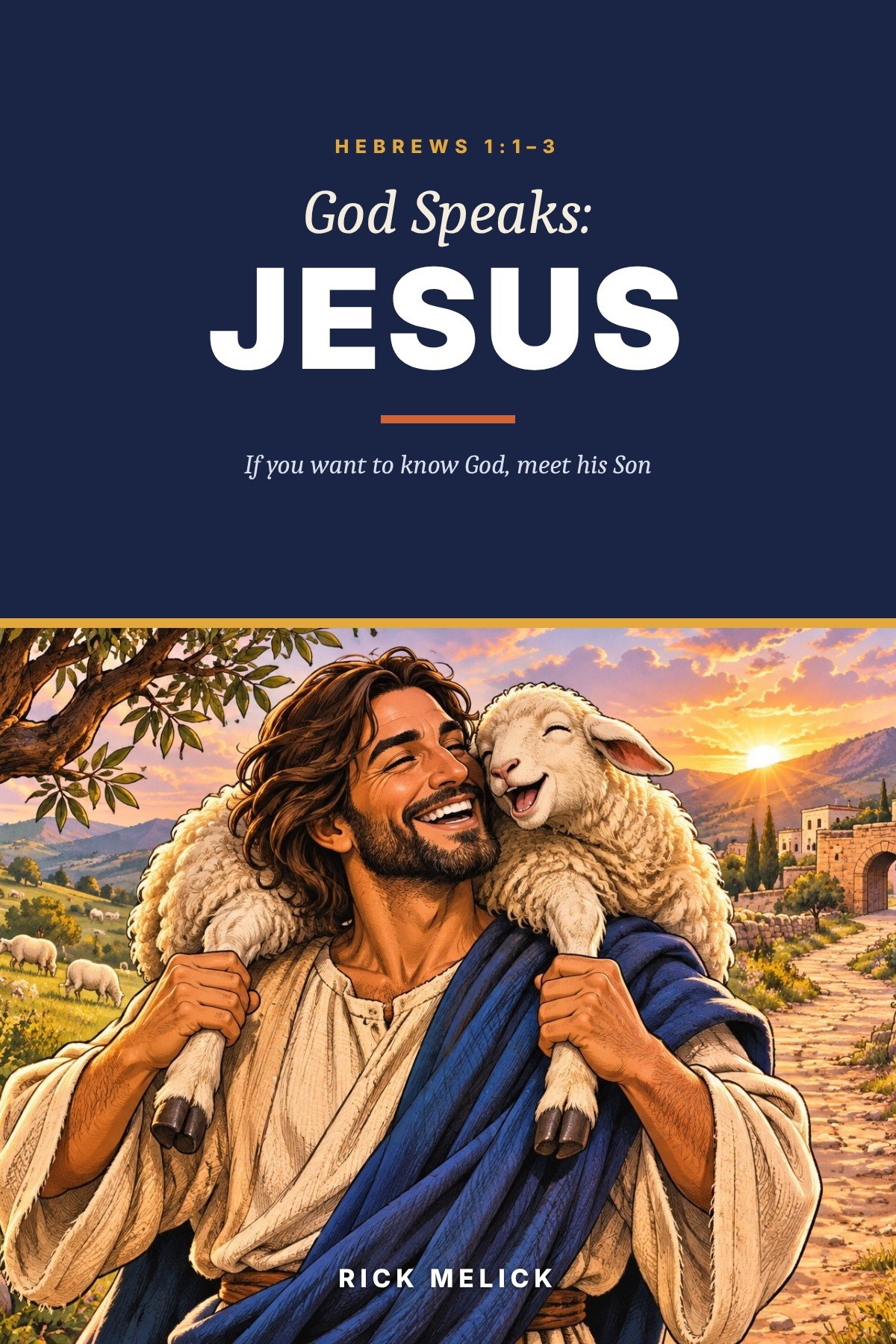 The entire series · Free bookGod Speaks: JesusAn entire month on Hebrews 1:1–3Read it free →
 Capitol City Store · Everything is freeBooks, Bible studies, kids’ comics and short readsDozens of short reads like this one, plus free books, City Group studies, sermon notes, and kids’ comics and games. Read on your phone, print or share with a friend.Explore the store →
© 2026 Rick Melick. All rights reserved. Free to read and share for personal use. Not for resale.
Scripture quotations taken from The Holy Bible, New International Version®, NIV®. Copyright © 1973, 1978, 1984, 2011 by Biblica, Inc.™ Used by permission. All rights reserved worldwide.