Read First
The Seat That Could Never Be Satisfied
Stay with me here. This is the part where some of you will think, “Okay, now it’s the Discovery Channel.” But we’ll need this background in a minute.
One way God spoke in the Old Testament was through the sacrificial system, and it had two purposes. The first was to overwhelm people on purpose. There were too many rules, and nobody could keep them all. The best you could hope for was deferred judgment, kicking the can down the road. The second purpose was to make people long for the Messiah.
God gave instructions for the tabernacle, a traveling temple. In its innermost room sat the Ark of the Covenant (yes, the one from the old Indiana Jones movie). It was a chest holding the stone tablets of the Ten Commandments, Aaron’s staff, and a golden jar of the manna God used to feed Israel in the wilderness. On top was a solid gold lid, about 45 by 27 inches, with two carved cherubim facing each other. It was called the mercy seat.
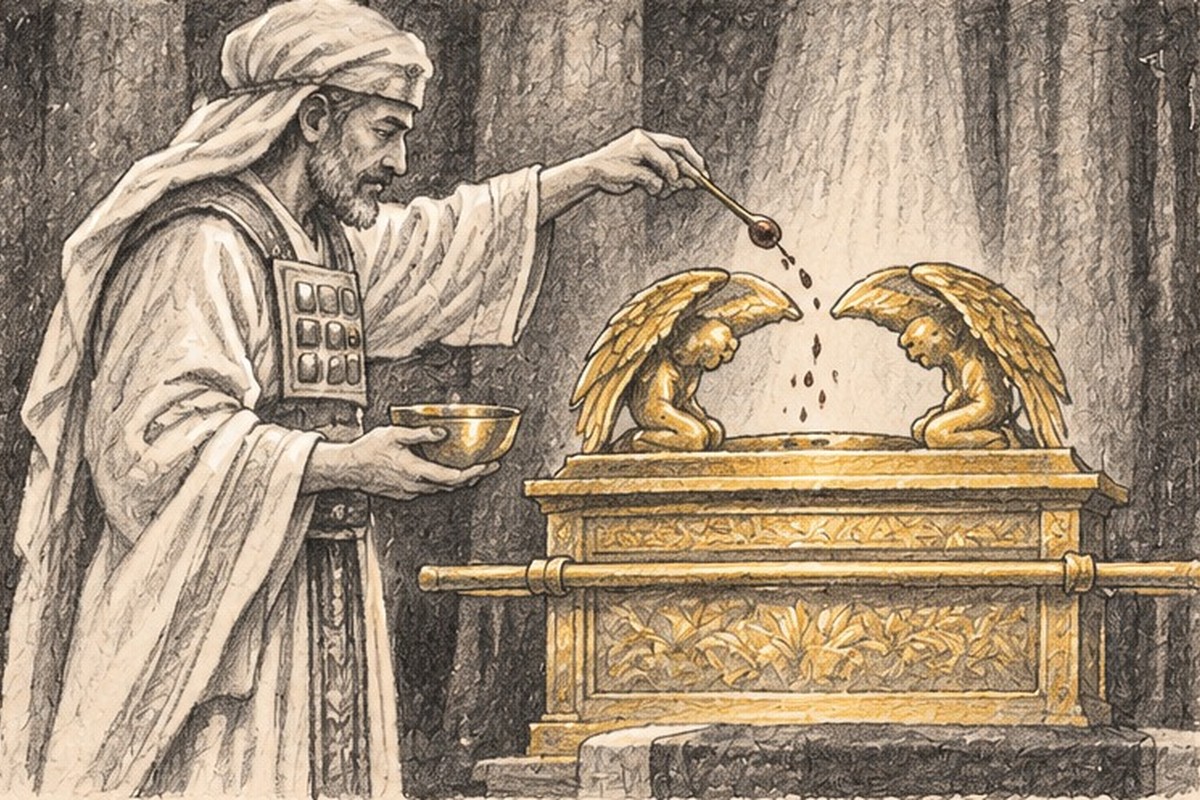
But really, it was the deferred judgment seat. Think of a traffic ticket where the judge tells you, “I won’t prosecute, but you’re on probation for six months. Mess up, and it all comes down on you.” Once a year, on the Day of Atonement, the high priest went behind the thick curtain into the Holy of Holies and sprinkled the blood of a sacrificed animal on that seat. God’s presence came, judgment was postponed one more year, and then everyone waited to do it all again.
Without Jesus, the best you could do was stay one step ahead of the snowball.
Let’s Talk About Sin
Who wants to talk about sin? Here’s a Bible trivia question: where did sin begin? Many Bible teachers believe that before the earth was created, Lucifer, an angel who led worship and pointed everyone to God, decided he wanted to be God. God cast him out of heaven. Other angels went with him and became what we call demons, and Lucifer became known as Satan.
Sin is any thought, action, or attitude that goes against what God wants. The Bible uses three main words for it:
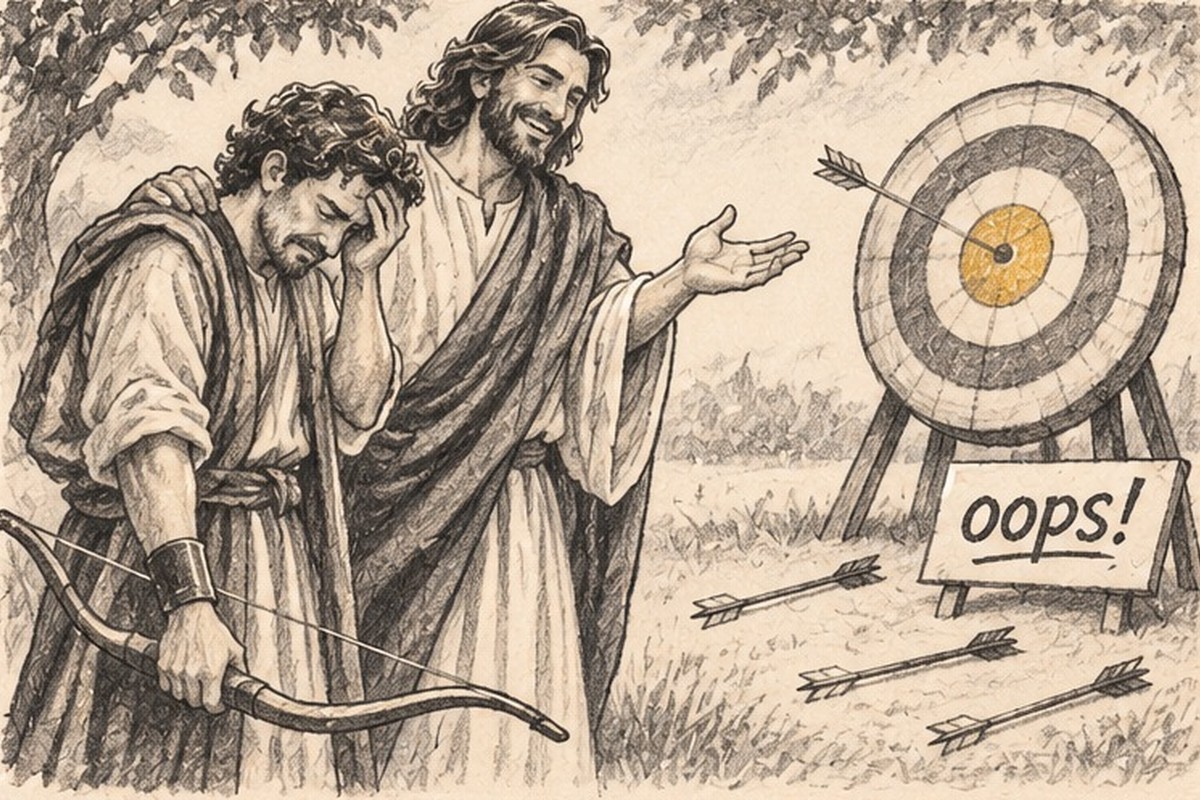
- Sin: missing the mark. Doing what we shouldn’t, or not doing what we should. We just blow it sometimes.
- Transgression: willful defiance. You know what’s right, and you do what you want anyway because you think you deserve it or you just don’t care.
- Iniquity: who you become. Sin left unchecked and unconfessed hardens into a character, a way of life lived in opposition to God.
Sin entered the human race in the Garden of Eden, when Satan came as a serpent and tempted Eve with the same thing he fell for: God’s keeping you in the dark. Don’t you want to be like God? She ate and gave some to Adam (who probably didn’t need much convincing), and sin entered humanity. Now it’s passed down from generation to generation (Romans 5). It shapes how we think and react, it shows up in the choices we make, and without intervention, it shapes who we become.
“For all have sinned and fall short of the glory of God.” (Romans 3:23)
“For the wages of sin is death, but the gift of God is eternal life in Christ Jesus our Lord.” (Romans 6:23)
“Do” Became “Done”
Sin had to be paid for. The old system was exhausting and frustrating by design, so the whole world would long for the One who could pay the price once and for all.
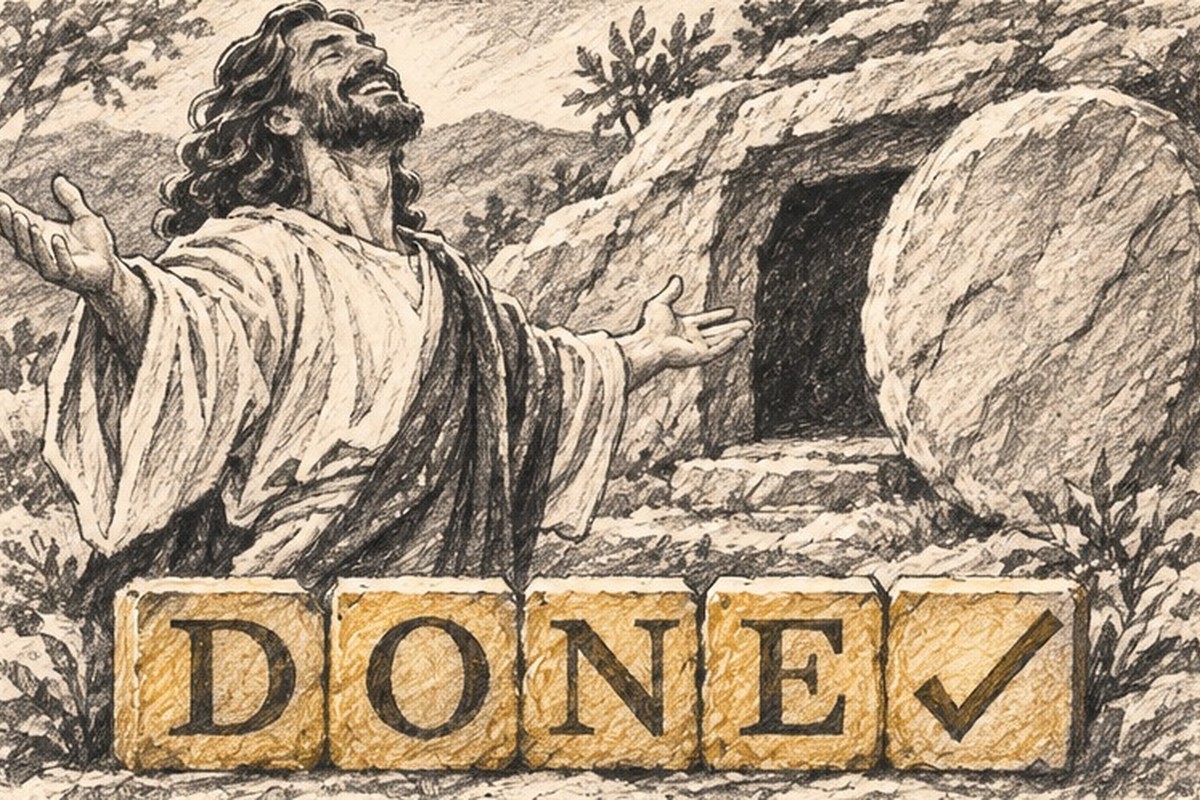
And then he came. One hundred percent God and one hundred percent man. Emmanuel: God with us. He lived a perfect life, never sinning, yet he experienced everything we experience. He willingly took on the sins of the world, past and future, and died to pay the price. Three days later he rose again and defeated sin, Satan, and death once and for all.
What religion spelled D-O was finally spelled D-O-N-E.
All that’s required now is faith in Jesus and a decision to give him your life. You couldn’t help the condition you were born in, but you’re still responsible for it. So we confess: “Guilty. Guilty because I was born with it, and guilty because I’m pretty good at it.” We believe, and we hand him our lives. Your faith plus his finished work equals salvation.
He Sat Down
Some of you are grammar people. (Thank you for your text messages. I appreciate most of them.) Remember diagramming sentences? You find the subject and the verb, and everything else supports those two. Verses 1–3 are one complete thought. The subject is “he.” The main verb is “sat down.”
That’s the main point of the entire passage! Everything else explains why. He created everything and inherits everything, so of course he’s seated at God’s right hand. He’s the exact representation of God, so of course. He sustains all things, so of course.
Why the right hand? When a ruler seated someone at his right hand, it meant equality and full authority. When that person acted, the king acted. And being seated means the work is finished. Picture Jesus walking up to that mercy seat that could never be satisfied and, because of his own blood, taking his seat. Payment complete. No more pulling your hair out trying to keep a system designed to show you that you can’t.
The right hand is also where Jesus intercedes for us. Here’s how I picture it (theologically it breaks down, so don’t press me!). The Father is watching me and says, “Rick did it again. I can’t believe he did it again.” Jesus says, “Hey, Dad, he’s with me.” The Father says, “Oh, okay. He’s with you.” A little later: “There he goes again...” And Jesus says, “No, wait, he’s mine.” “Yes, of course.” God knows everything, so the picture isn’t perfect. But the point is true: God sees me through his Son. Jesus is the reason our salvation is secure and the reason we have any connection to the Father at all.
“He’s with me.”
And there’s one more thing he’s doing at the Father’s right hand: waiting for the day he comes to bring you and me home to be with him forever.
Let the Little Children Come
All this theology matters. It shapes how we see the world. But I still need something I can hold on to. So here’s one more picture of Jesus.
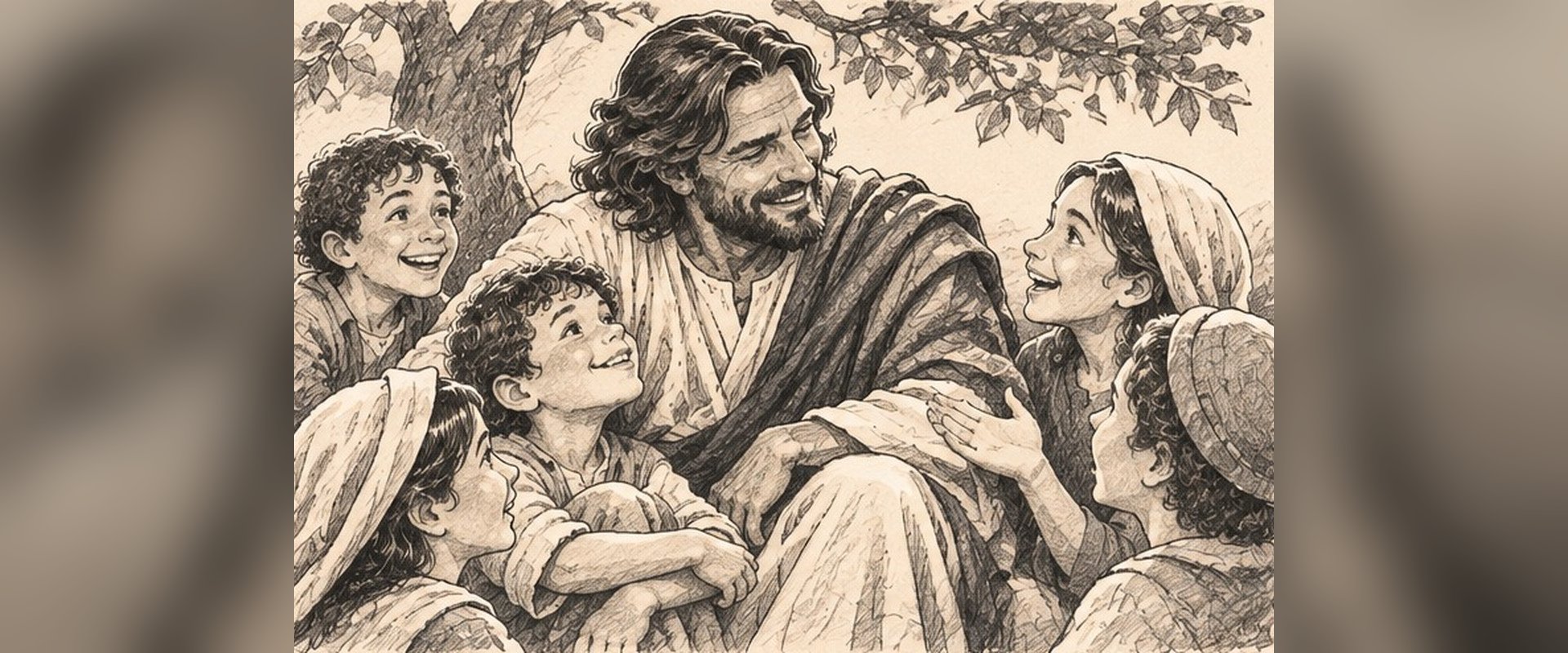
“People were bringing little children to Jesus for him to place his hands on them, but the disciples rebuked them. When Jesus saw this, he was indignant. He said to them, ‘Let the little children come to me, and do not hinder them, for the kingdom of God belongs to such as these.’” (Mark 10:13–14)
These weren’t third graders. The word means little ones, even babies. Parents often brought babies to a rabbi for a blessing, and people loved Jesus. But in that culture, little ones were considered insignificant, so the disciples basically yelled at the parents. It’s the same word used when the crowd told blind Bartimaeus to be quiet on the road out of Jericho. And Jesus was indignant, an even stronger word than their rebuke.
Why did Jesus love children and talk about childlike faith? I think it’s their innocence and their trust. A baby doesn’t worry about tomorrow, the next meal, or whether there’s a clean diaper in the box. All a baby needs is to be close to the people who love them.
My phone’s text alert is a recording of my granddaughter laughing for the very first time, at about a year old. When it goes off in a store or a coffee shop, people around me can’t help smiling. There’s an innocence in it. Little ones don’t understand everything, and they don’t know what’s coming next. All they know is they need their dad, and when they have their dad, they have everything they need.
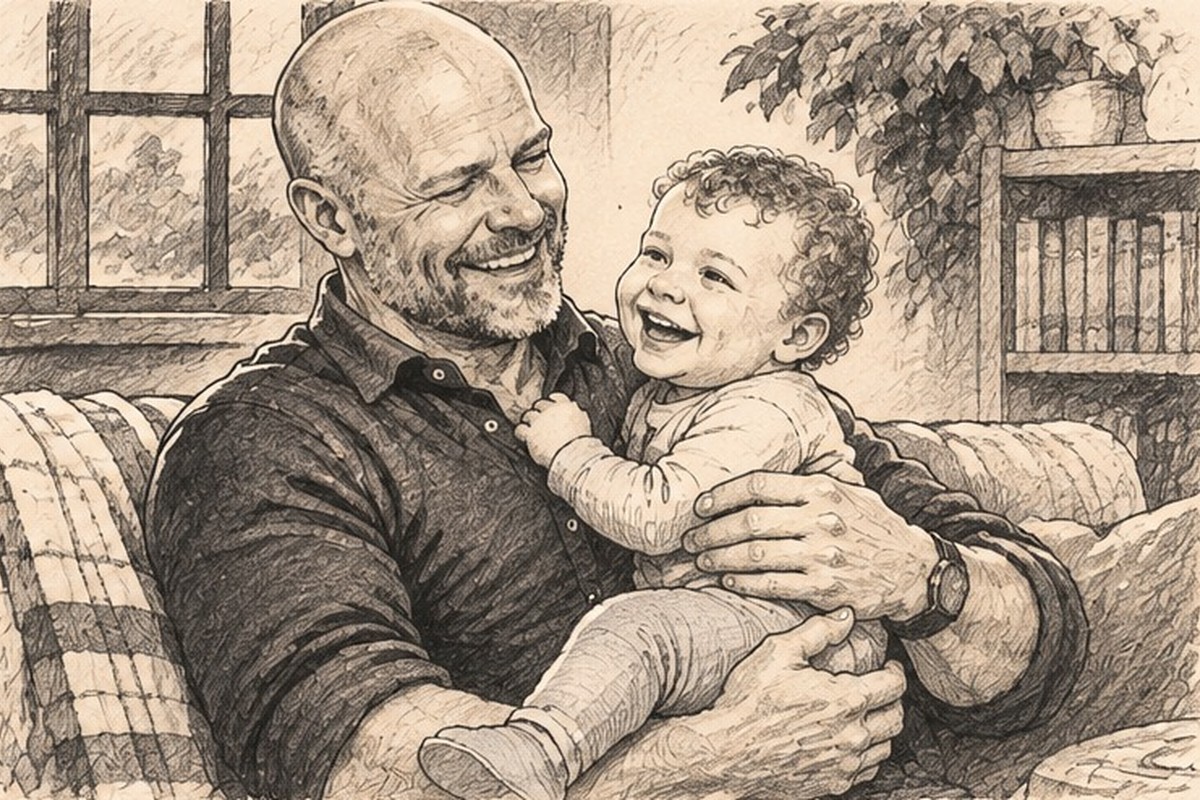
All we need is our heavenly Father. That I can wrap my arms around.
That isn’t an uninformed faith. We keep learning and growing from wherever we start. But it is the faith of a child, and in a lot of ways, I think that’s a great summary of Hebrews 1:1–3.
Talk It Over
- Where are you still living like it’s “deferred judgment,” trying to stay one step ahead?
- Which word describes your struggle right now: missing the mark, willful defiance, or a pattern that’s become part of you?
- How does picturing Jesus saying “He’s with me” or “She’s with me” change how you feel when you fail?
- What would childlike faith look like in your life this week?
 Next short readThankful: Paul’s SecretWhat Paul learned in chains, just in time for ThanksgivingRead it →
 The entire series · Free bookGod Speaks: JesusAn entire month on Hebrews 1:1–3Read it free →
 Capitol City Store · Everything is freeBooks, Bible studies, kids’ comics and short readsDozens of short reads like this one, plus free books, City Group studies, sermon notes, and kids’ comics and games. Read on your phone, print or share with a friend.Explore the store →
© 2026 Rick Melick. All rights reserved. Free to read and share for personal use. Not for resale.
Scripture quotations taken from The Holy Bible, New International Version®, NIV®. Copyright © 1973, 1978, 1984, 2011 by Biblica, Inc.™ Used by permission. All rights reserved worldwide.