
The Easy Way and the Hard Way
The door from our garage into our mudroom is the only door in our house we actually use. And for a while, the handle had been getting a little wonky. Joy is always good about reminding me what needs fixing, so it was on her list. “You might need to replace that handle before it stops working.”
“It’s not going to stop working. Door handles like that last forever.” I’d just turn it, jiggle it, and the door would open. So I didn’t fix it. You can already tell whose fault this is.
One night we got home late. We were tired, our arms were full, and the garage door had already closed behind us. I turned the handle. The lever levered. The door didn’t move.
Joy looked at me. I looked at her. And I prayed, Please, Jesus, let it work just once. I’ll fix it later. Whatever happens, don’t let her be right.
I jiggled it. Nothing. I grabbed the door and shook it like a bear. Nothing. It was broken. And Joy, gracious as always, even when she’s right, which is most of the time, didn’t say “I told you so.”
But we had a problem. No keys, and every other door in the house was locked tight. Have you ever locked yourself out of your own house? You live there. You pay the mortgage. All your stuff is inside, and you’re outside.
My first thought was, I’m kicking the door in. I’ve seen it on TV.
Joy, who thinks things through, said, “Why don’t we check whether any other doors are unlocked?” I don’t leave doors unlocked. I’m security-conscious. I have cameras. But she checked anyway, and she found I had forgotten to lock the dog door. You see where this is going.
“I think I can get through there,” she said. “Unless you want to pay for a new door frame.”
It took some effort and a sort of corkscrew motion, but she made it through. “My hero!” I said. And then she stood inside, looked at me through the door and said, “I’m in. What are you going to do?”
So there I was, hat in hand: “Please let me in, Joy.” And she did.
There’s always an easy way and a hard way. We took the hard way. Today we’re going to get to a simple truth, but we have to take the hard way to get there. First, a little theology. Then comes the really hard part: living it.
Your Origin Story
Paul gives us a theology of reconciliation in 2 Corinthians 5. To reconcile simply means to make a relationship right again.
If you’re a Christian, this is your origin story. If you’re not, it can be. Here are five things in this passage. We’ll take the first four in order and save the fifth, from verse 17, for last.
But don’t skip verse 16: “From now on we regard no one from a worldly point of view.” Have you done that? Have you stopped sizing people up the way the world does? Instead of nitpicking, judging and dividing, we should be for people. And if someone doesn’t know Jesus, maybe that’s the real issue, and maybe we’re part of the answer. Let’s not cut ourselves off from the mission field God has called us to just because we’re so worried about being right.
1. God Went First
“All this is from God, who reconciled us to himself through Christ.” Being reconciled to God means being forgiven of your sin, trusting Jesus as your Lord and Savior and deciding to live as his follower.
But notice: you didn’t start this. You were the offending party, and God went first. He didn’t do anything wrong to Adam and Eve. He’s never done anything he needs to apologize for. We have. When Adam and Eve chose to sin, the perfect fellowship they’d had with God was broken. God is holy and just, so sin brought a death sentence on all of us. “All have sinned and fall short of the glory of God” (Romans 3:23). “The wages of sin is death” (Romans 6:23).
But God is also loving and merciful. So he put a plan in place to forgive sin, close the gap and reverse the curse. The one who was offended made the first move. He reached out his hand. And it was a move we couldn’t make on our own, because we were spiritually dead.
How do you wake up a dead man? Through Jesus. God went first.
2. Through Jesus
God started it, but he did it through Christ, and Christ did it on the cross.
Here’s how I picture it. For centuries, people who wanted to serve God brought sacrifice after sacrifice. It was a constant reminder that nobody could ever be good enough to check every box. It was exhausting, but it was the only way they had.
Then Jesus was crucified, buried and raised, defeating sin, Satan and death once and for all. A few weeks later he ascended and sat down at the right hand of God (Hebrews 10:12). I picture that seat of judgment becoming a seat of mercy, because now God sees us through Jesus. Jesus put himself between us and God, and his righteousness became ours.
God started it, and he did it through Jesus. It cost Jesus his life, and he asks us to give him ours.
3. God Doesn’t Count It Against You
“God was reconciling the world to himself in Christ, not counting people’s sins against them.”
God chooses not to see you in light of your worst moment, your mistakes, the ways you’ve let him down, the things you’re ashamed of or the regret you still carry. He sees you through Jesus, as a son or daughter of his kingdom.
Can you imagine someone choosing not to hold your offenses against you? Joy and I have been married 36 years. When you’ve been married that long, you’ve both done a lot of dumb things. It’s almost impossible not to remember some of them: the insensitive words, the forgotten things, the worst moments. You move on, you overlook, you choose to think the best. But to have God say, I no longer hold your sins against you. When I look at you, I see my Son.
When my younger son was in junior high and high school, he had a lot of friends who had problems at home. Joy and I joked that we collected strays. I say that with love. At one point we had six mattresses from Walmart spread around our basement. Kids just lived with us. I took some of them to get their driver’s licenses. One studied for his GED. Joy cooked. It’s just what we did.
One of those kids needed tires. It was a lot of money, and we didn’t have a lot of money. My son came to me and said, “Dad, would you think about buying tires for him?”
“Is he going to pay me back?”
“I don’t know. I think he will. But if there’s any way you can do it, it would really mean a lot to me.”
So I bought the tires. And he never paid me back, which is 100 percent fine. We expected that going in.
But here’s the thing. I didn’t buy those tires because of that kid. I bought them because my son put himself between me and his friend and said, Dad, please help him. Did the friend deserve it? No. Could he pay? No. What did he have? A son standing in between.
And today, when I think about that kid, I don’t think of him as the kid who owes me for tires. I think of him as my son’s friend.
God sees you because of Jesus. So you can relax. Stop hiding. It’s good news.
4. You Have a Job
“He has committed to us the message of reconciliation. We are therefore Christ’s ambassadors.”
God says, I went first. I gave you Jesus. I don’t hold your sins against you. Now I’m tapping you on the shoulder. I want people to see Jesus because of you.
Paul uses some form of reconcile five times in three verses. Put “Ambassador of Reconciliation” on a T-shirt, and nobody will sit next to you on the bus. It sounds super spiritual. But it’s what God has called us to.
5. You’re the New Guy
You might be asking, Why me? How? It sounds impossible. That’s where verse 17 comes in:
If you belong to Jesus, you’re the new guy. The old is gone. Your sins and your past are forgiven, and your future is secure. That’s the how, and that’s the why.
So do you see yourself as a new person? As someone who belongs to Jesus? As part of his plan to make things right?
Follow Me as I Follow Jesus
Now for the hard part. Paul gets very practical:
That’s the secret to being an ambassador of reconciliation. Paul didn’t say, “Listen to my words and change your life.” For too long, the church has said exactly that. Stop it. Stop lobbing truth bombs over the church walls and hoping they hit somebody.
We’ve been so worried about being right that we’ve forgotten to be righteous.
Paul’s words always pointed to the truth, but what he said was, Look at my life, and you’ll see the back of my head looking at Jesus.
And it starts with the people closest to you: the one you wake up next to, the one across the breakfast table, the first person you see at work, the people you text all day. It’s no accident they’re in your life. They’re the ones you influence most, and the ones you’ll be most responsible for.
The church complains about “the world out there.” If they’d just get their hearts right. But if I make sure the way I’m a husband, a father, a friend, a boss and a pastor pleases the Lord, the world will change. It starts with my world and works its way out.
So how’s your world?
What Jesus Did
I asked myself: What did Jesus do, and what did the people closest to him experience? You could make a list of a thousand things. Here are five I’m working on. I want the people around me to see someone real, not perfect, failing and getting back up, eyes on Jesus.
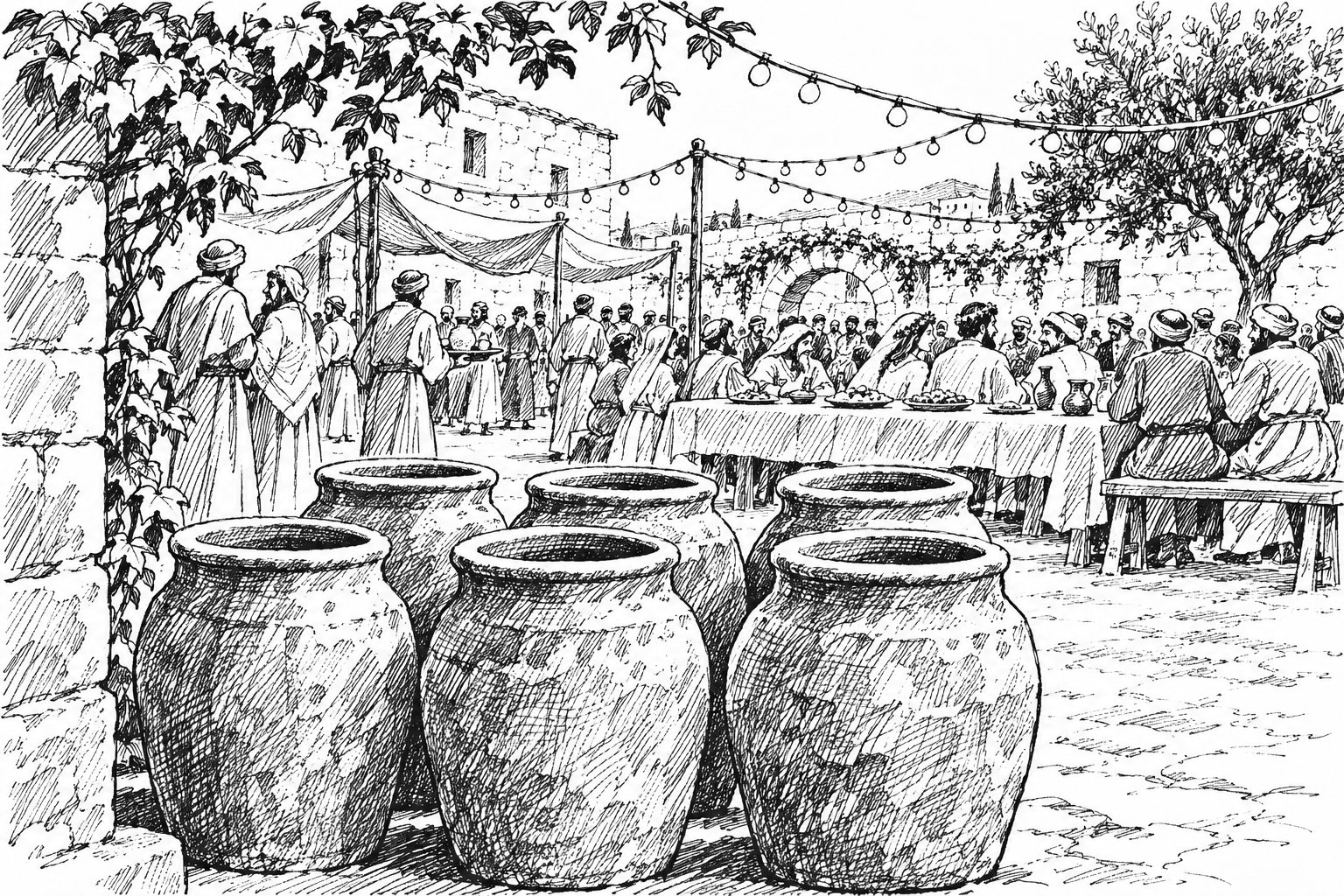
He found the extraordinary in the ordinary. Right at the start of his ministry, with the clock ticking, Jesus went to a wedding in Cana (John 2:1–11). Weddings back then could last a week. It was a celebration for a couple most people had never heard of. He didn’t jump on a rock, tell everyone to repent, drop the mic and leave. He was fully present. And something extraordinary happened on an ordinary day: he turned water into wine.
Quit thinking your purpose is out there or up there or has to be bigger. Look at the people and opportunities right in front of you, and engage.
He showed people they mattered. By the time Jesus came, religious leaders had spent years telling people they weren’t good enough, didn’t come from the right family and didn’t know enough. Jesus saw value in people, and he showed it.
Lots of people who weren’t like Jesus at all liked Jesus very much. How many people who aren’t like you at all like you? Or have you pushed them away because you’re so busy being right?
He even made time for kids. Children didn’t hold the place in that culture that they hold in ours. When parents brought their children to Jesus, the disciples tried to shoo them away. Jesus is too important. He has things to do. And Jesus rebuked them:
By the way, kids don’t run toward someone who’s harsh. Ever seen a kid screaming on Santa’s lap? Kids wanted to come to Jesus. He was approachable. He had a smile.
Most of us say the people in our lives matter to us. But do we show it? I don’t. I’m not sensitive by nature, and I’m not an encourager by nature. I just expect people to know. But a thought you never express is almost the same as not having it at all. If you don’t affect the people around you, what good are you?
So I’ve been working on it, starting with my granddaughter, Emery. She just turned four. I have a plan for reaching out to my kids and my wife, but Emery is new to the list. Her world used to be about a foot tall. Now it’s about three feet. And I want to be the grandpa, the Bapo, who influences her for good. Not the one who sweeps in, tells her she’d better follow Jesus, makes her listen to Bible stories and leaves again. I want her to ask me about life and let me tell her who Jesus is. I want it to be natural. And I live seven hours away.
A couple of weeks ago, Emery FaceTimed us. She does that a lot, sometimes when her mom and dad don’t know about it, which is always fun. She said, “Bapo and Grandma Joy, I wrote you a letter!”
She can’t really write yet. But Joy was so excited she wanted to screen-record it, and we couldn’t get the recording to work. “Emery, wait! Don’t read it yet! Bapo’s figuring out how to record!” So I held up my phone and recorded Joy’s phone.
“Okay, Emery, go.”
She stood up, held a notebook in front of her face and read: “Grandma Joy, I’m sorry you hurt your leg.”
That was it. Grandma had hurt her leg on a visit and needed a Band-Aid, and Emery remembered.
“Is that all? Where’s my letter?”
“Oh,” she said. “Your letter is X.” She had just learned to write the letter X.
That night I prayed, God, how can I show this little girl I love her, so that when the time comes, I’ve earned the right to point her to Jesus? And I thought, I’ll write her a letter.
It sounded simple. I put it on my to-do list. That night I thought, I don’t know how to write a letter to a four-year-old, so I snoozed the reminder for 24 hours. The next night, same thing. On the third night, as Joy and I were getting ready for bed, I grabbed an old-school legal pad and a pen. “What are you doing?” Joy asked. “Writing a letter to Emery.”
Try it. It’s hard. You can’t write from your perspective. You have to get down to hers. So I asked how her dog was and hoped she hadn’t chewed up any toys. I told her how wonderful her mom and dad are. I told her Bapo thinks she’s amazing. I put the inside things first: You’re kind. You’re loving. And then, at the end, You’re beautiful, because it’s important for that one to come last.
Then I thought, Kids like art. I hadn’t drawn anything since third grade. But this wasn’t for me. So I got out markers and drew everything I remembered how to draw: palm trees, dog prints all the way around, hearts, hearts with arrows. I was so proud when I finished. Joy took a picture of it.
Then I addressed the envelope, stamped it, decorated it and set it by the door. Because if you don’t, it never gets mailed, and it becomes another good intention nobody ever feels.
Is that enough? No. But it’s a start. And if I don’t remind myself to do things like that, the people closest to me will never know, and I’ll never earn the chance to influence them.
He had compassion. “When he saw the crowds, he had compassion on them, because they were harassed and helpless, like sheep without a shepherd” (Matthew 9:36). Jesus didn’t say, How could anyone think that way? People think the way they do for a reason, and what they do makes sense to them. I want a compassionate heart, because it changes how I see the world, how I see you and how I see my wife.
He forgave freely. Jesus forgave sins against the Father. But it got a lot more personal than that. After he’d been falsely accused, tortured and nailed to a cross, he prayed, “Father, forgive them, for they do not know what they are doing” (Luke 23:34).
Bitterness and unforgiveness are some of the most visible things in a person’s life. People can see it. They can smell it. And it pushes them away.
When Joy and I talked about our goals for the year, we asked each other: Is there anyone you haven’t forgiven? Anyone we need to ask for forgiveness? Have we done everything we can to be at peace with people?
If Jesus no longer holds my sin against me, how can I justify holding a grudge against someone else? Forgiving doesn’t mean they were right. It doesn’t mean there are no consequences. It doesn’t even mean you have to have a relationship with them again. It means you hand the offense to the Lord and say, Teach me what you want me to learn. Let me own my part. The rest is between you and them. Make it right, as gently as you can.
He pointed people to the truth. Jesus always worked his way around to the truth. “I am the way and the truth and the life” (John 14:6). And he didn’t just point the way. He took people by the hand and led them there.
In John 4, Jesus went where no self-respecting Jewish teacher would go, to Samaria, and talked with someone no self-respecting Jewish man would talk to, a Samaritan woman. He had to decide that he cared more about what she thought of the Father than about what the religious people thought of him. And that’s when she could actually see and experience the truth.
Pick Somebody

Here’s my challenge. Start with the people closest to you. You can’t pick everybody, but you can pick somebody.
Pick someone close to you. Pray about it. Make a plan. Follow through.
God will change you, whether or not he changes them. And almost everything about the way you relate to the world will change once you live the way Paul did, following Jesus where people can see it.
Father, thank you that you loved us so much you sent Jesus to make peace, so we could be forgiven, know we’re going to heaven and live with purpose for your glory. For those of us who have been so caught up in being right that we see the people around us as enemies, help us remember to be righteous. I count myself in that group sometimes. More than anything, I want people to see me following Jesus. In our weakness, let the people around us see your strength. Make us ambassadors of reconciliation, fixing what’s broken and nudging the people around us toward peace with you. In Jesus’ name, amen.
Talk It Over
With a friend, your City Group or over coffee:
- Have you ever had to take “the hard way” because you put off something simple? What happened?
- God went first, even though we were the ones who did wrong. Is there someone you need to go first with?
- The tires story: what does it mean to you that God sees you because of Jesus?
- “So worried about being right that we’ve forgotten to be righteous.” Where do you see that in yourself?
- Of the five things Jesus did (found the extraordinary in the ordinary, showed people they mattered, had compassion, forgave freely and pointed people to the truth), which do you most need to work on?
- Who is your “somebody”? What’s your plan?
 Next · Part 3 of 3 · Free study guideRented HouseThe theology of physical fitness: your body matters to GodRead it free →
Scripture quotations taken from The Holy Bible, New International Version®, NIV®. Copyright © 1973, 1978, 1984, 2011 by Biblica, Inc.™ Used by permission. All rights reserved worldwide.