
A Gate at the Bottom of the Mountain
My kids live in Mountain Home, Arkansas. It’s a fantastic place, one of the top places in the country to retire if you love the outdoors. But it doesn’t take long to get out to the sticks. You can drive an hour into the Ozark Mountains and feel like you’ve gone back a couple of centuries.
On a trip down there, my younger son asked me to go look at some property with him. He’s young and starting out, so we weren’t looking at gated communities. We were looking at property.
The realtor had sent him directions, and they were exactly the kind you’d expect. Dirt roads. Gravel roads. No road names. “Turn at the white house with the truck in front.” No power. No water. “Go all the way down the mountain. After the road crosses the creek three times, you’ll see a surveyor’s stake.” And at the bottom, one more line, with an exclamation point: “Don’t drive past the property. They don’t like that!”
So we drove way, way out into the boondocks. Down at the bottom, near the creek, we came to a gate across the road. Hanging on it was a sign: Nothing inside is worth dying for.
Maybe we were in the wrong spot. We drove back up the mountain until we had cell service and called the realtor. She laughed. “Oh, they’ve got it gated again. Just open it. It’s a dummy lock. You’ll be fine.”
So we drove back down, opened the gate and drove in.
It wasn’t a neighborhood. It was a compound. The houses were shacks, but they were arranged in a very strategic, tactical way. A school bus was parked up on a little ramp, ready to roll across the road and keep anybody in or out. There was a truck in front of every shack, but we didn’t see a single person. We knew they knew we were there. One little girl was out feeding the chickens. When she saw us, she took off running inside. It was creepy quiet.
We found the lot, right in the middle of it all. I was thinking, Son, I don’t want you out here. And you are not bringing your wife out here. But he wasn’t scared off. “Let’s at least find out what kind of people they are,” he said. “If they’re good people, this might be the safest place in the world.” Pretty smart.
So we drove back up the mountain and flagged down a guy in a pickup truck. “Hey, what kind of people live down at the bottom of the hill?”
“Oh, don’t go down there,” he said. He named the family. “That’s not a neighborhood. That’s a compound. The men will come out with guns. They probably won’t shoot at you. They’ll just tell you to leave. But if Granny’s on the porch, she’ll fire a round over your truck.”
We never got a word in to tell him we’d already been down there.
Sometimes it’s good to know ahead of time when you’re in danger. Sometimes information comes too late. And sometimes it comes in plenty of time, and we ignore it.
The King Rides In
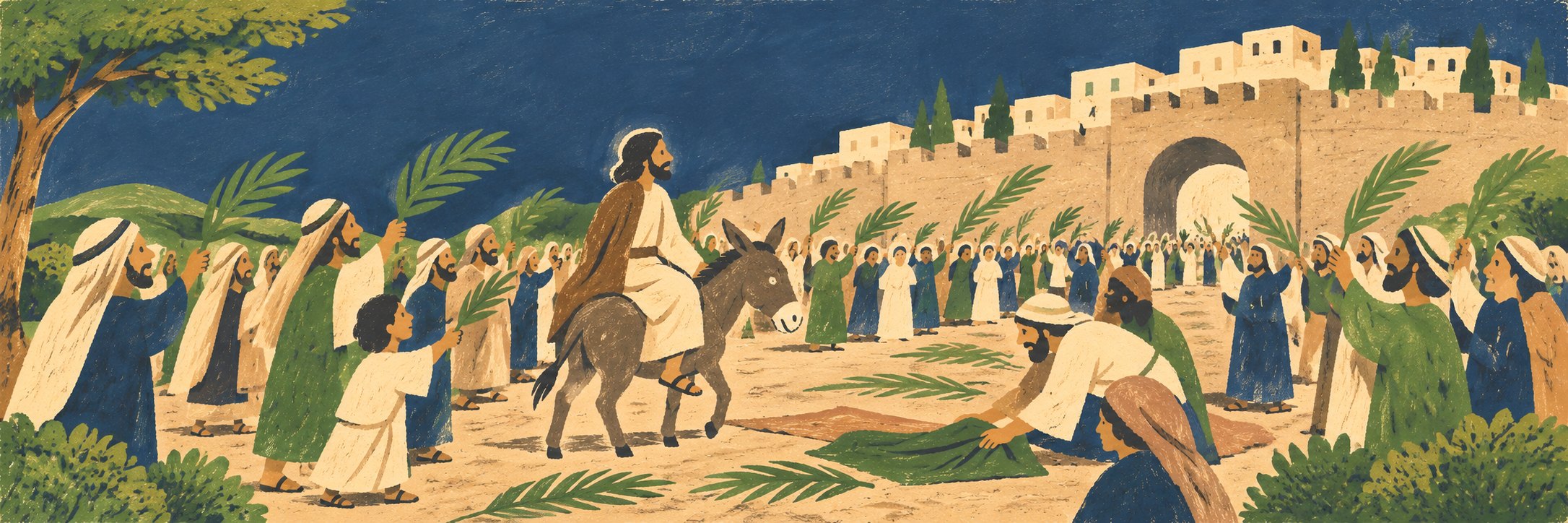
A few days before the cross, Jesus rode into Jerusalem for the last time before his death, his burial and his resurrection. It started the week that changed everything.
Matthew tells us people spread their cloaks and cut branches from the trees to lay on the road (Matthew 21:8). John tells us the branches were palms. The crowd was quoting Psalm 118:26 word for word. They knew their Bibles.
About five hundred years earlier, the prophet Zechariah had written that Israel’s king would come riding on a donkey’s colt (Zechariah 9:9). Here he was. The people were cheering for the king, the problem solver, the fixer, the one they’d been waiting on for a very long time.
Then John adds a line I love: at first, even the disciples didn’t understand what was happening. Only after Jesus was raised did they look back and say, “Oh. That’s what was going on” (John 12:16).
What the Crowd Wanted
Everybody expected the Messiah to come and set things right: the money problems, the political problems, the comfort problems. They were going to add a king to their lives so they could get on with their lives.
We still do this. I want this, and then I want that, and a little more of this. And of course I want Jesus. I’ll add a little Jesus to my life. A little fire insurance. Make sure that when the day comes, I get the check mark and slide into heaven.
But Jesus had a different plan. He tipped his hand the very first time he called his disciples. “Follow me,” he said (John 1:43). Leave it behind and follow me.
The first disciples said, in effect, “All right. Let’s see what you’ve got. What we have here isn’t worth living for, and it sure isn’t worth dying for.” And Jesus took them on a three-and-a-half-year journey to show them who he was and why he came.
Seven Warnings and Seven Promises
Jesus didn’t hide who he was. In the Gospel of John, he says it seven times, and every time he starts with the same two words: “I am.”
That wasn’t an accident. When Moses asked God what name to give the Israelites, God said, “I am who I am. This is what you are to say to the Israelites: ‘I am has sent me to you’” (Exodus 3:14). It sounds a little like Popeye, but it’s not. It’s God’s name. Every time Jesus said “I am,” he was tipping his hand.
- “I am the bread of life” (John 6:35).
- “I am the light of the world” (John 8:12).
- “I am the gate” (John 10:9).
- “I am the good shepherd” (John 10:11).
- “I am the resurrection and the life” (John 11:25).
- “I am the way and the truth and the life” (John 14:6).
- “I am the vine; you are the branches” (John 15:5).
Some people were intrigued. Many didn’t get it. Some didn’t want to. But Jesus was giving them the information they needed ahead of time.
Think about “the light of the world.” It reminds me of our Christmas Eve candlelight service. Jesus came into a very dark world like one lit candle in Bethlehem. As he lived a perfect life and showed God’s love to anyone who would listen, the light was passed from one person to another to another. By the week of the cross, there was a handful of light. More than when he came, but still in danger of blowing out.
A Shepherd Lies Down in the Gate
Two of those “I am” statements were about sheep. People in the first century understood sheep. Moses was a shepherd. King David was a shepherd. I have zero experience with sheep. I had a couple of goats once. They were smart but disgusting, so we got rid of the goats.
From what I’ve learned, sheep are simple creatures. They have no homing sense. Take them a mile from home and they can’t find their way back. They’re skittish. They won’t drink from moving water. And when a wolf shows up, they don’t fight and they don’t run. They just huddle together.
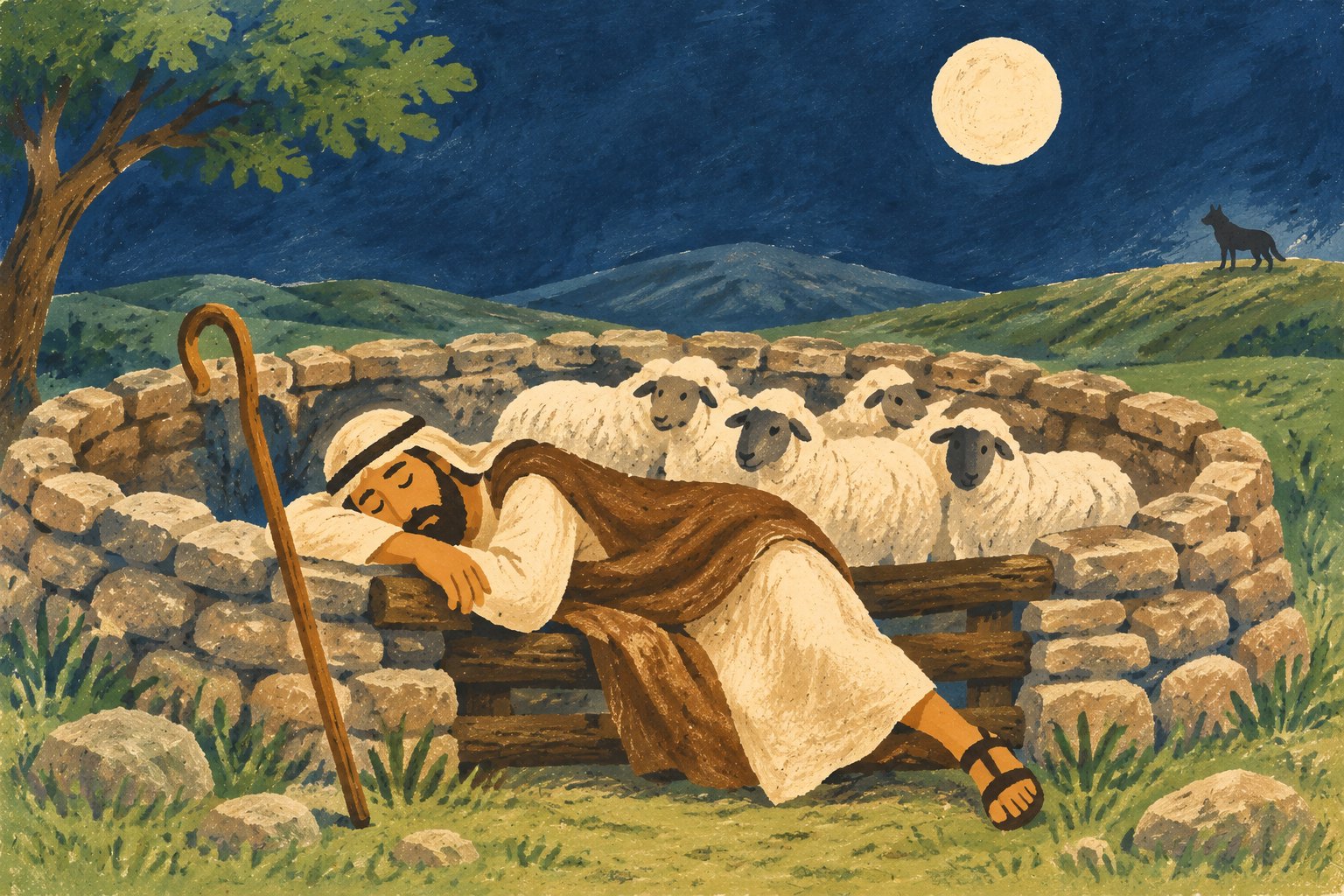
Out in the fields, shepherds would pile up rocks and logs in a half circle, tall enough to keep the wolves out. That left an opening. So at night, the shepherd lay down across the opening and slept there. He was the gate. Nothing got to the sheep without getting past him.
So when Jesus said, “I am the gate” and “I am the good shepherd. The good shepherd lays down his life for the sheep” (John 10:9, 11), people understood the picture. Then, right in the middle of it, he told them why he came:
Life, and life to the full. Eternal life: you can be forgiven and spend eternity with God. And abundant life: a faith and a life here and now that are full, meaningful and significant.
The crowd heard “life to the full” and thought it meant money, freedom from Rome and a better life. When they figured out that’s not what Jesus had in mind, the cheering turned. By Friday, the same city was shouting, “Crucify him!”
Pick a Mood
That week, Joy and I stayed with our six-month-old grandson while his parents and big sister were away. He’s the cutest grandson in the history of the world. I may be biased.
My job was to get up in the middle of the night, hold him while Joy made the bottle, hand him to her, and go back to sleep. It still wore me out.
He has the most beautiful big eyes. One second he’s looking up at you and smiling, and your heart melts. Then he does what Joy calls “the Melick forehead.” He squinches up his forehead, and you know you’re at a crossroads. He’s either about to be the happiest baby in the world, or he’s about to go off. And when he goes off, he goes off. What do you want? I’ll give you anything! And he can’t tell you, because he’s a baby.
My only complaint is that he’s fickle. Just pick a mood, buddy. But he can’t. He’s a baby. He’s supposed to be that way.
Grown-ups are supposed to grow out of it. But that crowd in Jerusalem acted a lot like my grandson. They went from a smile, to a forehead, to a scream, depending on whether they were getting what they wanted.
Here’s a hunch I’ve been chewing on. When soldiers came to arrest Jesus in the garden, Peter pulled out a sword and cut off a man’s ear (John 18:10). I’m not 100 percent sure Peter was only protecting Jesus. I think he may have been protecting the picture of Jesus he’d built in his head, the one where he got what he wanted. He was willing to fight for that picture rather than let it die. Because a cross wasn’t part of Peter’s plan.
A Problem With Our Wanter
So what is “life to the full,” and does your life feel full?
I’m not asking whether you’re busy. I’m asking about your faith. Is it alive? Do you feel like you’re growing? Do you look forward to what God might do in you and through you this week? Will next week’s you be different from this week’s you?
If not, maybe we want the wrong things. I call it a problem with our wanter.
Jesus said, “I am the vine; you are the branches.” Remain in me. Don’t give up. Don’t quit. “Apart from me you can do nothing” (John 15:5). Now, apart from him you can reach your goals. You can get rich. You can fill your life with stuff and vacations and keep yourself busy. But the things that really matter, you can’t get without him. With him, you can become the person he had in mind when he made you.
And what does that full life look like? We spent seven weeks on it in our series on the fruit of the Spirit: “love, joy, peace, forbearance, kindness, goodness, faithfulness, gentleness and self-control” (Galatians 5:22–23). That’s what Christlike looks like.
When I looked at that list for my own life, one word stopped me: faithfulness. Finishing what we start. Making a commitment and sticking to it. I think that may be what I lack, what you lack and what a lot of churches lack.
Sometimes we treat Jesus like a dealer. We show up every six or seven weeks: “Okay, Jesus, I need a fix. What have you got?” Then we take off and do whatever we want, and we wonder why life isn’t going very well. That’s what the crowd wanted. It’s not what Jesus offers.
What Do You Want Most?
Life to the full starts with answering a question: What do you want most, and what are you willing to let go of to get it?
Following Jesus means coming with nothing hidden behind our back. No fine print. No prenup. No golden parachute. “Everything I am belongs to you, Jesus. You tell me who I am. You tell me what to love. You tell me what I’m working for now.”
We sometimes think God is in the conformity business. He’s not. He’s in the transformation business. “Do not conform to the pattern of this world, but be transformed by the renewing of your mind” (Romans 12:2).
Here are three places where our wanter often gets stuck:
- A grudge against God. Things have happened. Some weren’t your fault, some were, and some were a mix. And deep down we feel God owes us, so we hold back until he makes it right. Call a truce.
- Offenses we won’t let go. Jesus taught us to pray, “Forgive us our debts, as we also have forgiven our debtors” (Matthew 6:12). Some of us would rather hang on to an offense than forgive freely.
- Waiting for different circumstances. “Once God gets me out of this, then I’ll grow.” But where you are right now is where God grows you. Not after you get out or through, but right there, in it and under it. And the people around you right now are the ones God has given you to encourage, forgive, love and nudge toward Jesus.
Jesus’ invitation is simple. “Whoever wants to be my disciple must deny themselves and take up their cross daily and follow me” (Luke 9:23). Follow me means don’t follow yourself.
Information Ahead of Time
That gate in the Ozarks had a warning on it, and we drove right through it.
Seven times, Jesus told us who he is. It’s a warning: life without him ends without him. And it’s a promise: you don’t have to reach the end of your life with regrets, having chased the things you thought you wanted, only to find you didn’t want them after all. You can live with purpose, with meaning and with hope, and be part of the light that was lit in Bethlehem.
That’s the information ahead of time. Please don’t drive past it.
Talk It Over
- Have you ever ignored a warning and wished you hadn’t? What happened?
- What did the crowd that day want from Jesus? What do people want from him today?
- Which of the seven “I am” statements means the most to you right now, and why?
- Is your spiritual life full right now? What would “life to the full” look like for you this week?
- Of the three places our wanter gets stuck (a grudge against God, an offense we won’t let go, waiting for different circumstances), which one is closest to home for you?
- Who has God put in your life right now to encourage, forgive, love and nudge toward Jesus?
If You’re Hurting
If you’re holding a grudge against God because of something that happened, you’re not the first. Tell him honestly. He can handle it. And talk with a pastor or a trusted friend. You don’t have to carry it alone.
Father, thank you for telling us who you are ahead of time. Forgive us for wanting so many things more than we want you. Settle our restless souls. Give us the courage to let go, to forgive, to stop waiting, and to follow you right where we are. Make us part of your light in a very dark world. In Jesus’ name, amen.
 Go deeper · Free bookCome and SeeWho Jesus is up close, in the Gospel of JohnRead it free →
 Next short readTwo Sons, One FatherThe oldest family feud, and the God who seesRead it →
Scripture quotations taken from The Holy Bible, New International Version®, NIV®. Copyright © 1973, 1978, 1984, 2011 by Biblica, Inc.™ Used by permission. All rights reserved worldwide.