

An Origin Story
I love a good origin story. Every superhero has one. Every family has one too, usually told at Thanksgiving by the uncle who remembers it a little differently every year.
This is an origin story, not a political one. I have opinions about what you’ll see on the news tonight, like most of us do, but that’s not what this is about. This is about something older and deeper. And if you’ve ever wondered where the deep tension between Arab and Jewish peoples began, it started in one family, with two women, two sons and one father.
Let me be careful here. Any time you talk about whole people groups, you’re speaking in generalities. Not all Arabs are Muslims. Not all Arabs dislike Israel, and not all Jews dislike Arabs. Real people are always more complicated than headlines. But there was a beginning. A time, a place, a decision, a cause and an effect.
And here’s what surprised me: Jews, Christians and Muslims all tell this same story. They disagree about who the hero is. They don’t really disagree about what happened.
The story centers on a man most of us can barely place. His name is Ishmael. Who’s that? And who cares?
You should. Because generations later, his story still shapes the world.
A Promise and a Long Wait
Abraham came from Ur of the Chaldeans, in what is now Iraq. His people worshiped many gods. Then the one true God spoke to him and said, in effect, Follow me. Abraham wasn’t sure about everything yet, but he was sure enough to leave. And that was sure enough for God.
God made Abraham an enormous promise: You’re going to have a son, and through him you’ll become a great nation, with more descendants than you can count (Genesis 15:4–5).
There was one problem. Abraham was already in his seventies, and his wife, Sarah, was past the age of having children. When she later heard the promise, she laughed out loud (Genesis 18:12).
Then years went by. Ten of them. Still no baby.
I have a hard time waiting three days for an Amazon package if it isn’t Prime. Abraham and Sarah waited, and waited, and kept waiting.
Helping God Out
Sarah looked in the mirror and decided it just wasn’t going to happen. So she came up with a plan to help God out.
Sarah gave her Egyptian servant, Hagar, to Abraham, and Hagar became pregnant.
There’s a lot going on here, and most of it is a mess. When we read the Old Testament, we have to separate what is descriptive from what is prescriptive. The Bible tells us what happened. That doesn’t mean it’s telling us to do it. This is one of those. Don’t try this at home. God’s design was always one man and one woman for life.
You can probably guess what happened next. As soon as Hagar knew she was pregnant, she started looking down on Sarah. Ha. I can have a baby, and you can’t. Nasty, personal stuff.
Sarah went straight to Abraham. “You are responsible for the wrong I am suffering” (Genesis 16:5). That word wrong is a strong one. In Hebrew it’s chamas, the same word used for the violence that filled the earth before the flood (Genesis 6:11).
And Abraham? He did what a lot of us men do when things get uncomfortable at home. He stepped back. “Your slave is in your hands. Do with her whatever you think best” (Genesis 16:6). In other words, Not my problem. He had a chance to step in and lead, and he didn’t.
So Sarah mistreated Hagar, badly, and Hagar ran away into the desert, pregnant and alone.
When we get tired of waiting on God, we’re tempted to help him out. It almost never ends well.
The God Who Sees Me
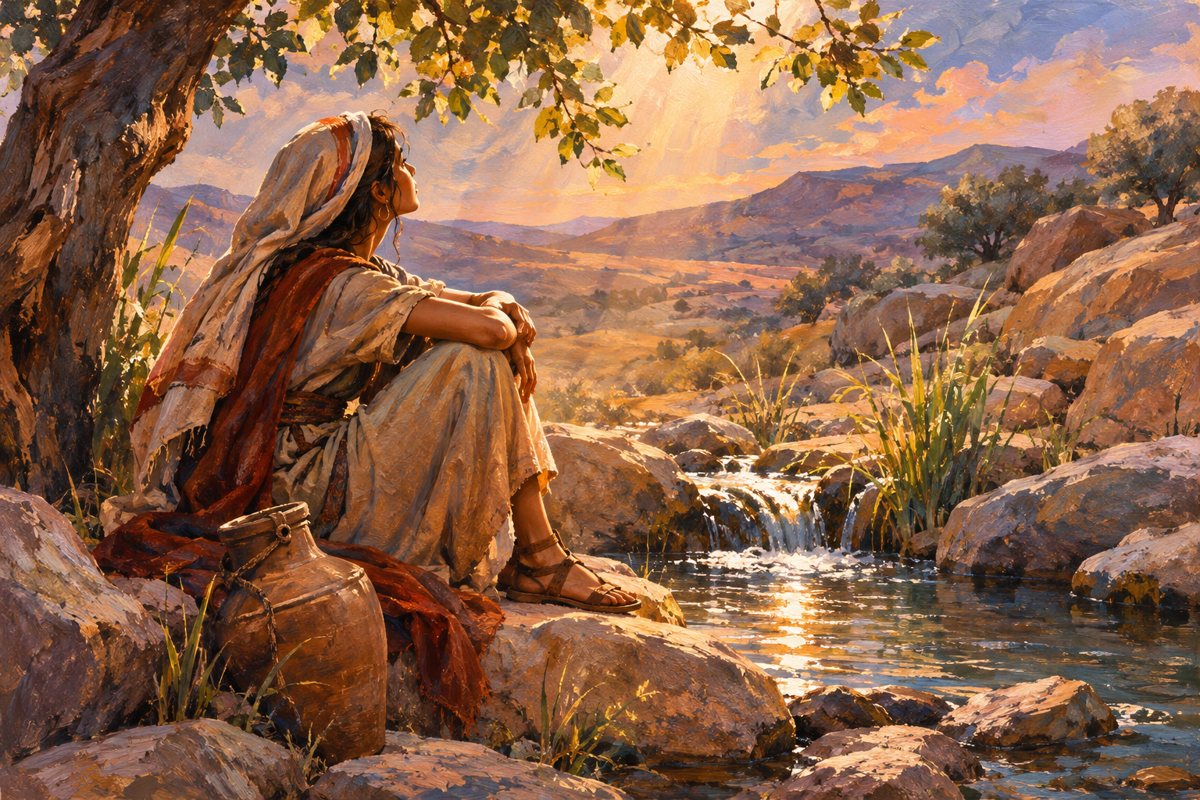
Out in the wilderness, beside a spring on the road to Shur, someone found her. The Bible calls him the angel of the Lord. Many theologians believe that when this figure appears in the Old Testament, it’s God himself, maybe even Jesus before he was born in Bethlehem. Whoever you believe he was, he came looking for a runaway servant nobody else cared about.
“Hagar, slave of Sarai, where have you come from, and where are you going?”
“I’m running away from my mistress.”
He told her to go back. And then he made her a promise. Her son would have so many descendants they couldn’t be counted. She was to name him Ishmael, which means “God hears,” because, the angel said, “the LORD has heard of your misery” (Genesis 16:11).
Then he described the boy she was carrying:
“He will be a wild donkey of a man; his hand will be against everyone and everyone’s hand against him, and he will live in hostility toward all his brothers” (Genesis 16:12).
Now, don’t get King James on me. A wild donkey wasn’t an insult. It meant strong, smart, independent and fierce. When we lived in Arkansas, a neighbor who raised miniature horses kept two miniature donkeys to protect them from coyotes. When her fence went down, those donkeys stayed with my wife and me for months. They were smart, they were funny, and they were ferocious. Ask the dogs I had back then. A donkey will stomp you flat and then stand there and laugh at you.
But the last part of that promise is sobering. Hostility toward his brothers. That’s not just two boys fighting in the back of the minivan on the way to Grandma’s. That’s something much bigger.
And then Hagar did something remarkable. This Egyptian servant, who probably grew up worshiping other gods, gave the Lord a name.
You are the God who sees me. The spring was named for it: Beer Lahai Roi, “the well of the Living One who sees me” (Genesis 16:14).
So Hagar went back. And when Abraham was 86 years old, she gave birth to Ishmael.
The Laughing Baby
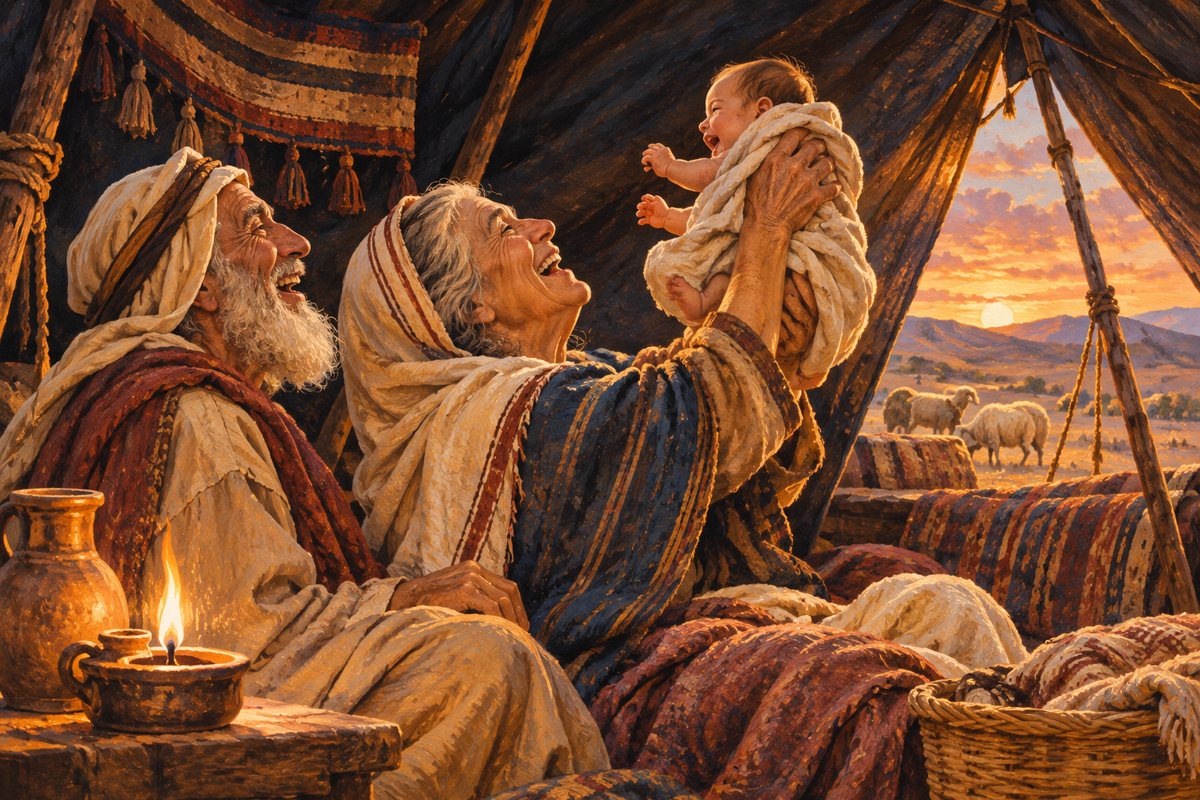
About fourteen years later, God kept his promise. Sarah, now ninety, had a baby boy, and they named him Isaac, which means “he laughs.” The woman who laughed at the promise was now laughing with joy (Genesis 21:6).
From the time God first spoke to Abraham until Isaac was born, twenty-five years had passed.
When Isaac was weaned, probably around two or three years old, Abraham threw a big party. And at that party, Sarah saw Ishmael, now a teenager, mocking the little boy (Genesis 21:9).
That word mocking is more than name-calling. The same word shows up when Potiphar’s wife accused Joseph of making sport of her household (Genesis 39:14), when Lot’s sons-in-law laughed off his warning about Sodom (Genesis 19:14), and when the Philistines dragged blinded Samson out to entertain them (Judges 16:25). It’s contempt. It’s dismissing someone as worthless.
Sarah had seen enough. “Get rid of that slave woman and her son” (Genesis 21:10).
Abraham was heartbroken. He loved his son. But God told him, Let it go. Do what Sarah says. I’ll take care of the boy. I’ll make a nation of him too (Genesis 21:12–13).
Under a Bush in the Desert
So early the next morning Abraham packed some food and a skin of water, put them on Hagar’s shoulder and sent her and Ishmael away.
It didn’t take long. Out in the wilderness of Beersheba, the water ran out. Ishmael was so weak he couldn’t take another step. So Hagar laid her son under a bush and walked off about a bowshot away, because she couldn’t bear to watch him die. And she sat there and sobbed.
Then, for the second time, God spoke to her.
“What is the matter, Hagar? Do not be afraid; God has heard the boy crying” (Genesis 21:17).
God opened her eyes, and she saw a well. Maybe it had been there all along and she couldn’t see it through her tears. Maybe God put it there. Either way, they drank, and they lived.
Ishmael grew up in the desert and became an expert archer. His mother found him an Egyptian wife. He had twelve sons, who became twelve tribal rulers (Genesis 25:16). Years later, he and Isaac buried their father together (Genesis 25:9). One of Ishmael’s daughters even married Isaac’s son Esau (Genesis 28:9). It was a family thing.
A Fork in the Family Road
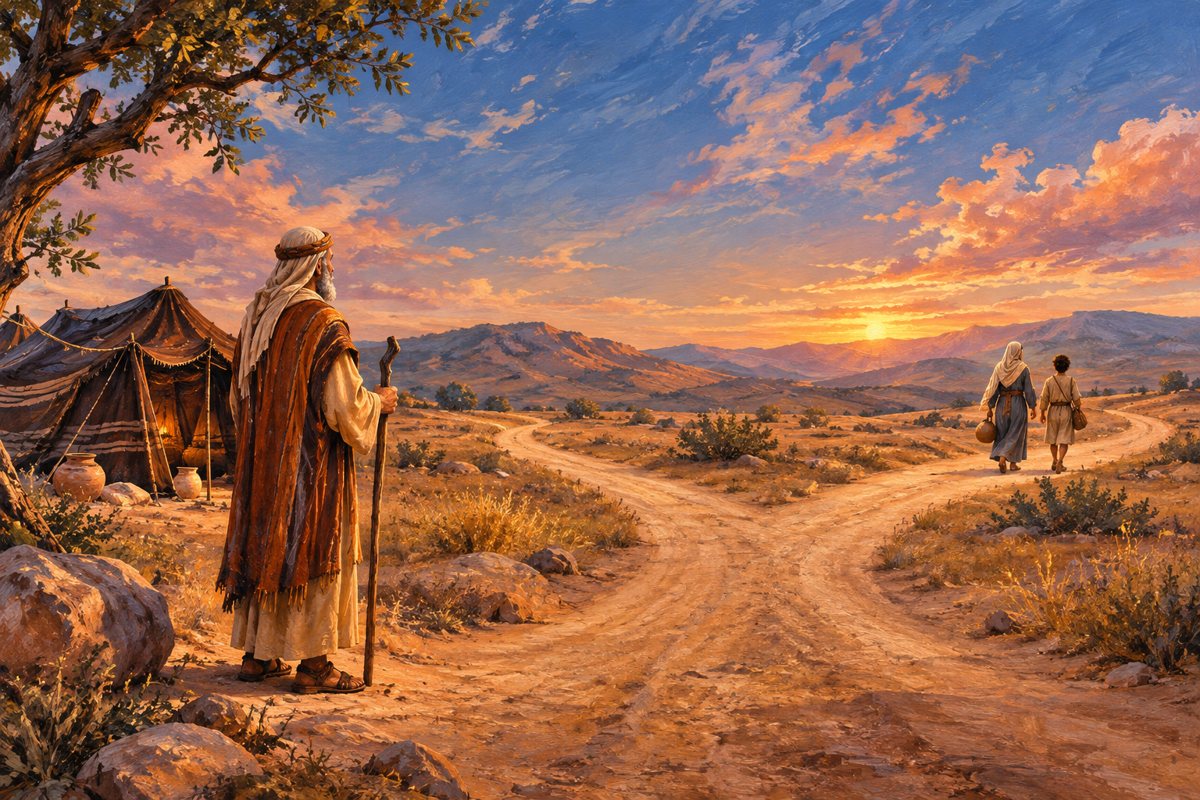
And then Ishmael mostly disappears from the Bible. But his descendants don’t.
The Ishmaelites show up when Joseph’s brothers sell him to a caravan of traders heading for Egypt (Genesis 37:25–28). They show up again in the book of Judges, where the Midianite raiders Gideon fought are also called Ishmaelites (Judges 8:24).
The Jewish people trace their family line through Isaac. Many Arab peoples trace theirs through Ishmael, and Muslim tradition holds that Muhammad was one of his descendants.
One father. Two sons. A fork in the road that sent two families in very different directions, and the hurt has been passed down ever since. Generation after generation. Thousands of years of grief, war, broken families and lost lives, and no lasting peace.
It all started in one tent, with one woman who got tired of waiting on God, and two women who couldn’t get along.
So what does an ancient family feud have to do with you and me? More than you’d think. Here are three things I take from it.
1. God Keeps His Promises, in His Time
God works in miraculous and impossible ways. But sometimes it takes a long time. Abraham waited twenty-five years.
I own a little gun that shoots table salt at houseflies. It’s a blast. (I get no royalties.) The label says, very clearly, Do not shoot at face or eyes. It does not say, Do not shoot your wife in the backside. I found that out the hard way. Sometimes the instructions are clear, there just aren’t enough of them.
Sarah had a clear promise. What she didn’t have was a timeline. So she filled in the gap herself.
We do the same thing. God’s promise is way over there, and we’re stuck over here with detours and speed bumps: our health, our kids, our jobs, the world. We start to wonder, God, where are you? Time’s running out. And then we decide God needs a little help.
God is more interested in growing our faith than in giving us what we want on our schedule. Don’t let impatience shipwreck your faithfulness.
God is more interested in making us faithful than in giving us what we want, when we want it.
2. Little Things Become Big Things
When I was working on this message, I talked it over with my wife, like I always do. She stopped me. “It sounds like you’re being negative about women.” That’s fair, and it’s not my heart. This isn’t about women. You could put two men’s names in this story and it would play out exactly the same way.
It reminds me of something I told my youngest son about getting feedback from his boss. When someone shows you, with details, what went wrong, they’re not attacking you. They’re being descriptive. So don’t get defensive. Learn and grow.
Here’s the description: two people who wouldn’t forgive. Who held grudges. Who chose bitterness. Who wouldn’t make peace. And look at what came from it.
When we hold on to bitterness and unforgiveness, the people closest to us suffer. If you spend any time around kids, it’s not hard to tell which parents are angry, bitter and unforgiving. The kids see it, they absorb it, and they become it.
Sometimes what you’re carrying isn’t your fault. Some of the bravest people I know are doing the hard work of facing trauma that happened to them, so they don’t pass it on to the people who come after them.
You may not be the father or mother of nations. But you are shaping the people around you, starting with the ones closest to you and working out from there. Paul put it this way: “If it is possible, as far as it depends on you, live at peace with everyone” (Romans 12:18).
When we refuse to make peace, the people closest to us pay for it.
3. Jesus Is the God Who Sees
The first two points are heavy. This one makes them bearable.
Hagar was a foreign servant with no say in her own life. She was used, mistreated and thrown out. Twice she ended up alone in the desert, sure no one cared whether she lived or died. And twice God came looking for her.
She mattered to him, even when she didn’t think she mattered to anyone.
That’s the God we serve. He proved it by sending Jesus, born a baby, who lived a sinless life, took our sin on himself, died on the cross and rose again, defeating sin, Satan and death once and for all. The Bible calls him Immanuel, “God with us.” But I love the name Hagar gave him in the desert:
You are the God who sees me.
If you feel lost, unseen, used or thrown out, he sees you. He hears you. And he’s already looking for you.
Talk It Over
- Where are you waiting on a promise from God right now? Where are you tempted to “help him out”?
- What’s the difference between a passage that’s descriptive and one that’s prescriptive? Why does it matter when we read stories like this one?
- Is there a grudge or bitterness you’re carrying that the people closest to you are paying for?
- Who in your family line handed you something good? Something hard? What do you want to hand down?
- When have you felt unseen? What does it mean to you that God is “the God who sees me”?
 Next short readSlave to FreedomAmerica just turned 250. Here’s what our freedom is actually forRead it →
Scripture quotations taken from The Holy Bible, New International Version®, NIV®. Copyright © 1973, 1978, 1984, 2011 by Biblica, Inc.™ Used by permission. All rights reserved worldwide.