

What Is Your Freedom For?
America just turned 250. That sounds old until you do the math. Stack three 85-year-olds on top of each other and you’ve got the whole history of the United States. Babylon lasted about 1,300 years before it fell the first time. Rome lasted about 1,500. We’re just getting started.
And I’m grateful. I live in a country where I can open a Bible, say the name of Jesus out loud and gather with other believers without anyone kicking in the door. That freedom wasn’t free. People bled for it. It’s worth thanking God for, and it’s worth protecting.
But I want to ask a question most Christians never ask on the Fourth of July: What is your freedom for?
Because the Bible’s answer is going to make you uncomfortable.
The Word Nobody Wants
I’m going to use a word that should make you flinch. It made people flinch in the first service. It’s slave.
Let me be clear. The slavery in American history was sin. It was unspeakable, it should never be repeated, and it still exists around the world today. That’s not what I’m talking about, and it’s not what the apostle Paul was talking about either.
But Paul uses the word on purpose, and he won’t let us skip it.
Set free... and become slaves. In the same sentence. Paul isn’t confused. He’s telling you something about freedom that America can’t teach you.
Free, and Owned Anyway
Here’s where Paul takes us into the deep water.
The first half sounds like a bumper sticker. I’m free. I belong to no one. Every American nods along. Then Paul finishes the sentence, and the nodding stops.
He had every right to live for himself. He chose not to. Not because anyone forced him, but because something bigger was at stake: people’s eternity.
Peter says the same thing.
And Paul says it again to the Galatians.
Freedom in Christ isn’t the right to do whatever you want. It’s the power to finally do what you were made for.
The Doorpost
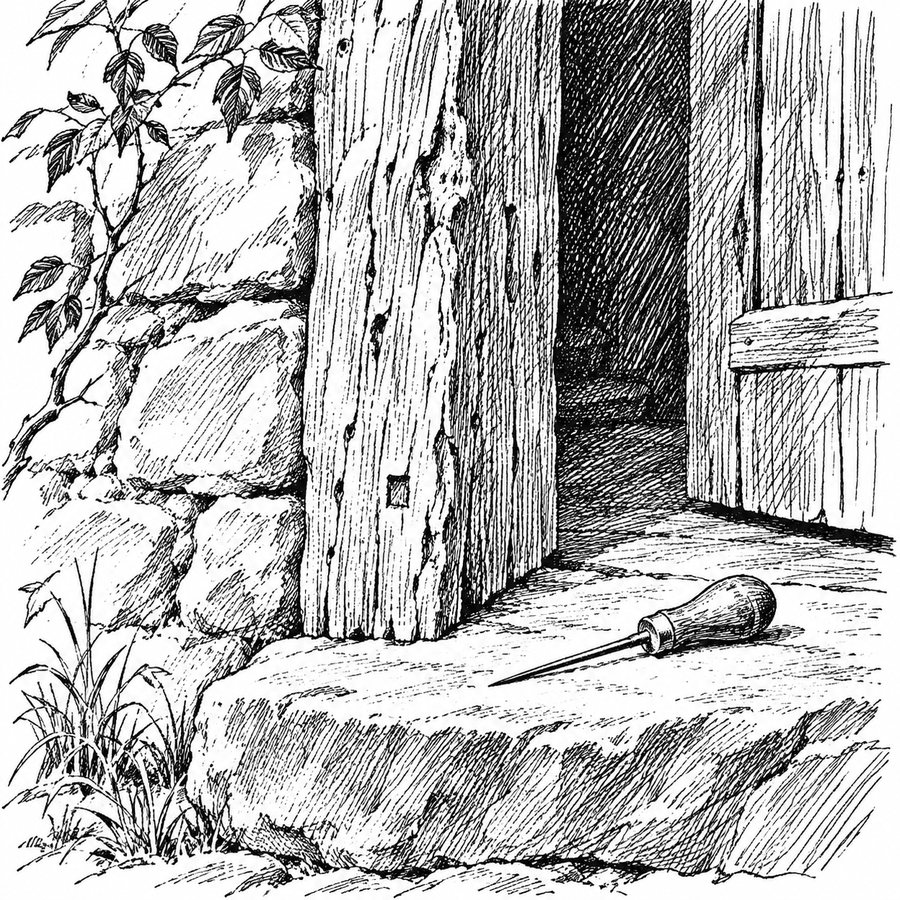
God’s law gave a picture of this more than a thousand years before Paul. In Israel, a person who couldn’t pay a debt could work it off as a servant. After six years, they went free. But sometimes the master had been so good to them that they didn’t want to leave.
Read that again. A free person, standing at the door, choosing to belong to someone for life. Not out of debt. Not out of fear. Out of love.
That’s the Christian life. Jesus paid a debt you could never pay. You’re free. And then you walk to the doorpost and say, I don’t want to go. I’m yours. My time, my money, my thoughts, my relationships, my opinions. Under new ownership.
If that sounds extreme, look at Jesus.
If the Son of God took the very nature of a servant, what exactly are we holding on to?
“Do You Know Who That Guy Is?”
A few years ago I was standing in line at O’Reilly’s, the auto parts store. There’s always a line. The man in front of me was in greasy jeans and a T-shirt, asking the two guys behind the counter some very basic questions. Where’s the oil filter? What’s the difference between oil and transmission fluid?
The two clerks were elbowing each other and snickering. When he walked out, one of them said, “That has to be the dumbest guy in the world.”
I knew him. He was the leading heart surgeon in the Mid-South.
So I asked, “Do you know who that guy is?” And then I told them: if you ever wake up on an operating table, the “dumbest guy in the world” is the one who put you back together.
One question changed everything.
Christians, we have a bad habit of being those guys behind the counter. We take the moral high ground and assume it comes with intellectual superiority. We look down on a world that’s just trying to figure things out. We know a little about one thing and nothing about a dozen others, and the arrogance that comes with it does real damage to the gospel.
Before you write someone off, ask the question: Do you know who they are? Do you know why they think the way they do? Do you even care to find out?
Meet Them Where They Are, Without Moving the Truth
Paul keeps going.
Paul didn’t compromise the truth. Not once. But he refused to make people climb over his preferences to get to Jesus.
Some people come to faith out of heavy religion: rules, rituals and a God who feels distant. Paul didn’t mock that background. He started there and pointed to Jesus. Some people come with no religious background at all. They’ve pieced together a worldview from conversations, the internet and whatever made sense at the time. Paul didn’t sneer at them either. He built a bridge.
I grew up in a church that preached the Bible, believed in heaven and hell and called people to follow Jesus as Savior and Lord. That’s a blessing. It doesn’t make me better than anyone. It makes me fortunate. If you had that too, you don’t get to look down on the people who didn’t.
And to the weak, the slow, the ones who should know better but don’t? Paul says, I’ll be patient as long as it takes. Why? Because eternity hangs in the balance.
Now the Part That Lands Too Close
This is where it gets personal.
Everything. Not “most things.” Not “unless the other party is winning.”
Do you know what I hear most from Christians when I bring up America’s 250th birthday? Grumbling. Complaining. Everything that’s wrong with the country and how it ought to be better. Let me tell you about the Republicans. Let me tell you about the Democrats.
Nothing pushes the world away from Jesus faster than people who should be the most hopeful people on earth acting like the most cynical.
You are not a mature Christian if you’re full of grumbling and complaining. Neither am I.
If what’s wrong, what you’re owed and how things should be different are what fill your mind most of the day, your heart is far from God. Grumbling is emotional: this is how I feel. Arguing is intellectual: this is what I think. They travel together, and ultimately both are aimed at God: You haven’t given me the life, the job, the spouse, the country I deserve.
Is our generation warped? Sure. Is it crooked? Absolutely. Paul would agree with every complaint you’ve got. And then he’d say: So is everybody else’s. Now stop.
You can light a candle or you can curse the darkness. You can’t do both. Paul says the way you shine “like stars in the sky” isn’t by winning the argument. It’s by holding firmly to the word of life and refusing to grumble.
Can you still vote? Yes. Can you stand for what’s right? Of course. But you can stand for the truth without becoming a professional complainer, and you can be part of the solution that brings people together instead of one more voice tearing them apart.
Strength That Looks Like Weakness
Paul had a thorn in his flesh, something painful he begged God three times to take away. Three times God said no.
The world isn’t won by Christians who shout down from a pedestal. It’s won when people see our weakness and watch Jesus hold us up anyway. That’s not the strength we usually want. It’s the only kind that has ever drawn anyone to the cross.
What Your Freedom Is For
So here’s the point, on the 250th birthday of the land of the free and the home of the brave.
You live in a country that gives you the right to give your rights back to Jesus.
You don’t have to fear for your life to follow him. Don’t waste that. Walk to the doorpost. Give him your time, your money, your opinions and your right to complain. Become a slave to righteousness, to Jesus and to the people he’s trying to reach, “so that by all possible means” you might win some.
Start this week. Pick one place you usually grumble: the drive to work, the group text, the news, your own kitchen. Give that right up. Lay it on the altar.
Then go find someone you’ve written off, and ask the question that changes everything: Do you know who they are?
Father, thank you for the freedom we have. Show us where we’ve held on to our rights instead of giving them to you. Take our grumbling and our arguing. We lay them on the altar. Make us servants of Jesus, focused on one question: Who are they, and how can I show them Jesus? In Jesus’ name, amen.
Talk It Over
- What does “freedom” mean to most Americans? How is Paul’s idea of freedom different?
- Read Exodus 21:5–6. What would it look like for you to “walk to the doorpost” with Jesus?
- Who in your life have you written off without knowing their story?
- Where do you grumble most? What would change if you gave up that right this week?
- How can you stand for the truth without becoming a professional complainer?
 Next short readStrong Man, Soft HeartWhat kept David pointed toward God, and can keep you there tooRead it →
Scripture quotations taken from The Holy Bible, New International Version®, NIV®. Copyright © 1973, 1978, 1984, 2011 by Biblica, Inc.™ Used by permission. All rights reserved worldwide.