
The Times I Blew It
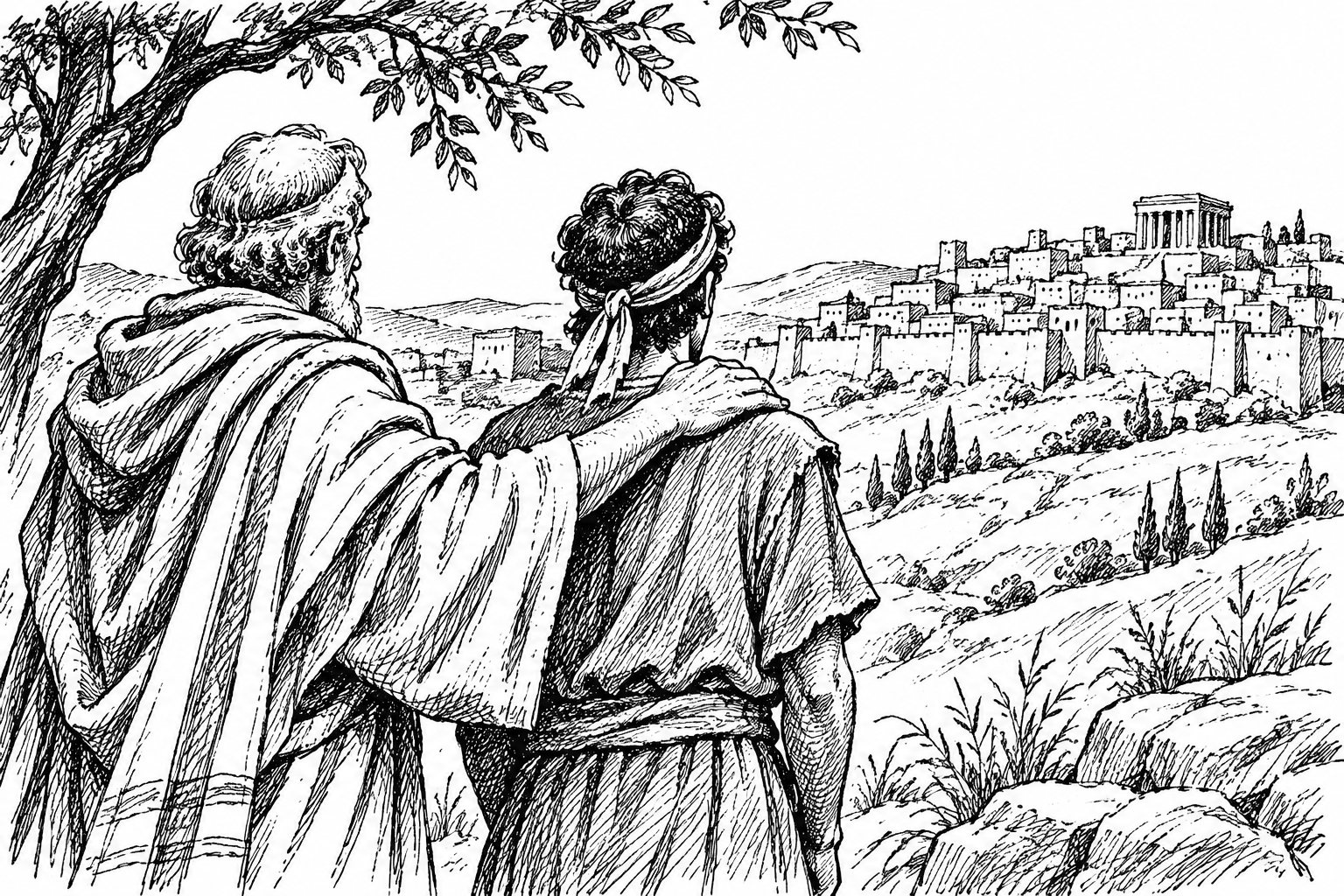
When I think about being a dad, I think about the times I blew it.
There were a couple of times with my boys that stand out in my mind. Probably more than a couple, if you ask them. Big moments. Important conversations. Decisions that mattered. And right when it counted, I blew it.
My oldest son is a dad now, and my younger son probably will be someday. One of the best gifts I can give them is to sit down and say, “Remember those times I blew it?” Then name them, specifically. “I’m sorry. I never meant to blow it, but I did. Here’s how, and here’s what I want you to do differently as a dad.”
Being a dad is hard. Being a man of God is hard. Being a person of God is hard. It keeps us humble, and it keeps us dependent.
Today I want to talk about a man who was a great king, not a great father and, as a husband, let’s say it varied case by case. And somehow God still called him a man after his own heart.
I’m talking to the men here, because this started as a Father’s Day message. But ladies, this is 100 percent for you too.
I want us to be strong: people of principle and character, with backbone and grit, who stand up for those who can’t stand up for themselves. And I want us to have soft hearts, overflowing with compassion and grace. Those two things can live in the same person.
Saul Looked the Part
Here’s a quick Bible lesson.
Before David, Israel had a king named Saul. God never wanted Israel to have a king at all. But the people said, in so many words, “The cool kids have a king. The other nations have a king. We look kind of dumb without one.” And God said, “All right. You want one? Pick one.”
So they picked a king the way people usually do: on looks, on how well he talked, on what would play with the crowd. Saul started out okay. But he didn’t have a heart after God.
The defining moment came in a battle against the Amalekites. God told Saul exactly what to do, and Saul said, “Got it.” But he didn’t got it. He decided to help God out a little. Maybe God doesn’t really mean everything he said. Maybe he means most of it. Maybe I can adjust the command so it works for both of us. So Saul kept the best of the plunder and spared the enemy king (1 Samuel 15).
Maybe you’ve been there. I know I have.
And God said, “Enough.”
A Man After God’s Own Heart
When God went looking for Saul’s replacement, he sent the prophet Samuel to a man named Jesse. Jesse lined up his sons, the good-looking, impressive ones, and Samuel went down the line. Not that one. Not that one. Not that one.
“Do you have any other sons?”
“Well, there’s the youngest. He’s out with the sheep.”
Any youngest children here ever feel like the forgotten one? (I’m the oldest, so I wouldn’t know.) David was way out in the pasture, the most unlikely son of Jesse. And he’s the one God chose (1 Samuel 16). Centuries later, the apostle Paul summed it up this way:
Saul did what he wanted and blamed it on God. David wanted what God wanted, even more than what he wanted for himself. He was willing to serve and didn’t demand to be served. That’s what it means to have a heart after God: not a perfect life, but a heart pointed in a Godward direction.
Life is never a straight line. It zigs and it zags. It takes you up and it takes you down. But every life has a trajectory. So here’s my question: Is the trajectory of your heart pointed toward the Lord?
The Bible also says David led God’s people “with integrity of heart” (Psalm 78:72). Integrity means being the same person when no one is watching as you are when everyone is. I had a dad of integrity. Seeing it lived out in front of me is how I learned what it looks like. Some of you didn’t have that. But you can still learn it from Scripture and from the people God puts in your life.
We Know the Rest of the Story
Have you ever heard someone praised, and you think, I know the rest of the story? We know the rest of David’s story. More of the Old Testament is about David than almost anyone else. We know the good, the bad and the ugly.
As a teenager, David showed up at the front lines to check on his brothers and heard a giant named Goliath cursing the God of Israel. Everyone else was scared to death. David said, “I’ve fought lions and bears, and God protected me every time. I’ll fight him.” He turned down the king’s armor, grabbed a sling, ran down the hill and sank a stone in Goliath’s head (1 Samuel 17).
Suddenly David was famous. People sang songs about him. He married the king’s daughter. And he found a best friend, Saul’s son Jonathan (1 Samuel 18). David learned early that you can’t follow God alone. Don’t settle for whoever happens to want to hang out. Look for a running partner who shares your values, holds you accountable and is committed to you.
Then Saul got jealous, and David’s life fell apart. In a matter of days, he lost his job. His wife helped him escape, then told her father David had threatened her (1 Samuel 19). He was cut off from his best friend. He lost his dignity, hiding in caves with a band of outlaws (1 Samuel 22). Can anybody relate to losing it all at once?
But he never turned his back on God.
Eventually David became king. He won battles. He got rich and famous. And then one evening he was walking on his palace roof and saw a woman bathing. The Bible says she was very beautiful (2 Samuel 11:2). Instead of looking away, the way a man of God would, he looked. Job said, “I made a covenant with my eyes not to look lustfully at a young woman” (Job 31:1). David didn’t. His look became a linger. His linger became a desire. His desire became an action. He had an affair, and then he covered it up with a murder. The consequences cost him a child and a lot of respect (2 Samuel 11–12).
His family was a mess too. One of his sons led a coup, tried to kill him and nearly took the kingdom. Rather than fight his own son, David fled Jerusalem. That son died in battle, and David’s heart broke (2 Samuel 15–18).
Failure is an event, not a person.
So how could God call this man a man after his own heart? Because when David sinned, he did what God wanted next: he owned it. He confessed it. He got up, brushed himself off and said, “That was awful. I’m going to live a different way.” Through all the ups and downs, his heart kept pointing back toward God.
That gives me great hope. And it challenges me to the core.
Drop Another Ball
How many of you play golf? I play golf. I don’t play well, but I play.
Last week I was out with some friends from church, and through 16 holes I had one of my best rounds in a long time. I’m not telling you the score. It’s none of your business. It wasn’t great for some people, but for me it was really good.
On 17, a par five, I teed it up thinking, I’m going to smoke this drive. I hit it straight right into the trees. One of my buddies helped me look. We couldn’t find it, so we offered it to the tree gods and moved on.
I dropped another ball, pulled out a two-iron and decided to take it all the way to the green. I hit a beautiful fade, which I meant to do. What I didn’t mean to do was fade it clear across the fairway into the trees on the other side. Two lost balls on one hole.
The next shot, I was going to stick it on the green and save the hole. Instead I hit a pitch about 35 yards. I finally made it to the green and walked off with a triple bogey. I was so mad that I double-bogeyed 18 without even knowing what I was doing. I threw the whole round away.
A lot of the spiritual life is like golf. We have good intentions. We want to hit the fairway. But sometimes we tee it up and hit it into the woods. Then we have to decide what to do.
Some people break their clubs, throw them in the lake and say, “I’m never playing again.” Spiritually, that’s saying, I failed, so I quit.
Or you can drop another ball and try again. And if that one goes in the woods, you drop another. You keep trying until you get it right. That’s what a man of God does. When you fail, you dust yourself off, confess your sin and keep your heart pointed toward the Lord.
Three Things That Kept David Pointed True North
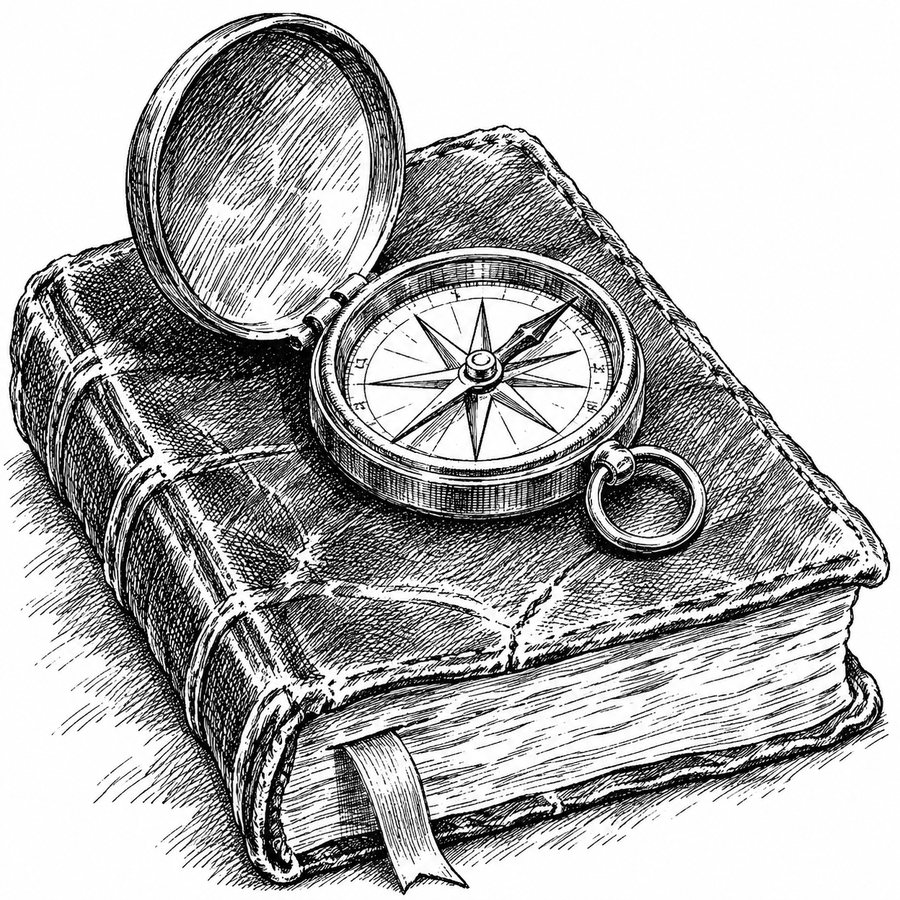
David made a commitment early in his life: I am going to be a man of God. Period. Three things kept the compass of his heart pointed true north.
1. He loved God. David wrote:
Notice what David says first: “You, God, are my God.” Not I am my God. Not my family, my job, my hobbies or my money. You are my God. And he says it from “a dry and parched land,” through the hardest seasons of his life.
There’s a difference between being a Christian man and being a man who really follows Christ. Lots of men say they’re Christians. Following Christ means pursuing him and putting everything else behind him: my career, my family (as much as I love them), my hobbies, my bank account and my legacy. God, you are my God.
2. He loved God’s Word. Any relationship takes communication. Guys, you’ve probably heard that more than you’d like. But you can’t have a relationship with someone you never talk to, and you can’t guess what God is thinking. He has told us who he is and how to live in his Word.
Even when the path runs through the desert. Through losing your job, through divorce, through losing your dignity or a friendship, through family dysfunction, he’ll make your paths straight. And your life will be built on a foundation that never shifts.
3. He loved God’s people. I’m not just saying this because I’m a pastor. David said it, not me:
David didn’t say, “I rejoiced with those who said, ‘Let’s sleep in and go next week.’” He didn’t say, “I’m a believer, but I don’t really need to go.” He knew something powerful happens when God’s people meet together. When he pulled away from that, he wasn’t the man God wanted him to be.
Your walk with God is personal. But it was never meant to be private.
Finishing Well
At the end of his life, David finished well. Before he died, he did four things.
First, he reflected without regret. I’m in my fifties now, and I’m starting to get it. I wake up some mornings wondering what I did yesterday to hurt myself, then realize I didn’t do anything. Sometimes you just hurt. I don’t think the end is near, but I can see it out there. When you’re 25 you think you’ll live forever. You won’t. The last thing you want at the end of your life is to look back with regret.
The one thing David wanted most was to build a temple for God. And God told him no, because David had been a man of war who had shed a lot of blood (1 Chronicles 28:3). David could have let that become regret. Instead, he thanked God for everything God did let him do, and he got ready for his son Solomon to do the rest.
Second, he blessed his son. Dads, this is so important. David pulled Solomon close and, in a sense, said, I want you to be a better man than me. More obedient. More blessed. Better in every way. Here are his actual words:
You saw the good, Solomon, and you saw the bad. But you knew my heart. When I was wrong, I owned it. When I was right, I thanked God. Now you serve him too.
Third, he prayed. He thanked God for a great life and for being faithful to him even when he wasn’t faithful back. Then he prayed for his people, because he couldn’t lead them anymore (1 Chronicles 29:10–19). Read that prayer for yourself. It’s beautiful.
Fourth, he worshiped with God’s people. Don’t believe me? Read it. At the very end of his life, David led the whole assembly in praising God (1 Chronicles 29:20). What we do together on Sundays isn’t just important. It’s necessary.
His body decayed. That sounds morbid, but Paul was making a point: Jesus died and rose again, and his body never saw decay. David served his generation well. Then he handed it off to the One who never dies.
You Never Drift Close to God
So here’s my question as we finish: What’s the one thing you’d ask God for?
I want that kind of heart. A strong man with a soft heart, pointed toward God.
And here’s the thing. You never end up close to God by accident. Ever. There’s no intimacy with God without intentionality on your part.
But you don’t have to do it all at once. Just put yourself in motion. Put some things in your life that let you collide with the Holy Spirit: time with God, time in his Word and time with his people. As you do, God will change you into something that surprises you, is useful for his purposes and is great for the people around you.
When you hit one into the woods, drop another ball. Keep teeing it up.
Father, thank you for the example of David. Not a perfect man, but he kept teeing it up. Boy, did he hit it into the woods more than once. But he owned his mistakes, confessed them to you, checked his heart and recommitted to wanting what you want more than what he wanted. That’s what I want. That’s what I want for my friends. Thank you for being the perfect Father. Bless every dad and every parent reading this. Give them endurance, patience and wisdom, and the words to speak life, hope and truth to their kids. Protect their hearts as they point them toward you. Keep them from distraction, deception and destruction. We ask with confidence, not because of who we are, but because of who Jesus is. In his name, amen.
Talk It Over
With a friend, your City Group or over coffee:
- Who in your life showed you what it looks like to be a strong person with a soft heart?
- Saul tried to adjust God’s command to “work for both of us.” Where are you tempted to do the same?
- “Failure is an event, not a person.” Do you believe that about yourself? About someone else?
- When you hit one into the woods spiritually, are you more likely to break your clubs or drop another ball?
- Which of David’s three loves (God, God’s Word or God’s people) is strongest in your life right now? Which needs work?
- If you’re a parent, what would you want to say to your kids the way David spoke to Solomon?
 Next short readIdentity Politics: One Nation Under BabylonWhen how we vote becomes who we areRead it →
Scripture quotations taken from The Holy Bible, New International Version®, NIV®. Copyright © 1973, 1978, 1984, 2011 by Biblica, Inc.™ Used by permission. All rights reserved worldwide.