
“There Are Just Too Many Rules”
Have you ever heard someone say, “I’d like to know more about Christianity, but there are just too many rules”?
I hear it a lot. And it usually comes from one of two kinds of people.
The first never grew up in church. One day they realize, I think this is what I want. Now what do I have to do? Fair question.
The second is someone like me, who grew up in church, where Christianity and religion were mixed together so well that it was hard to tell where one ended and the other began.
Here’s the difference. Religion is man-made. Christianity is a relationship with Jesus Christ.
Wherever you’re coming from, I hope you find freedom today.
No one is made right with God by following the rules. For two reasons: you can’t keep them all, and even if you kept almost all of them, it still wouldn’t impress God.
A Faith That’s Allowed to Grow Up
A lot of us were told about God the way we were told about Santa Claus. As we grew up, our understanding of Santa grew up too. But for many people, their understanding of God never did. It stayed in the childhood stage, buried under traditions and rules.
A faith that isn’t allowed to grow up won’t hold up.
And a faith that’s never been tested can’t be trusted. Some people “deconstruct” their faith. That isn’t terrible, as long as you do it in a safe place and let God rebuild. But too many people sense something’s wrong, can’t put their finger on it, and walk away for good.
How the Rules Piled Up
When the Bible says “the Law and the Prophets,” it means the Old Testament. The first five books hold God’s law, and the Jewish teachers later counted 613 commandments in them.
But people didn’t leave God’s law alone. Religious leaders looked at their congregations and thought, They’ll never keep God’s law, so let’s build a fence around it. They added rules to protect the rules. Over the centuries those traditions grew and grew, until they were finally written down in the Mishnah. The Sabbath alone came with thirty-nine categories of forbidden work.
Jesus never intended all that. People did.
And before we shake our heads at them, every church tradition and denomination comes with its own rules and sub-rules, where the biblical and the cultural are blended together. Ask too many questions, and someone may tell you to stop asking, because when you drill down, a lot of it isn’t in Scripture. What may start innocently turns into control.
That’s where the Pharisees were. They built a system to micromanage people’s lives and judge them by things Jesus never cared about.
The Toilet Paper Hearing
A hypocrite says one thing and does another.
Last night my wife walked into the bathroom, and I heard the call every married person knows: “Somebody didn’t put a new roll of toilet paper on!” There are two of us in the house. I wonder who it could be.
She came out sweetly, with a point to make. “I’m upset for two reasons.” (When she has two reasons, she’s upset.) “First, sometimes you don’t put the new roll on. Second, sometimes when you do get one out, you leave it on the counter.”
Guilty. Probably guilty.
But in my head I was thinking, I know you’ve done the same thing. I didn’t say it. That would not have been constructive.
People could see the same thing in the Pharisees. They’d hop up on any stump to tell you how bad you were, and everyone knew they were doing the same things.
Clean the Inside
Don’t miss what Jesus said. This is the key to your freedom: First clean the inside, and the outside will be clean too.
When the inside is right, you don’t need a church police force micromanaging your behavior, your kids or your social media. Religion focuses on the outside: rules and self-righteousness. A relationship with Jesus starts on the inside, with love.
I was at a training with a room full of first responders, and one of them let a bad word slip. Everyone turned and looked at me like he’d just earned detention in heaven. They’d been introduced to a version of God who is mostly concerned with catching you.
Hand me a Bible and your pet peeve, give me some time, and I can probably find a verse to back up your bias. That’s not what we’re doing. We want to know what Jesus intended.
What the Law Was For
God’s law isn’t bad. It was inspired by God and written down by people, and it’s still good for us. It shows us God’s nature and character. It teaches us the history that leads to Jesus. It gives us heroes like Joseph, Moses, David and Daniel.
But the law had a purpose. It shows us that God is perfectly holy, and it shows us that we can’t measure up. That’s a relief: you’ll never be good enough on your own. It’s also stressful, because you’ll never be good enough on your own.
That tension was meant to drive us to a solution. Humans added more rules, and people were left frustrated and hopeless.
David found the answer, even in Old Testament times. He broke some of God’s biggest laws. He was an adulterer and a murderer. He was also a warrior, a poet and a servant of God, and he wasn’t defined by his worst mistakes.
The boundary lines have fallen for me in pleasant places. When your heart is right with God, his boundaries don’t feel like a cage. They feel like home.
Choosing Jesus Is Choosing Freedom
So how is a person made right with God?
Confess your sin. Admit you can’t measure up. Believe that Jesus is God’s Son, fully God and fully man, that he lived a perfect life, died a death he didn’t deserve on the cross for your sin and mine, and rose again three days later to defeat sin, Satan and death. Then tell him, I want to follow you.
You don’t have to say it the way I said it. Just mean it.
When you choose Jesus, you choose freedom. He didn’t come to abolish the Law and the Prophets but to fulfill them (Matthew 5:17). And he still says, “Come to me, all you who are weary and burdened, and I will give you rest” (Matthew 11:28). If you’re a little rough around the edges, if you don’t think you’re the kind of person who belongs in church, you’re exactly who he’s inviting.
Jesus’ Two Rules
So what do you have to do?
An expert in the law asked Jesus to sum it up.
Not six hundred. Two.
So from here on, every choice comes back to two questions:
Is this helping me love God?
Is this helping me love my neighbor?
That’s why I keep talking about forgiveness, even when some of you are tired of hearing it. Not because there’s a rule. Because almost nothing shows love for God and a right view of people like forgiving does.
That’s why we give. Your treasure and your heart are connected (Matthew 6:21). Giving shows what you love, and it lets others experience what you’ve been blessed with.
And all of God’s teaching about marriage, sex and morality that people get so upset about? It comes back to the same two questions. It’s not “do it or else.” It’s the path to the freedom you find in loving Jesus and loving people.
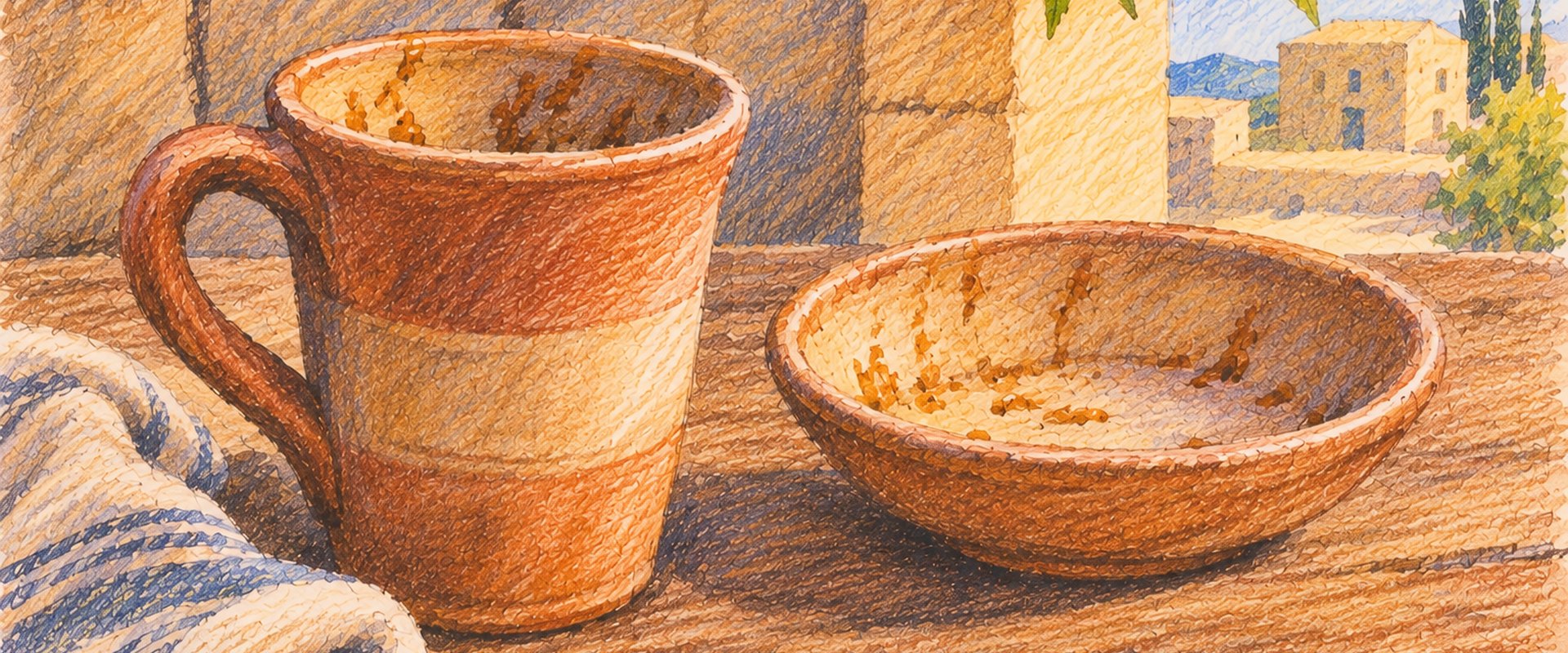
Clean the inside of the cup. The outside will follow.
Talk It Over
- Did you grow up with “too many rules,” or with no spiritual tradition at all? How has that shaped the way you see God?
- What’s one tradition you were taught as if it were from the Bible?
- “A faith that isn’t allowed to grow up won’t hold up.” What questions have you been afraid to ask?
- What does it look like to clean the inside of the cup first?
- Why do you think God’s boundaries feel like a cage to some people and like “pleasant places” to others?
- Pick a decision you’re facing. Is it helping you love God? Is it helping you love your neighbor?
 Next in the seriesWhat Does It Mean to Be Born Again?Saved from What? · Ever Ask Why?Read it →
 Free · Short readsMore articles from Pastor RickSunday messages you can read in about 15 minutesSee them all →
 Capitol City Store · Everything is freeBooks, Bible studies, kids’ comics and short readsDozens of short reads like this one, plus free books, City Group studies, sermon notes, and kids’ comics and games. Read on your phone, print or share with a friend.Explore the store →
© 2026 Rick Melick. All rights reserved. Free to read and share for personal use. Not for resale.
Scripture quotations taken from The Holy Bible, New International Version®, NIV®. Copyright © 1973, 1978, 1984, 2011 by Biblica, Inc.™ Used by permission. All rights reserved worldwide.