

Back to the Basics
My wife and I spent a week with our granddaughter, who’s almost two. (If you think you’ll never be one of those grandparents who talks about their grandkids all the time, just wait.)
A couple of those days, it was just the two of us. I’ll admit, I was a little nervous. A two-year-old’s whole world revolves around three things: potty training, nap time and food. Mess up any one of them and the world stops. (We also watched a certain animated movie about a snow queen. I’d been a conscientious objector for years. I’m not better for it, but I am more informed.)
Her potty-training setup amazed me. A knee-high toilet with a battery-powered flush that sounds like it’s flushing the whole world away. And next to it, a little instruction book. My mom never had resources like that. She just figured it would work itself out.
Sometimes it’s good to go back to the basics. So that’s what we’re doing today: one of the most basic truths in the Bible, and one we often overlook. The difference between the old covenant and the new covenant.
Covenant isn’t a boring word. It simply means agreement. And at the Last Supper, Jesus announced a brand-new one.
The Passover meal celebrated God rescuing Israel from Egypt. That night, Jesus was saying, in effect, This meal will never mean the same thing again, because of what you’re about to see me do.
The Old Agreement
The old covenant was built around a sacrificial system: blood sacrifices, temporary atonement and a law no one could keep perfectly. In part, it showed God’s people that they couldn’t make themselves right with God. They needed someone to bridge the gap. Paul says the law was our guardian until Christ came (Galatians 3:24).
Here’s something important that might clear up some confusion.
Under the old covenant, God dealt with Israel as a nation, and his blessing or discipline often showed up in their circumstances (Deuteronomy 28). Good times meant they were walking with God. Hard times meant someone had disobeyed.
So when Christians grab Old Testament promises made to Israel as a nation, at a particular time and for a particular purpose, and apply them directly to our personal lives, we get confused. We start thinking like they did: If life is going well, God is with me. If life is hard, God must be gone.
The New Agreement
Under the new covenant, God’s presence isn’t measured by our circumstances. It rests on a person and an event: Jesus Christ, his death, burial and resurrection, and the Holy Spirit living in everyone who trusts him.
So just because your life doesn’t look better or feel better doesn’t mean God has left you, or that you should have a crisis of faith.
John the Baptist’s Question
Jesus said no one born of a woman was greater than his cousin, John the Baptist (Matthew 11:11). John told the truth no matter the cost.
When Herod Antipas married his brother’s wife, John called him out publicly. Herod had John arrested and locked away in a prison fortress in the desert, a place where, if no friend brought you food, you didn’t eat.
And John sat there, month after month, waiting for Jesus to do something.
If John had been thinking in old-covenant terms, he’d have concluded, God has forgotten me. And doubt crept in. (Anybody ever doubted when life got hard? I’ve got both hands up.)
So John sent his friends to ask Jesus, Are you really the one? Have I bet my life on someone I can trust?
His friends found Jesus healing, feeding and teaching everyone else. Have you ever felt like that? You’re in some kind of prison, and it seems as if God is blessing everybody but you.
At first that sounds almost cold. Nobody making up a story about their hero would write that. (That’s one reason scholars find these words believable.) But look closer. Jesus is saying, Blessed is the one who doesn’t walk away from me when I don’t do what they expected.
The Two-Year-Old Stiff-Arm
My granddaughter calls me “Bapo.” Her favorite thing is to grab my hand and say, “Bapo, help!” Most of what a two-year-old wants help with will put her in the ER. So I squat down, put my arm around her and explain that this isn’t good for her.
And she says, “Oh, I understand, Bapo. You know what’s best.”
No, she doesn’t. She gives me the two-year-old stiff-arm. Her face scrunches up, and there’s a silent scream before the sound finally comes out.
How short-sighted would I be to give her everything she screams for? But I don’t send her away. I scoop her up, sit her on my lap and tell her I love her. I’m not doing what you want, but I’m going to show you how much I love you.
That’s the new covenant. God says: I’m with you. I’ll give you strength and perspective. I’ll lead you home. And blessed are you if your faith doesn’t crumble when I don’t do what you told me to do.
When Jesus Said No
Paul knew this too. He had something in his life, he called it “a thorn,” that caused him pain. He begged Jesus three times to take it away. Three times Jesus said no.
Paul could have thrown the two-year-old stiff-arm. But when Jesus said no, there was a comma, not a period:
Bad things don’t just happen to Christians. They happen to people. Isn’t it far better to walk through disappointment with God than without him? I’ve tried it on my own, and I’ve made a mess of things.
The Promise You Can Count On
Here’s one of my favorite new-covenant promises to pray for people:
Paul wrote that from house arrest. God wants to hear our requests, like any loving father, even when they’re not the right ones. Sometimes he changes our circumstances. Paul and Silas sang in a prison until an earthquake shook their chains loose. Sometimes he doesn’t. John stayed in prison. Stephen was stoned.
Let God be the God of the sometimes. Present your requests. Then hold onto the promise: peace that transcends all understanding, guarding your heart. You didn’t cook it up, and neither did anyone else.
God, here’s my pain and my disappointment. Here’s what I think I need. But you’re God. If you say no, I’m not going anywhere. Your plan is better than mine.
A two-year-old is supposed to act like a two-year-old. They’re two. But when grown Christians choose to act like spiritual two-year-olds, nothing is more tragic.
What Happened to John
People asked me what happened to John. At a party, Herod made a reckless promise, and Herodias used it to have John beheaded (Matthew 14:1–12).
The story seems to end badly: a good man dies badly. But it foreshadows another death. A perfect man, Jesus, tortured, falsely accused and crucified, who didn’t deserve it at all. And then he rose again.
He had to die because we’re all born sinful. “For the wages of sin is death, but the gift of God is eternal life in Christ Jesus our Lord” (Romans 6:23). Jesus died in our place. And John? He’s with Jesus now.
This life isn’t the one we’re counting on. Our circumstances don’t decide the state of our souls.
Coming to the Table
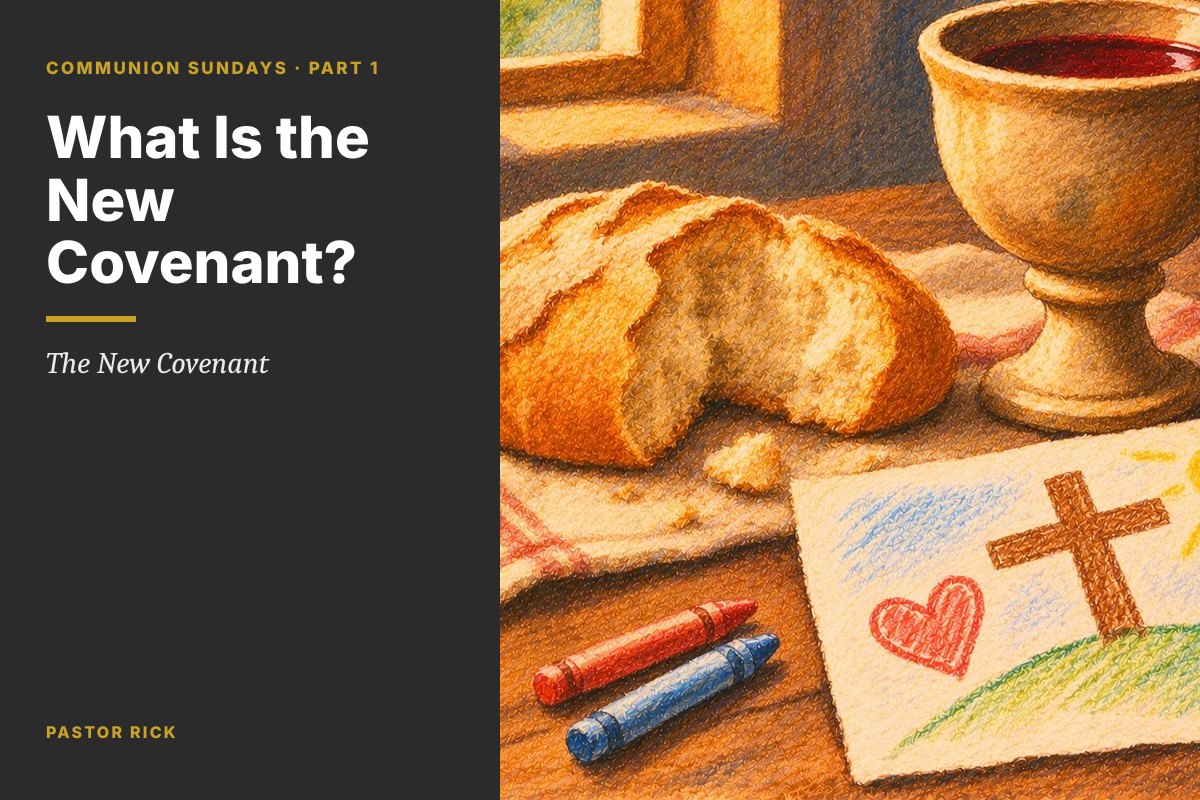
Communion remembers a historic event: Jesus’ death and resurrection. It’s also deeply personal. At some point we each had to bring everything we know about ourselves (the good, the bad and the ugly) to everything we know about Jesus and say, Forgive me. I believe. I want to follow you.
The bread and the cup are symbols. They represent Jesus’ body and blood, and we take them to remember what he did and to proclaim it until he comes (1 Corinthians 11:26). Coming back to the table is like renewing your vows. I’d do it all over again today.
So before you take the bread and the cup, examine your heart. Is there any ground you’ve taken back? Any fine print? Any cupboard where you’ve stashed a sin you don’t want to give up? David prayed, “Forgive my hidden faults” (Psalm 19:12). Let the Holy Spirit shine his flashlight into the corners.
Then say thank you, for the new covenant, sealed in Jesus’ blood.
Talk It Over
- Have you ever measured God’s presence by your circumstances? What happened?
- What’s the difference between the old covenant and the new covenant in your own words?
- Why do you think Jesus answered John the way he did?
- When has God said “no” or “not yet” to you? How did you respond?
- What would it look like to let God be the God of the “sometimes”?
- What do you need to bring to the table before you take Communion next time?
 Next in the seriesHow Do I Examine My Heart?Worth Living? · Communion SundaysRead it →
 Free · Short readsMore articles from Pastor RickSunday messages you can read in about 15 minutesSee them all →
 Capitol City Store · Everything is freeBooks, Bible studies, kids’ comics and short readsDozens of short reads like this one, plus free books, City Group studies, sermon notes, and kids’ comics and games. Read on your phone, print or share with a friend.Explore the store →
© 2026 Rick Melick. All rights reserved. Free to read and share for personal use. Not for resale.
Scripture quotations taken from The Holy Bible, New International Version®, NIV®. Copyright © 1973, 1978, 1984, 2011 by Biblica, Inc.™ Used by permission. All rights reserved worldwide.