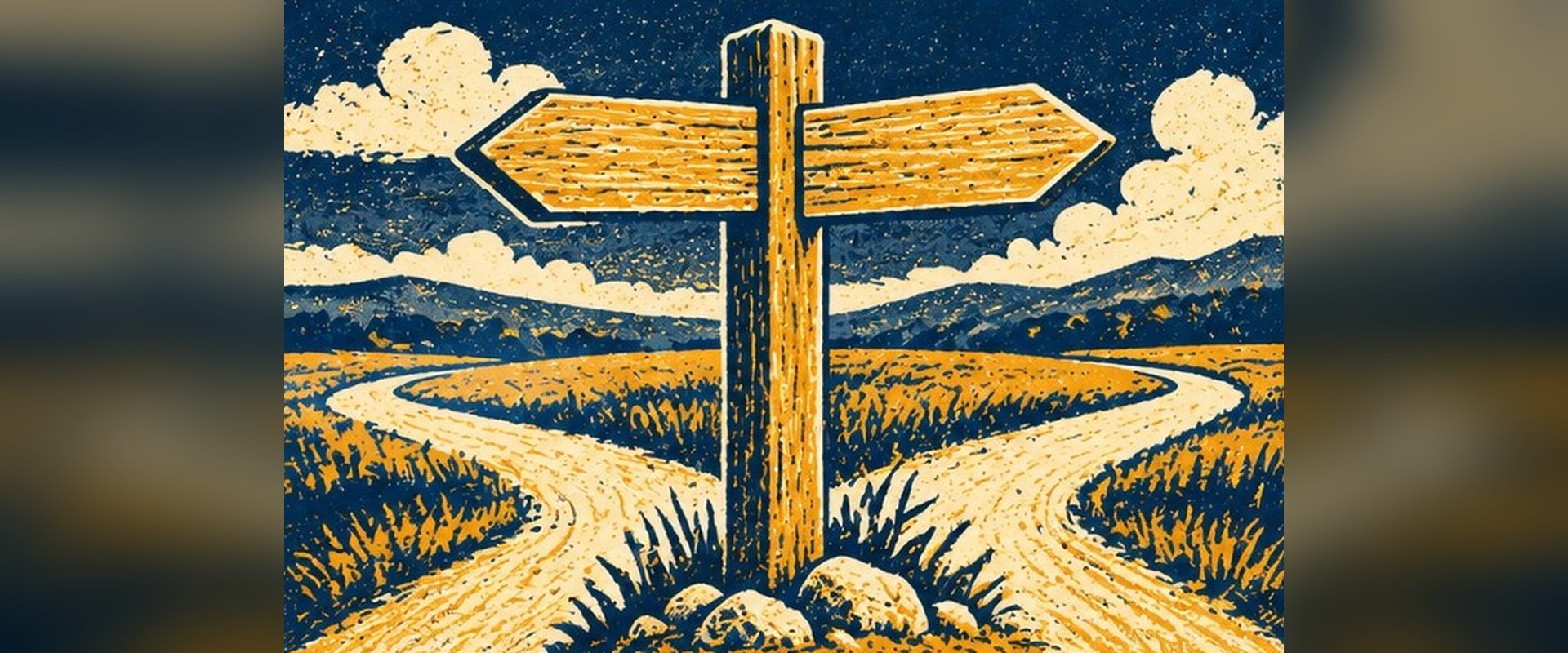
Barely Tasking

I hate waiting in line. Nobody likes it, but I hate it more than most.
Not long ago my wife and I were shopping at one of those places with a long row of registers. Each register has a light that comes on when it’s open, and a voice announces, “Register number five is available.” Everyone knows the unspoken rule: when a register opens, the person at the front of the line goes.
The lady in front of me was talking on her phone, loudly enough that everyone could enjoy her conversation. And she was next.
Ding. “Register number five is available.”
She didn’t move. She kept talking. My wife and I looked at each other. Finally she put her phone down. But instead of walking to register five, she turned around to address the rest of the line, kicked her leg out for some reason, and said, “Hee hee! I’m multitasking!”
My eyes got big. Multitasking is doing two things at once, which would mean walking to the register while you’re on the phone. She was barely tasking.
Whether you’re just tasking, figuring all this out for the first time, or multitasking, having wrestled with it for years, take a deep breath. The ground is level at the foot of the cross. You’re about to read what Jesus himself said about how things will end.
Where Jesus Started
This article ends with one of the hardest truths in Christianity. It matters, because it’s in the Bible. But it isn’t where Jesus started. So let’s start where he did.
Life is pressure. Pressure to become, to decide, to be somewhere. You lick your finger, check which way the wind is blowing and do your best. And Jesus says:
Eugene Peterson’s paraphrase, The Message, puts it in a way I love. It talks about learning the unforced rhythms of grace. I don’t know everything those rhythms are, but I want to learn them.
Learn the unforced rhythms of grace.
Jesus’ arms were open wide: Anyone who wants to come can come. And he spent three years proving it.
He started at a wedding, for two people nobody really knew in a tiny town nobody cared about, and he stayed for the celebration. When religious leaders dragged in a woman caught in adultery, Jesus knelt in the dirt beside her. In effect: If you want to get to her, you’ll have to throw those rocks at me first. When he met Matthew, a tax collector, he went to his house and invited Matthew’s friends too.
His arms were open. His invitation was for everyone.
How It Ends
By Matthew 24 and 25, those three years are nearly over. Jesus is about to die on the cross and rise again. And his disciples are still asking, How does this end? So Jesus laid out the final chapter. It’s beautiful and sobering, encouraging and terrifying. And it’s real.
The word to focus on is when. Not if, but when.
There are two ways to meet Jesus: we die, or he comes back. Nobody knows when either one will happen.
I like to schedule. The world divides into people who like to ride and people who like to drive. Riders say, I’ll get there when I get there. I like to drive. I want a timeline. But Jesus said:
The Days of Noah
Why bring up Noah? Jesus isn’t saying the people of Noah’s day were evil, though they were. He’s saying they were simply going about life. Having weddings, going to work, buying things, taking vacations. They weren’t thinking about what would matter to them five minutes after they were dead. And one day the waters came, and they were surprised.
Jesus says it will be like that. People will live in their three-foot world, so consumed with their own lives that they see nothing beyond arm’s length. Even good things can become distractions.
Then his illustrations get harder for me.
In Jesus’ day, two men working the same field were almost certainly family, most likely father and son. Two women grinding at the same mill were almost certainly mother and daughter, or sisters.
If we live like the people of Noah’s day, pointing our families toward everything temporary and never toward eternity, one will be taken, and the other left.
Remember the rich man in Part 4? When he realized there was no relief, his heart went straight to his family. Can’t someone at least warn them? It was too late.
Wouldn’t it be wise to decide that what will matter most to us five minutes after we die should matter most to us now?
The Hardest Truth
He will sit on his glorious throne. Jesus is going to come back, literally. Scripture says his feet will touch the Mount of Olives (Zechariah 14:4), the very hill where he sat when he gave this talk. And he’ll take his seat as judge.
Here is the hardest truth in Christianity. I softened it by showing you the heart of Jesus first, so it lands with both grace and truth. If I didn’t love you, I wouldn’t tell you.
The decision you make about Jesus in this life will determine your eternity. Period.
The time for choosing ends when we die or when Jesus comes again, whichever comes first.
Sheep and Goats
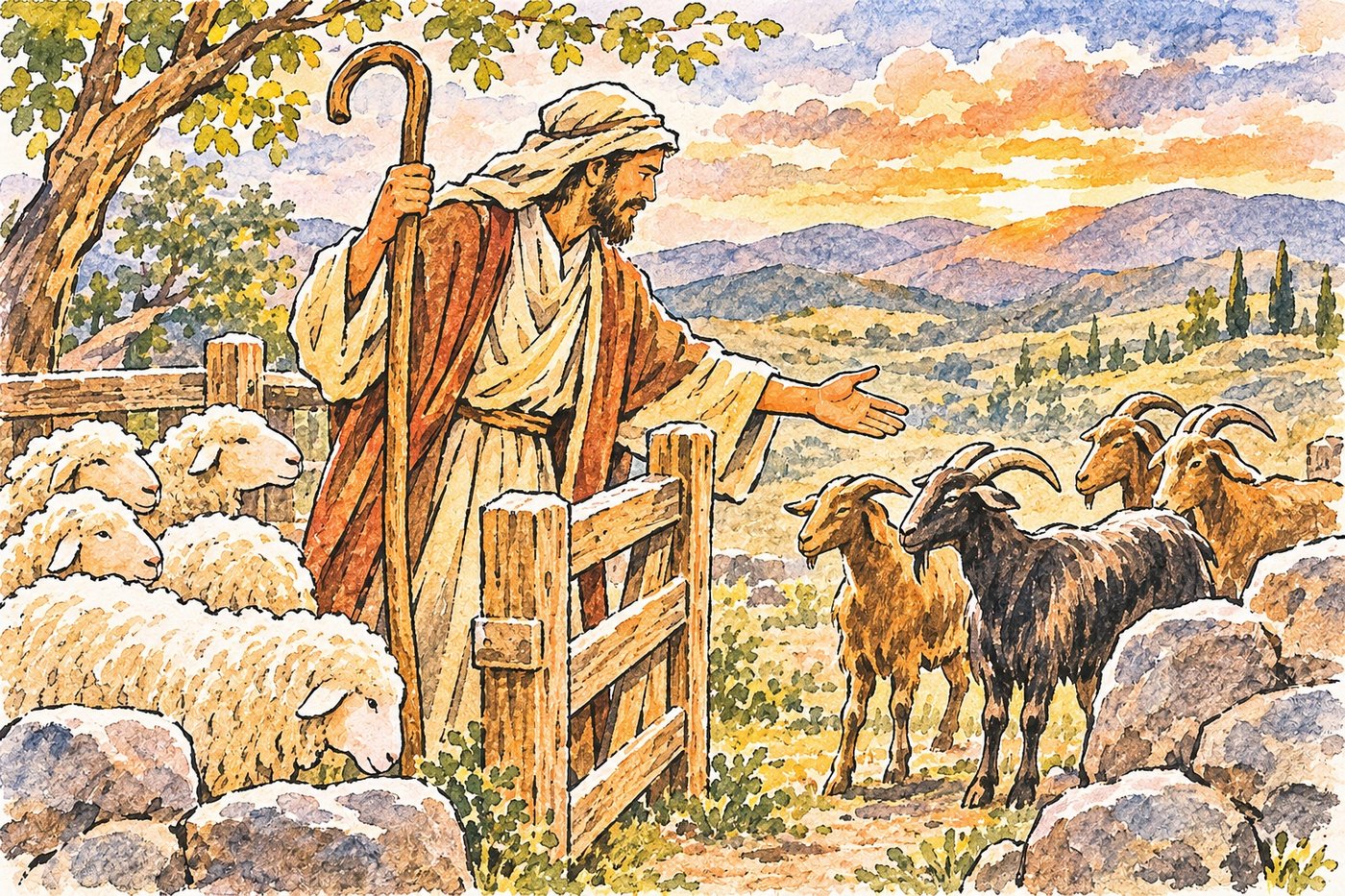
Jesus isn’t calling you a sheep or a goat. I had goats once. My boys might remember. They’re the nastiest animals you could ever own. But in Jesus’ day, sheep and goats grazed in the same herd. During the day you often couldn’t tell which was which. At night the shepherd separated them. Everyone listening understood immediately.
The right hand and the left hand meant something too. A judge would move the person he ruled in favor of to his right hand, and the person who lost to his left.
So Jesus comes again and takes his seat as judge, and he separates all people. Everyone.
Two Destinations
Jesus names only two destinations.
(A word of comfort here: any child who dies before they’re old enough to decide for themselves to follow Jesus is with Jesus. I believe that one hundred percent.)
Many people hold other views of what comes after death. Maybe you hold one of them. If so, I don’t want to dismiss you. I just want to point out that these ideas don’t come from the Bible.
Nothing. When you die, you just disappear. Nowhere in Scripture is that even hinted at.
Everyone. Everyone eventually ends up in heaven. There are many paths, and it will all work out in the end. I wish that were true. If I were writing the story, that’s how I’d write it. But it isn’t in there.
A second chance. A temporary place where you can work your way into heaven later. You can’t find it in Scripture.
What Scripture clearly teaches is that hell is real, that people there will be conscious and aware, and that it’s eternal and irreversible.
So why does Jesus talk about judgment? Because he’s holy and just, and sin must be paid for. But he’s also loving and merciful, so he warned us. He invited us. And he offered himself on the cross to die a death he didn’t deserve, to pay a price we couldn’t pay.
We have to choose hell.
That’s the part I would rather not have had to tell you.
The Evidence
Then Jesus describes what a true follower looks like:
Don’t misread this. Works reveal; works do not redeem. You can’t earn your place on the right hand by doing enough good deeds. But real faith produces a changed life. It isn’t all about you anymore.
Let’s be honest. How many of us have chased the next thing? While you’re chasing it, it seems like the only thing: the degree, the promotion, the purchase, the vacation, losing twenty pounds. Then you get it, and what do you have? On to the next thing.
Jesus said a person who really understands him won’t live like the people of Noah’s day. They’ll take responsibility for the people closest to them, like the father and son in the field and the mother and daughter at the mill. A spouse of faith. A friend of faith. A parent of faith, not so concerned with making their kids good at everything that won’t matter after they’re gone.
I’ll be honest with you. Studying this has kept me up at night. It horrifies me. And it compels me to do two things.
First, it makes me look inside. Not inside you. Inside me. Which side am I on? It makes me be honest with the Lord about the answer.
Second, it makes me pray for the people closest to me, because I want nothing more than for them to be people of faith.
Come
Come to me, all you who are weary and burdened, and I will give you rest.
That’s still his invitation. Leave the pressure behind. Leave your three-foot world behind. Come find the unforced rhythms of grace.
From here, the story turns. Next comes the thousand-year reign of Jesus. It sounds like something from Star Wars, but it isn’t. The story gets a lot more upbeat. We just couldn’t go on without first being clear about the two destinations, and the decision that determines eternity.
Talk It Over
- Read Matthew 11:28–30. What would the unforced rhythms of grace look like in your life this week?
- Jesus said his return will be like the days of Noah. What does your three-foot world tend to fill up with?
- Works reveal; works do not redeem. How does Matthew 25:35–40 fit with salvation by grace through faith?
- Why do you think the idea that everyone ends up in heaven is so appealing? Why does Jesus’ warning flow from his love?
- Who closest to you do you most want to hear Jesus say, Come?
 Next in the seriesThe Devil Is Never in Charge: The Thousand Years and the Final JudgmentHighway to Heaven: Mile Marker 1,000 · Part 6Read it →
 The entire series · Free bookSee You on the Other SideWhat the Bible says about heaven, and what it doesn’tRead it free →
 Capitol City Store · Everything is freeBooks, Bible studies, kids’ comics and short readsDozens of short reads like this one, plus free books, City Group studies, sermon notes, and kids’ comics and games. Read on your phone, print or share with a friend.Explore the store →
© 2026 Rick Melick. All rights reserved. Free to read and share for personal use. Not for resale.
Scripture quotations taken from The Holy Bible, New International Version®, NIV®. Copyright © 1973, 1978, 1984, 2011 by Biblica, Inc.™ Used by permission. All rights reserved worldwide.