Read First
To the Stop Sign
I recently committed to something I’m not sure I can do. I agreed to run a certain distance, in a certain time, with a group of people in their early twenties. For them, it’s a test. For me, it’s pride.
The problem is, I don’t run. I walk. Every day I try to walk three miles, somewhere between fourteen and fourteen and a half minutes a mile, sometimes with a weighted vest. But running? When I run, I look like I’m fleeing the scene of a wreck. Or escaping a mugging.
So why do it? Because it’s hard for me. Every once in a while I like to do something hard, because doing hard things is good for your character.
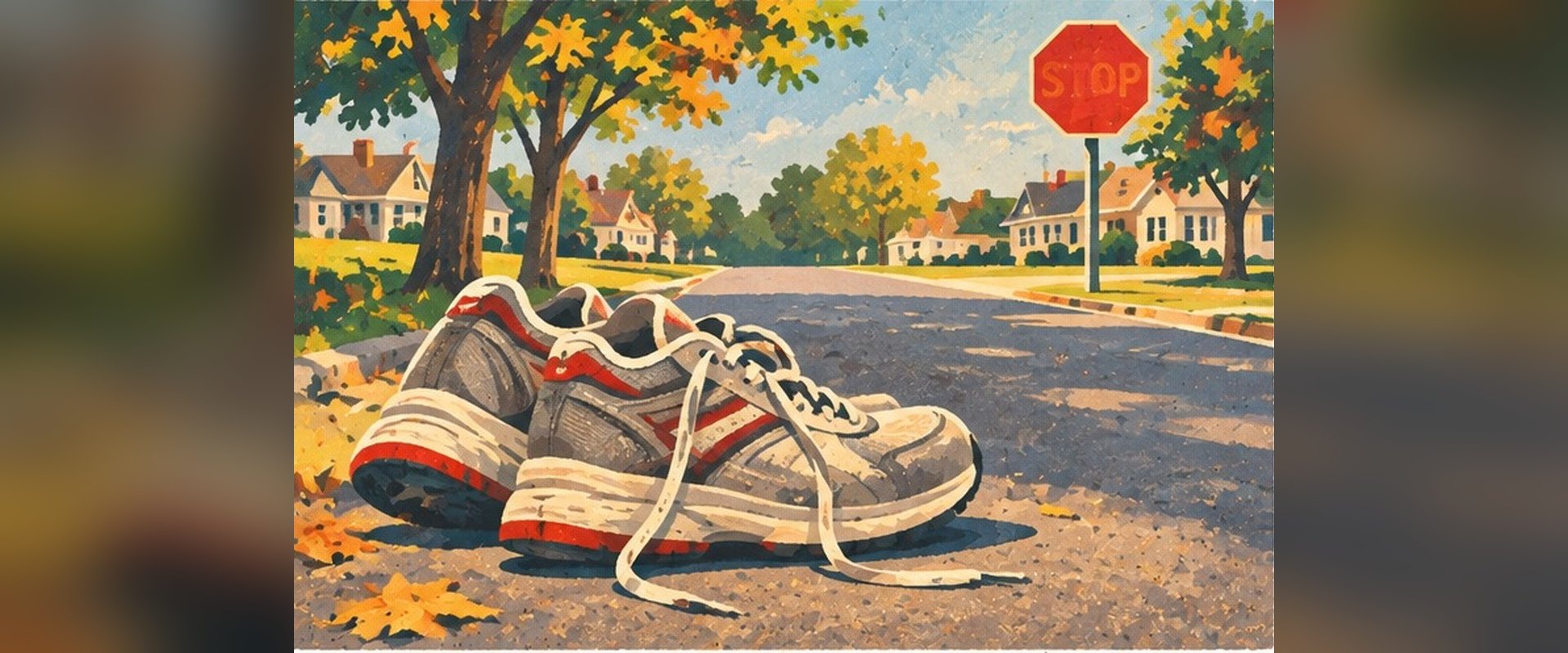
I live on a street with an alley, and there are about seven houses between my house and a stop sign. Uphill. Not up a mountain, but uphill. So the first goal was simple: run to the stop sign. That’s about three hundred yards. Off I went. I got to the stop sign and bent over, huffing and puffing. My neighbors asked if they should call 911. Please don’t. I’m doing this on purpose.
The next day, same plan. I was going to stink, but I was going to stink a little less. Run to the stop sign. This time I got there and thought, Maybe a few more houses. Then a few more. Then the next stop sign. Bend over. Breathe. Don’t call 911. The next day, a little further.
I haven’t gotten there yet, but I know how this goes. One day you pass the first stop sign and think, That wasn’t so bad. Then the second. Then the third. And then you’re running.
I have to get up every day and go out there, even though I’m not good at it and I look a little silly. And spiritual growth works the same way. Your body adapts, and so does your spirit. As you give everything you have, which still isn’t enough, the Holy Spirit does the heavy lifting and makes you a runner.
Hold the Hill
Love “always perseveres.” (1 Corinthians 13:7) The Greek word is a military term. Picture a war movie. There’s one strategic hill, and if you lose it, you lose the war. You’re outnumbered. The odds are terrible. But you rally the troops: We will stand on this hill, and we will fight, even if we die here. Nothing is more important.
That’s the power behind the word. Love refuses to quit.
Mark Twain said something like this: if you pick up a starving dog and take care of it, it won’t bite you, and that’s the main difference between a dog and a person. It didn’t come from Scripture, but it’s true. We’re going to get bitten. Will we stick around anyway?
Sometimes we leave way too early. We stand before a pastor and a room full of people and make promises: to love and to cherish, in sickness and in health, for richer, for poorer, till death do us part. And then we don’t persevere.
I know sometimes there’s no way to save a marriage. If that’s happened to you, I’m not judging you. I haven’t walked in your shoes. That’s not what I’m talking about. I’m not looking at your past. I believe in who you’re becoming. Let’s put a period at the end of that sentence and say, From today on, by God’s grace, we stick around, unless it’s unsafe or unwise.
Not Dead to Me
This one grieves me. I’ve watched Christian parents whose kids made choices they found objectionable, a lifestyle or a belief, give them a couple of chances and then turn their backs, for the sake of God: You’re dead to me until you repent. Often it’s because they’re worried about what other Christians will think.
You can set boundaries. You’re responsible to protect your home, and in some cases a relationship really isn’t safe or wise. But would Jesus turn his back on us because we’ve used up our chances, because we’re living in a way that displeases him, because he’s embarrassed? No. He believes in who we’re becoming.
Love is demonstrated best up close, never with a turned back. You don’t have to delight in evil to delight in people. Whatever they believe or celebrate, they can still be at your table for dinner. You can still celebrate the parts of their lives worth celebrating. They’re still your kids.
Love sticks around.
Love Never Fails
And then Paul lands the plane: “Love never fails.” (1 Corinthians 13:8) The word means love never falls, never falls apart. It holds all fifteen colors together.
I fail. You fail. We fail. Love never fails. God is love, and God never fails. He showed his love by giving us Jesus, who never fails. And Jesus gives us salvation, which never fails.
Myth: I Did the Best I Could
If you’ve gotten defensive anywhere in this series, Get out of my business, Pastor Rick, you don’t know what I’ve been through, I did the best I could, I understand. Those are the thoughts I have when I look back at the ways I’ve messed up.
Here’s something that was a revelation to me. It may not sound profound, but it was to me: Just because you did the best you could doesn’t mean you did it the best way.
Being honest enough to say, Even though I did my best, it may not have been right, takes humility. Being willing to learn a different way is the mark of a true disciple.
Joseph
Joseph’s story fills the last part of Genesis. He was born into privilege, and honestly, he was a bit of a brat. His dad’s favorite. He got a special robe, which meant he didn’t have to go out and work. Then he had a dream that his brothers, and even his parents, would someday bow down to him, and instead of keeping it to himself, he told them all.
One day his dad sent him out to check on his brothers, who were tending sheep far from home. Picture Joseph getting up off the couch and riding out on his air-conditioned camel with some sandwiches. His brothers saw him coming a long way off and decided to kill him. Then they decided to throw him in a dry well instead. Then a caravan of slave traders came by, and they thought, Why let him die when we can make some money? So they sold him.
In Egypt, Joseph was sold to Potiphar, who eventually put him in charge of his household. Potiphar’s wife tried to seduce him. Joseph refused. He loved God, and he was loyal to his master. So she accused him of trying to assault her, and he was thrown in prison. And still he trusted God.
In prison he interpreted the dreams of two of Pharaoh’s officials. One of them was restored to his job and promised to remember Joseph. He forgot. Time went by.
Then Pharaoh had a dream nobody could interpret, and the official finally remembered. Joseph told Pharaoh, I can’t interpret it, but God can. God revealed a coming famine, and Pharaoh put Joseph second in command of all Egypt.
Over about twenty years, Joseph went from being betrayed by the people who should have protected him, to being falsely accused, to being forgotten in prison, to a place of honor and authority.
Then the famine hit. Joseph’s brothers came to Egypt for food, not knowing he was alive. Joseph held the keys to every grain bin in the country. When he finally revealed who he was, they were terrified: Please don’t kill us. He had all the power of Pharaoh. They had walked in front of his car in the parking lot, and he could have hit the gas instead of the brake.
And Joseph said, “Don’t be afraid. Am I in the place of God? You intended to harm me, but God intended it for good to accomplish what is now being done, the saving of many lives.” (Genesis 50:19–20)
Sometimes the worst things that happen to you bring out the best things in you. That’s a hard statement. But it’s true.
Forgiveness Loses Count
Peter, one of Jesus’ best friends, asked him, “Lord, how many times shall I forgive my brother or sister who sins against me? Up to seven times?” (Matthew 18:21) The religious teachers said three times was plenty. Peter more than doubled it and probably expected a pat on the back.
Jesus said, “I tell you, not seven times, but seventy-seven times.” (Matthew 18:22) Some translations say seventy times seven. Either way, he meant as many times as it takes. No matter what it takes, for as long as it takes, because Jesus has forgiven you.
Forgiveness doesn’t keep score. Forgiveness loses count.
So forgive others. We’ve talked about that a lot, and some of you hate it when I bring it up, which is exactly why I keep bringing it up.
Then forgive yourself. Move past the defensiveness and the justifications. You blew it. You wish you hadn’t. You’ve asked God to forgive you, and he has. Now let it go.
And for some of you, let me say this as your friend. You’re still holding a grudge against God. He didn’t act the way you expected. He let things happen. God didn’t do anything wrong, but you need to let go of that grudge. Joseph could have held a grudge against God like you wouldn’t believe. But God was bigger, and Joseph kept running from one stop sign to the next, even when it was hard and even when he looked foolish.
As we finish, here’s my question for you: Are you willing to love like you’ve never been hurt?
Burning Coals
The word for perseveres is hupomenō: to stay under the load and not walk away. And Paul shows us how far that goes.
“If your enemy is hungry, feed him; if he is thirsty, give him something to drink. In doing this, you will heap burning coals on his head. Do not be overcome by evil, but overcome evil with good.” (Romans 12:20–21, quoting Proverbs 25:21–22)
Not paying back evil with evil is good. But it’s really just not doing anything. Love goes further. Love does good, on purpose, to the person who did wrong to you. That’s what sticking around looks like when it costs something.
Try It This Week
- Monday · Hold your hill. What relationship are you tempted to walk away from too early? Decide to stick around.
- Tuesday · Run to the stop sign. Pick one small step of love you’ve been avoiding, and take it today. Tomorrow, go a little further.
- Wednesday · Joseph’s lens. Read Genesis 50:15–21. Where might God be using something someone meant for harm?
- Thursday · Lose count. Forgive someone again, even if you’ve already forgiven them more times than you can count.
- Friday · Let go. Forgive yourself, and let go of any grudge you’re holding against God.
Talk It Over
- Where are you running “to the stop sign” right now, spiritually?
- What hill in your life is worth holding, no matter what?
- When has something terrible brought out something good in you?
- Are you willing to love like you’ve never been hurt?
 Next short readThankful: Paul’s SecretWhat Paul learned in chains, just in time for ThanksgivingRead it →
 The entire series · Free bookLove Intentionally1 Corinthians 13, one color of love at a timeRead it free →
 Capitol City Store · Everything is freeBooks, Bible studies, kids’ comics and short readsDozens of short reads like this one, plus free books, City Group studies, sermon notes, and kids’ comics and games. Read on your phone, print or share with a friend.Explore the store →
© 2026 Rick Melick. All rights reserved. Free to read and share for personal use. Not for resale.
Scripture quotations taken from The Holy Bible, New International Version®, NIV®. Copyright © 1973, 1978, 1984, 2011 by Biblica, Inc.™ Used by permission. All rights reserved worldwide.