
Read First
Don’t
My wife and I were at a Walmart in Arkansas. Consider that for a second. We were driving down an aisle in the parking lot looking for a spot, and there was a lady walking to her car right down the middle of the aisle. Slowly. Doing the shuffle. That’s fine. I’m glad she was out shopping.
Then she stopped. Right in the middle of the aisle. And looked down at her phone. I guess she was answering a text.
I waited five seconds and looked at my wife. And my wife said one word: “Don’t.”
I don’t know what she thought I was going to do. But she was probably right.
Now, kindness gives ten seconds, so I gave ten seconds. She didn’t move. Twenty seconds. I may have revved the engine a little. She didn’t hear it, or didn’t care. And I said, “That was rude.”
Later my wife and I talked about it. My take was, Surely she had no idea anybody was waiting. My wife, who is more realistic and, as usual, probably right, said, Oh, she knew exactly what she was doing. She just didn’t care.
There’s a difference between not knowing and not caring. But either way, somebody else pays for it.
This one is so simple I almost skipped it. A lot of people who teach 1 Corinthians 13 lump it in with the others. Don’t skip it. It’ll land if you give it time.
“It does not dishonor others.” That doesn’t mean you’re insulting someone’s mother or challenging them to a duel. The word means to behave in an unseemly way, to act without grace or courtesy. Put simply: love isn’t rude.
And friends, we’re living in a renaissance of rudeness. We’re a rude, friction-filled society that pushes people away with our behavior, our attitudes and our sense of entitlement. And it isn’t just out there. It’s in the church too.
The Wake You Leave
I picture each of our lives like a boat crossing a lake. You can’t drive a boat across a lake without leaving a wake. The wake is biggest right behind the boat, where it hits the people closest to you. But the ripples keep going, all the way to the shore, and they’re felt for a long time.
Love is concerned about the wake.
The Top Five
I Googled the rudest behaviors in America, so you know it’s true. Here are the top five. You may find yourself on this list.
- Using your speakerphone in public. Especially when the person on the other end doesn’t know they’re on speaker.
- Interrupting. Finishing somebody’s sentence for them. Oh, I know what you’re thinking. Stop it.
- Talking with your mouth full. Chewing like a cow. Elbows on the table. My grandmother was a big manners person. She taught me which fork goes where. I forgot all of it, which is rude of me, but at least I knew better.
- Standing too close. In line, or when you’re talking. You step back, they step forward, and pretty soon you’re pinned against a wall and you know what they had for dinner yesterday.
- Being late. When I asked friends what bugged them most, almost everybody said this one. Your time is more important than my time?
I’d add one that isn’t on the list: blowing your grass clippings into the road. When I first said this at our church, a few people admitted they do it. I challenged them to a duel. Here’s why. When you ride a motorcycle, like I do, grass clippings on the road are like ice. When you drive a Jeep with the top off, like I do, the car in front of you kicks them up and they land on you. I’m wearing your yard, and all I did was drive by your house.
We laugh, but here’s the thing. Someone once said that when you’re dead, you don’t know you’re dead, but everyone around you grieves. Rudeness is the same way. Sometimes we don’t know we’re rude, but everyone around us pays the price.
Why does that matter so much? Because the gospel is buried inside us, and it shows best through the cracks of an ordinary life. The more friction we cause, the harder it is for anyone to see Jesus. So we try to live as frictionlessly as we can.
Personal, Practical, Public
The book of Hebrews was written to believers learning to live together after coming out of religion, legalism and judgment. In Hebrews 10, the writer gives them three instructions. One is personal, one is practical and one is public. The last one is where rudeness lives, but you need all three.
Personal: draw near. “Let us draw near to God with a sincere heart and with the full assurance that faith brings.” (Hebrews 10:22) The first readers were counting on their good works, their intelligence or their family pedigree. I was born into a religious family, so I’ll probably be fine. The writer says, No. Remember, it’s by God’s grace and your faith that you’ve been set free. That’s the organizing principle of your life. What do you want to be known for? I want to be known for my faith, and I hope you do too.
Practical: hold on. “Let us hold unswervingly to the hope we profess, for he who promised is faithful.” (Hebrews 10:23) Life gets hard. Sometimes a person wounds you. Sometimes a circumstance blindsides you. Sometimes it seems to come out of nowhere. And we look at God and say, If you loved me, this wouldn’t be happening. The writer knows that. Biblical hope isn’t “I hope it doesn’t rain.” It’s a reality built on facts: you’ve been saved by grace, your sins are forgiven, your life has meaning and your future is guaranteed. So don’t swerve.
Are you tempted to swerve right now? Tired? Disillusioned? God gets it. Draw near in faith, hold on to hope, and don’t swerve, because he is faithful.
Public: consider each other. “And let us consider how we may spur one another on toward love and good deeds.” (Hebrews 10:24) That’s where we’re headed next.
Spur One Another On
I’ve ridden horses, but nobody has ever trusted me with spurs. If you’ve seen someone use them, you know it doesn’t look particularly pleasant for the horse. The word in Hebrews 10:24 is a prodding word, an irritant. But here it’s used for something good: consider how you can be so considerate of each other that you’re in a position to nudge each other toward love and good deeds.
When you become a believer, you’re adopted into a family. Sometimes we act like we’re God’s only child, and all that matters is me and Jesus. But God made us interdependent. That’s not a guilt trip to grow a bigger church. It’s the blueprint for how you become who God made you to be.
Some people feel like something is missing spiritually, and they can’t figure out what. Sometimes the problem isn’t only between them and God. It’s that they’re living disconnected from God’s family, as if they don’t need anybody.
Myth: Church Is a Place I Go
The writer of Hebrews says, “not giving up meeting together, as some are in the habit of doing, but encouraging one another.” (Hebrews 10:25)
Church isn’t a place you go to get what you want, and if you don’t like it, go somewhere else. Church is an identity you embrace. We are the church.
Here’s something I know is true, even if I can’t fully explain it. God does things in you when you’re with his people that he will not do in you when you’re by yourself.
Remember the Corinthians? They turned the Lord’s Supper into a popularity contest. They yelled over each other to show off their spiritual gifts. Inconsiderate. Rude. But one of the rudest things I can do to you is take you lightly. And one of the rudest things we can do to God is take his family lightly.
When we drift from God’s people, we start to swerve. Our salvation is still intact, but our faith becomes a distant memory. The things that used to make sense don’t anymore, because the organizing principle of our life has slipped away.
Present, Engaged, Polite
So how do we love each other in a way that isn’t rude? It’s almost too simple. Three steps: be present, be engaged, be polite.
Be present. Show up. Presence matters for two reasons. The first is that you need it. God does things in you when you’re with his people that he won’t do when you’re by yourself. But that’s not the biggest reason. The biggest reason is that the people around you need you there.
Be engaged. Being in the room isn’t the same as being with the people in it. You’ve had this happen. You’re talking with someone, and the whole time they’re looking over your shoulder to see who else is in the room. Somebody more important. Somebody better. You can tell they aren’t really with you.
A friend told me he has a family member who does it on the phone. He can hear them cleaning while he talks. They toss answers back to him, but they’re not really listening. Finally he just says, “Call me back when you have time.” Don’t we all deserve a little consideration?
Being engaged means walking in and praying, God, I’m available. If someone around me is starting to swerve, point them out to me. Let me be the encouraging word, the pat on the back. It means noticing people instead of pointing your feet the other direction.
Be polite. Look for ways to make things better for the people around you. That’s all. Simple, and harder than it sounds.
My wife and I learned all three in one week in Arkansas. Our son and daughter-in-law went to Florida and left us in charge of our two-and-a-half-year-old granddaughter. Their instructions were simple: Keep her alive, and return her in the condition we gave her to you. No scratches. No dents.
Now, parents, I know. You do this every day. For you it’s no big deal. For us, it was a big deal. A two-and-a-half-year-old has the energy of about three two-and-a-half-year-olds, and we were out of practice. We went from man-to-man to a zone defense. Nap time was the best part of the day. Even after she went down at night, we sat and watched the baby monitor, because you never know.
We had tea parties. We watched every princess movie ever made. I went to gymnastics. I also learned that a two-and-a-half-year-old negotiates like a terrorist. I’m a reasonable man, so I’d say, “Sweetheart, if you do this, I’ll do that.” She’d say, “Okay.” I’d keep my end of the deal and say, “Your turn.” And she’d say, “Uh-uh.” Every time. I fell for it three or four times before I figured out she was never going to keep her end.
About three days in, I looked at my wife and asked, “What do you want to do today?”
She said, “It doesn’t matter what I want to do today.” She didn’t say it with a chip on her shoulder. Just matter-of-fact. Then she said, “It doesn’t matter what you want to do either.”
I said, “Why not?”
She said, “Because we’re on a mission. We came here to invest in this little girl. What matters is that we do what we came to do.”
She was right. We never once said, I don’t really feel like feeding her today. I think I’ll go do something for me. We were family, and she needed us. So when she wanted to talk, even when it was mostly jibber-jabber and I had no idea what she was saying, I didn’t look past her. I got down on her level. I was present. I engaged. I asked questions and told her how wonderful she was.
By giving ourselves away that week, we ended up tired. But it was the best kind of tired in the world.
That’s us. We’re on a mission. Love is a lot more than not being rude. But it’s never less.
Try It This Week
Before anything else: think of someone who may be starting to swerve. Send them a text right now. Don’t make it churchy, and please don’t make it weird. Something simple, in your own words: I see you. I love you. I’m praying for you.
- Monday · Draw near. Write down three things you’re thankful for about your salvation.
- Tuesday · Hold on. If you didn’t send that text, send it today.
- Wednesday · Your rude list. Look at the top-five list. Add your own. Ask someone close to you which ones you do.
- Thursday · Take your place. What’s your next step in God’s family: showing up, joining a group, serving, inviting?
- Friday · Why it’s worth it. Read Psalm 92:12–15. What does God promise to those planted in his house?
Talk It Over
- What’s on your personal rude list, things you do without realizing it?
- Who feels the biggest part of your wake?
- Have you ever been tempted to swerve? What helped you hold on?
- What’s one way you’ve been taking God’s family lightly?
 Next in the seriesWhat Can You Give Up? How to Stop Being Selfish in Your RelationshipsWhat Do You Need, What Can You Give Up? · Part 5Read it →
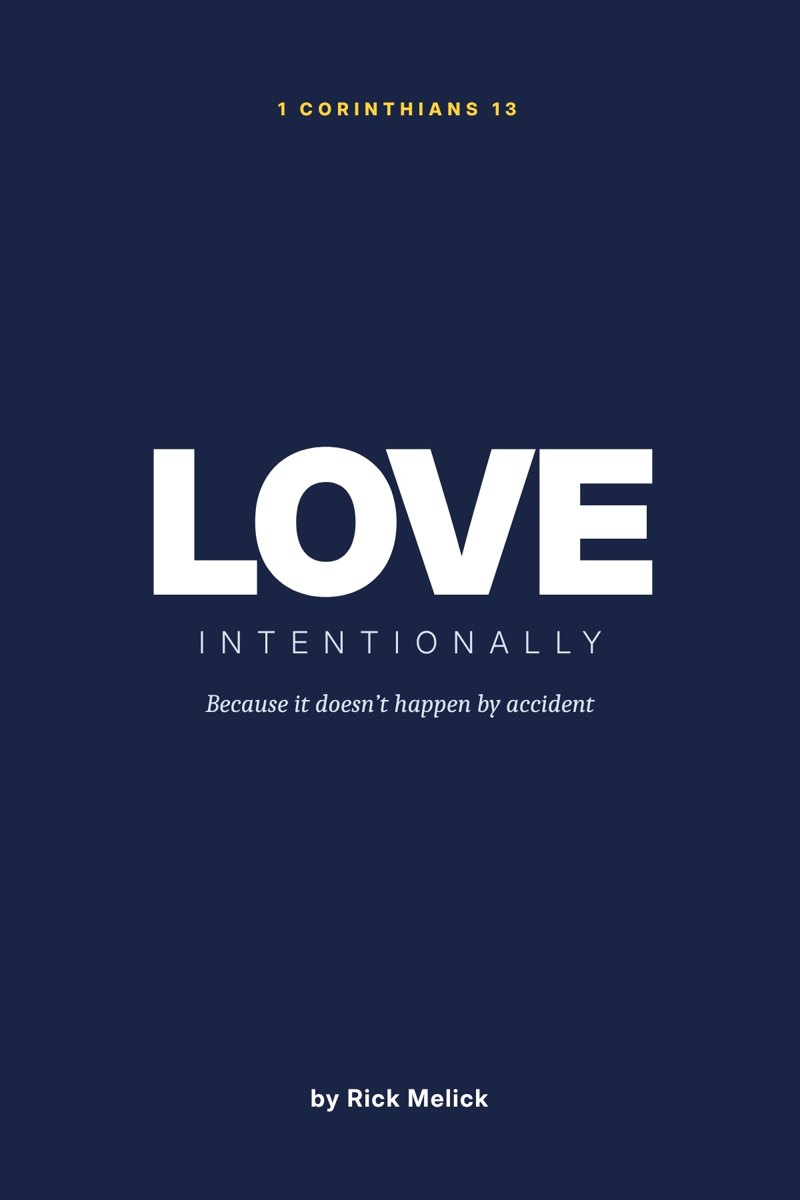 The entire series · Free bookLove Intentionally1 Corinthians 13, one color of love at a timeRead it free →
 Capitol City Store · Everything is freeBooks, Bible studies, kids’ comics and short readsDozens of short reads like this one, plus free books, City Group studies, sermon notes, and kids’ comics and games. Read on your phone, print or share with a friend.Explore the store →
© 2026 Rick Melick. All rights reserved. Free to read and share for personal use. Not for resale.
Scripture quotations taken from The Holy Bible, New International Version®, NIV®. Copyright © 1973, 1978, 1984, 2011 by Biblica, Inc.™ Used by permission. All rights reserved worldwide.