
Put Yourself in the Story
This one has a little more history than usual, so grab your coffee. But I think if you put yourself into the story, you’ll find it’s your story: the story of the church, of Christians today and of how the gospel has survived generation after generation.
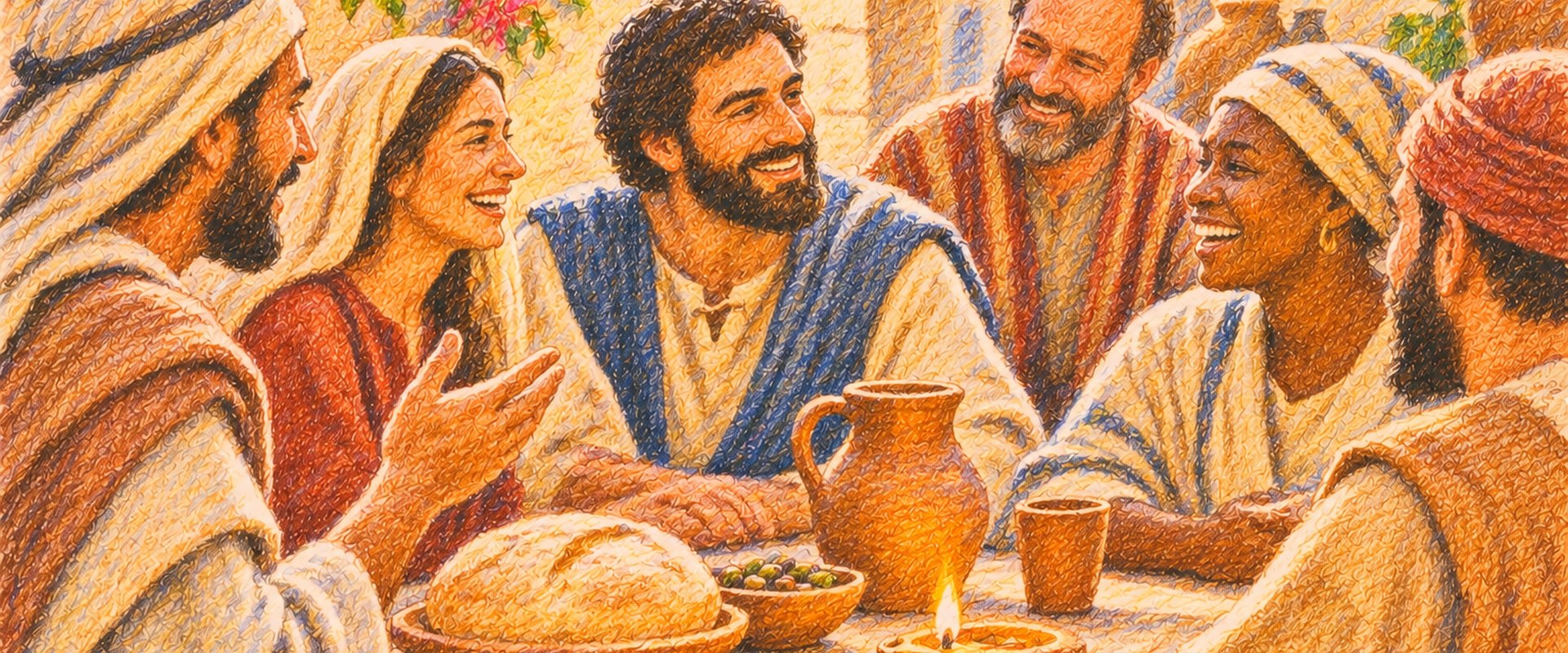
Picture yourself in the first century. You’re not Jewish. You’ve heard about a teacher who made some noise and was crucified, and then the reports that he rose from the dead. People are causing a stir about it.
The first followers of Jesus were mostly Jewish. They’d been waiting for the Messiah, and they hadn’t recognized him until they saw him alive again. And right away, they split into two camps.
One camp said, We have to protect the Jewish faith. Anyone who wants to follow Jesus has to become Jewish first. That meant keeping the whole Old Testament law. And for grown men, it meant circumcision. Imagine a church asking to see your health plan and schedule your surgery before you could join. Tough sell.
The other, smaller camp said, No, the gospel is for everyone.
A Messed-Up World
The Roman world was a mess. People sometimes say our culture is the worst it’s ever been, and that Jesus must be coming back tomorrow because of it. If you know history, that’s not true. Jesus may come tomorrow, but not because we’re the worst ever.
Romans worshiped many gods, often carried around as small family idols. Need children? Find a fertility god. Short on money? Try another one. These gods weren’t loving or merciful; they toyed with people, and people tried to manipulate them back. Sexually, almost anything went, often more about power and dominance than love.
When that culture met first-century Judaism, it scandalized the Jews. The Romans thought the Jews were weird and judgmental. The Jews thought the Romans were headed straight for judgment.
And Rome came to despise Christians. For about three centuries, persecution came in waves. When a plague hit or the economy failed, Christians were blamed, rounded up and killed. Where are your secret churches? Who are your people? Deny Jesus and we’ll let you go.
An early Christian writer named Tertullian, writing around AD 200, said that if the Tiber River flooded or the Nile didn’t rise, if there was an earthquake or a famine, the cry went up: Christians to the lion!
And yet instead of dying out, the church thrived. Persecution drew believers together around one person, Jesus.
Constantine
In AD 312, two Roman generals, Constantine and Maxentius, met near the Milvian Bridge to fight for control of Rome. According to accounts from people close to Constantine, he saw a sign in the sky and then dreamed that if he fought under the sign of Christ, he would win. He had the Chi-Rho, the first two Greek letters of Christ, painted on his soldiers’ shields and banners.
He won. The next year, Christianity was legalized. For a time, there was peace.
Eventually Christians started fighting each other. (That’s what Christians do when there’s no persecution to unite us.) Corruption came. But that’s a story for another time.
The First Church Business Meeting
Let’s go back to the very beginning, to the question the early church had to settle: Who is the gospel for, and what does someone have to do to follow Jesus?
Have you ever been to a church business meeting? If you haven’t, I don’t recommend it.
When I was a seminary student, I served on staff at a little church in Dallas. A fellow staff member said, “There’s a business meeting tonight. You have to come. They’re going to fight. It’s like pro wrestling and daytime TV all wrapped into one.”
So we sat in the back. They worked through the price of staples and where to buy envelopes. Then they got to the real agenda. People had sat on opposite sides of the room. The question was whether the denomination’s hymnal was inspired by God, on the same level as Scripture.
(For the record: no. Hymnals contain plenty of truth, but only Scripture is inspired.)
They shouted back and forth. The “inspired” side won. Then they started fighting over which edition of the hymnal was inspired. Two older men squared off and invited each other to settle it in the parking lot.
That’s a terrible way to solve church disputes. The first church business meeting was different. These were people who loved Jesus and wanted to protect the gospel.
Did you catch that? Believers who belonged to the party of the Pharisees. The same group that had pushed for Jesus’ death just a few years earlier. Some of them had become followers of Jesus. Imagine the courage it took to say to the other believers, We were wrong. Will you forgive us? And the church did, because that’s what followers of Jesus do.
I have compassion for them. They were trapped by how they’d been raised. Maybe you know the feeling. A friend told me that growing up, she was terrified to go to church, but terrified not to. Every Sunday she was told she didn’t belong and how she should behave. She never found Jesus there. But she was afraid she’d go to hell if she stayed home.
Jesus said something very different:
Peter, Paul and James
Peter spoke up. He told how God had sent him to the home of a Gentile named Cornelius, and how the Holy Spirit came on those Gentiles just as he had on Jewish believers (Acts 10). Then he asked:
Paul and Barnabas told about the miracles God was doing among the Gentiles.
Then James spoke, the half-brother of Jesus who hadn’t believed in him until after the resurrection, and who was now a leader in Jerusalem.
Write that one in your Bible. Our pastors try to live by it as we make decisions for our church: We should not make it any harder for people to come to Jesus than it already is.
Belong, Believe, Behave
In my book Dirty Church, I wrote about how many churches expect people to behave first, then believe, and only then, if they stick around, belong. The “behaving” often includes rules that aren’t in the Bible: which translation you read, what you wear, how long your hair is, what’s on your body.
Why make people go backward in order to come forward?
So let me say it plainly. You belong here. You’re welcome here. You may have some issues. I have some issues. Ask around; everyone else does too. My prayer is that you’ll belong, then believe, and then the way you live will follow. But behavior can’t come first.
Sexually Appropriate, Socially Considerate
The council summed up its decision in a short list for Gentile believers: avoid food polluted by idols, sexual immorality, the meat of strangled animals and blood (Acts 15:20).
That seems strange until you understand the culture. In short: be sexually appropriate and socially considerate.
The Romans had a morality problem, and sexual purity mattered to Jesus and still does. I believe sex is meant to be expressed only within the covenant of marriage, because it means far more than the physical.
The food rules weren’t about salvation. They were about unity. Early believers met in homes and shared meals. Jewish believers had grown up terrified of eating forbidden things. If a Gentile believer served them something that troubled their conscience, it could put a barrier between them and Jesus. So the church chose peace, so no one had to stumble on the way to Christ.
Everyone got to belong. Everyone was invited to believe. And then they learned how to behave, in community and as an example to the world.
Keep First Things First
So what do we do with this? We keep Jesus first.
The Old Testament is Scripture. It’s God-breathed, inspired, inerrant and infallible, without error in its original form. It tells the story of God and Israel, points to the coming Messiah and is full of lessons in character and faith. But when you’re talking with someone who doesn’t know Jesus, what’s more important for them to hear first: the story of Noah’s ark, or the story of Jesus on the cross?
That’s why we’ve spent so much time in the Gospels lately. There’s a time for Adam and Eve, Abraham, Moses, Joseph, David and the prophets. They’re important. They’re just not first.
Over the next five weeks, we’ll look at things Jesus said don’t do, and how each one turns into something life-giving to do. And we’ll ask: Is everyone really welcome? Can anyone belong? Can a broken life really be changed by the power of the Holy Spirit?
Talk It Over
- Have you ever felt like you had to “behave” before you could “belong”?
- Which part of the early church’s story stands out to you most: persecution, Constantine or the council?
- What does it tell you that former Pharisees became part of the church?
- Why do you think Peter called the law “a yoke” too heavy to bear?
- What rules have churches added that make it harder for people to come to Jesus?
- Who in your life needs to hear about Jesus first, before anything else?
 Next in the seriesHow Do I Stop Being Afraid?Fear · Jesus Said Don’tRead it →
 Free · Short readsMore articles from Pastor RickSunday messages you can read in about 15 minutesSee them all →
 Capitol City Store · Everything is freeBooks, Bible studies, kids’ comics and short readsDozens of short reads like this one, plus free books, City Group studies, sermon notes, and kids’ comics and games. Read on your phone, print or share with a friend.Explore the store →
© 2026 Rick Melick. All rights reserved. Free to read and share for personal use. Not for resale.
Scripture quotations taken from The Holy Bible, New International Version®, NIV®. Copyright © 1973, 1978, 1984, 2011 by Biblica, Inc.™ Used by permission. All rights reserved worldwide.