
Read the whole book free, right here. Tap Contents to jump to any chapter.
Introduction: Before You Begin

The Big Idea · We’re all dirty. That’s exactly who Jesus came for.
This book grew out of a four-part teaching series called Dirty Church. Each chapter follows one message, and every message stays with one simple story: four friends who carried a paralyzed man to Jesus and, when they couldn’t get through the door, went through the roof (Mark 2:1–12).
Why call it Dirty Church?
Because the dirty people aren’t those people. It’s us. All of us. Every one of us was born sinful and needs a Savior. Salvation is a free gift of God: his grace, our faith, nothing else (Ephesians 2:8–9). The people in the church who forget they’re dirty are part of the problem.
A lot of churches run on unwritten rules: behave first, then believe, and someday, maybe, belong. Jesus flipped that order. In the church he’s building, you belong from day one. You believe in him. And then he changes how you live, from the inside out.
Belong. Believe. Behave.
The church is for sinners, saved by grace through faith. Jesus came for the lost, and that’s who we’re here for. We grow together, become more like Jesus, and partner with him to share our faith, starting with the people closest to us and working out from there.
You can read this book on your own, but it was written to be read together. Each chapter ends with Key Truths and questions For Reflection. Grab a few friends, a small group, or the people at your kitchen table, and talk it over.
Scripture quotations are from the New International Version (NIV) unless otherwise noted.
Grandma’s House

The Chapter at a Glance
- Grandma’s house a place worth remembering
- A gathering, not a house Matthew 16:18
- You are God’s house 1 Corinthians 3:16
The Big Idea · The church isn’t a house to protect. It’s a family Jesus is building.
Read First · Matthew 16:13–18
13 When Jesus came to the region of Caesarea Philippi, he asked his disciples, “Who do people say the Son of Man is?” 14 They replied, “Some say John the Baptist; others say Elijah; and still others, Jeremiah or one of the prophets.” 15 “But what about you?” he asked. “Who do you say I am?” 16 Simon Peter answered, “You are the Messiah, the Son of the living God.” 17 Jesus replied, “Blessed are you, Simon son of Jonah, for this was not revealed to you by flesh and blood, but by my Father in heaven. 18 And I tell you that you are Peter, and on this rock I will build my church, and the gates of Hades will not overcome it.”
New International Version
I moved a lot growing up. I was born in Fort Worth, Texas. From there we went to South Carolina, then South Florida, where we lived in Miami, then Hollywood, then West Palm Beach. In eighth grade we moved to Germantown, Tennessee, right outside Memphis, and that’s where I finished high school. My dad was a professor, so this isn’t a sad story. We weren’t sleeping in the car. We just moved. A lot.
But there was one place that never moved.
My dad’s parents lived in Atlanta, in the same house, my entire growing-up life. Every summer we went there on vacation, and every summer it was exactly the same. I loved that.
Grandma and Grandpa
My grandpa was one of my heroes. He was a World War II guy. So was my grandma, by the way. She enlisted and served as a radio operator, which not many women did back then. Grandpa was old school. When you got close to him, he smelled like Marlboro Reds and Brut cologne. Brut was practical. If you ran out, you could buy more at the 7-Eleven.
Grandpa was a Christian, but he was the kind of Christian you’d have to know before you’d know he was a Christian. He was a little rough around the edges. Grandma was not. Grandma’s faith was real, but every once in a while it got a little out of control, and Grandpa and I would slip down to the basement and hide out until it passed.
They lived near Chastain Park, an old neighborhood with big houses and lots of trees. When you pulled into the driveway, the first thing you noticed was the ivy growing all the way up the brick. You’re not supposed to do that. It’s bad for the house. But Grandpa liked the way it looked, so the ivy stayed.
The first time we arrived each summer, we went up the outside stairs and in the front door. To your left was the formal living room. Grandma had cream carpet in there, and a white couch covered in clear plastic, like seat covers for your car, only for a couch. That room was for guests and for Christmas. At Christmas the tree stood by the front window and we were allowed in. The rest of the year, that room wasn’t really for us.
Straight ahead was Grandpa’s den. He had a TV and a big recliner, and Grandma sat on the couch next to him. Sometimes Grandpa was allowed to smoke his pipe in the house, and the whole room smelled like vanilla tobacco. I loved sitting in Grandpa’s chair and looking out at the swing set in the backyard. It was awesome when I was little. By the time I was older it was rusting out, but I wouldn’t let him move it. It wasn’t safe anymore, but it was still there, and it was the same.
And we watched the same things. Grandpa loved Loretta Lynn. I think he thought she was pretty, and I think he liked her music too. We watched Hee Haw together, and we watched Lawrence Welk. You would never catch me listening to Lawrence Welk anywhere else on earth. But at Grandpa’s house, by golly, it was Lawrence Welk, and I sat in his lap, and that’s the way it was.
Every year we went. Every year it was the same. I counted on it.
The Year It Changed
Then one summer, when I was in high school, we turned down the street and pulled up to the house, and the ivy was gone.
I was a teenage boy. I didn’t care about ivy then and I don’t care about ivy now. But I was furious. We went inside, and the formal living room had been completely redone. The white couch with the plastic cover was gone. New curtains. And the swing set in the back? Gone.
I found my grandpa and said, “Listen, we need to have a talk. What in the world is going on with your house?”
And he said, “Ricky,” because he was allowed to call me that, “it’s my house. It was time to update. Grandma wanted it done, so we did it.”
I was mad at him. I wanted things to be the way they were. That house reminded me of simpler times. When I was four and five, life was simple. By fifteen and sixteen it was getting complicated, and Grandma’s house was the one place where nothing had changed. I could leave and come back, and it would be waiting for me exactly the way I left it.
Some things deserve our nostalgia. But in a church, nostalgia is deadly.
Grandpa was right, of course. It was his house, not mine. I’d been treating it like a museum, and he was living in it.
The Road to Irrelevance
Some things deserve our nostalgia. A grandparents’ house like that is a gift, and if you have one, you’re fortunate. There is absolutely nothing wrong with wanting Grandma’s house to stay the same.
But there’s everything wrong with it if that’s how we think about church.
Nostalgia wants to keep things the way they were. In a church, that quietly turns into a need to control and a fight against change. It’s the road to irrelevance, and the people on that road are usually the last ones to notice.
My wife and I were married in the church she grew up in. Not long ago I saw a photo of a wedding in that same sanctuary, decades later, and not one thing had changed. Not the stage. Not the decorations. Not even where the sound equipment was set up. For years, the sign out front, carved in brick and stone, listed the worship time and the Sunday school time, because at some point somebody decided that was how it was going to be, forever. I love that church and the people in it, and they’ve moved past some of that since. But for a long time the goal was to protect and preserve the past at all costs.
If we do that, we create Grandma’s house. We don’t create church.
Church is supposed to be alive. It should be dynamic and changing. If you miss a week, you should miss something. When you come back, you should feel a little disoriented, because while you were gone the people around you grew. They obeyed. They took another step. We live in an ever-changing culture with a never-changing Word, and the church’s job is to stand right where the two meet.
The First Time Jesus Said “Church”
Firsts matter. So let’s look at the very first time the word church shows up in the Bible.
Jesus and his disciples were walking near a city called Caesarea Philippi. They had just passed a mountain with a cave at the bottom, where one of the springs of the Jordan River comes up out of the rock. The pagans who lived there called that cave the gates of Hades. They believed that if you went down into it, you went down into the place of the dead.
Right there, in the shadow of that cave, Jesus turned to his disciples and asked, “Who do people say the Son of Man is?” (Matthew 16:13).
In other words: What’s the word on the street about me?
I’m careful about asking that question myself. I don’t always want to know. But Jesus asked, and the disciples answered. “Some say John the Baptist; others say Elijah; and still others, Jeremiah or one of the prophets” (Matthew 16:14). That’s quite a compliment. It just wasn’t who he was.
So Jesus made it personal. “But what about you? Who do you say I am?”
Simon Peter spoke up. “You are the Messiah, the Son of the living God” (Matthew 16:16).
Jesus said Peter didn’t figure that out on his own. God revealed it to him. And then Jesus said this:
“And I tell you that you are Peter, and on this rock I will build my church, and the gates of Hades will not overcome it.” (Matthew 16:18)
There’s a play on words there. Peter means “rock” or “stone.” But the foundation Jesus is talking about isn’t Peter the man. It’s what Peter just said: that Jesus is the Messiah, the Son of the living God. The One who would die on a cross and rise again, defeating sin, Satan and death once and for all. That’s the rock. On that truth, Jesus said, I will build my church. And standing right there by the so-called gates of Hades, he promised that those gates would never win.
A Gathering, Not a House
Now here’s where it gets important.
The Greek word Jesus used that we translate church is ekklesia. It means a gathering. An assembly. A group of people called together for a purpose. That’s it. It never meant a building.
Our English word church actually comes from a different Greek word, one that means “belonging to the Lord,” as in the Lord’s house. It seems like a small thing. It’s not.
When William Tyndale first translated the New Testament into English in the 1500s, he translated ekklesia as “congregation.” The people. But when the King James Version was produced a few decades later, the translators were instructed to keep the old church word, church. And over time, the word that meant “the people God calls together” came to mean “the building with the steeple.”
Why does that matter? Because if you think the church is God’s house, you will protect it like Grandma’s house. You will fight over the carpet. You’ll fight over the music, whether we’re going to watch Lawrence Welk or Loretta Lynn. And you’ll make sure nobody sits on the white couch.
Myth: The church is a building, God’s house, and our job is to protect it and keep it the way it’s always been.
Truth: The church is people. Jesus said ekklesia, a gathering. The building is just where the family meets.
You Are God’s House
My grandpa, the same one who smelled a little like Marlboro Reds, used to tell me to dress up for church. Did you grow up that way? Maybe you wore a suit or a sport coat on Sunday mornings. There’s nothing wrong with that. But I asked him once why we had to, and he said, “It’s God’s house. We show respect in God’s house.”
How many of you were told not to run in church? Don’t run, it’s God’s house. Don’t wear a hat, it’s God’s house.
Here’s the thing. It’s not God’s house.
You are God’s house. Paul wrote to a church full of messy people, “Don’t you know that you yourselves are God’s temple and that God’s Spirit lives among you?” (1 Corinthians 3:16). The building is where the church gathers. There’s a huge difference.
Grandma’s house wasn’t our family. It was the place our family gathered. What tied us together wasn’t the brick or the address. It was blood, and the choice we made to be family. What ties you and me together is blood too. Jesus’ blood. And the choice we’ve made to be family.
That’s why the church Jesus started doesn’t exist to protect you from the world. It exists to prepare you for it. We don’t come together to hide inside with the plastic on the couch. We come together to be sent back out, to be salt and light in a world that desperately needs both.
The Church Becoming
So here’s the question for the rest of this book. If the church is a gathering of messy people who belong to Jesus, what does that kind of church actually look like?
I think Jesus answered that question one day in a crowded house in a town called Capernaum, when four friends climbed up on a roof and started digging. We’ll get there.
But first, we need to talk about the unwritten rules. Because before anybody can get through the roof, a lot of us have to unlearn what we were taught about who gets in the door.
Key Truths
- Nostalgia is a gift in a family, but in a church it leads to control, resistance to change and, eventually, irrelevance.
- The word Jesus used for church, ekklesia, means a gathering of people, not a building (Matthew 16:18).
- The church is built on the truth that Jesus is the Messiah, the Son of the living God.
- You are God’s house. The building is just where the family gathers (1 Corinthians 3:16).
For Reflection
- Was there a “Grandma’s house” in your life, a place you wanted to stay exactly the same? What made it so special?
- Where have you seen nostalgia turn into a need to control in a church, a family or a workplace?
- What changes when you think of the church as people instead of a place?
- Jesus asked, “Who do you say I am?” How would you answer that question in your own words today?
- If you missed a week of your church family, what would you miss? What would they miss about you?
Let’s Pray
Father, thank you that the church is not a building we protect but a family you are building. Forgive us for the times we’ve treated your church like Grandma’s house, holding on to what was instead of following where you are leading. Keep us alive and growing, so that if anyone misses a week, they miss something. Build your church in us. In Jesus’ name, amen.
The Order Matters
The Chapter at a Glance
- The unwritten rules behave, believe, belong
- Jesus flipped it belong, believe, behave
- Let the rough edge drag Romans 12:2
The Big Idea · You can belong from day one.
Read First · Romans 12:1–2
1 Therefore, I urge you, brothers and sisters, in view of God’s mercy, to offer your bodies as a living sacrifice, holy and pleasing to God—this is your true and proper worship. 2 Do not conform to the pattern of this world, but be transformed by the renewing of your mind. Then you will be able to test and approve what God’s will is—his good, pleasing and perfect will.
New International Version
When you went to my grandma’s house, nobody handed you a list of rules at the door. You just had to know. If you came with me one summer as my friend, walked into the formal living room and plopped down on the white couch with the plastic cover, oh man, you’d have been in trouble. But how would you know? Nobody told you. Somebody has to tell you the rules.
A lot of churches work the same way.
The Unwritten Rules
The church I grew up in, which may have been very different from yours, had a set of rules nobody ever wrote down. There was no guidebook. You just had to come in and figure it out.
You had to dress a certain way. You had to talk a certain way. You had to clean yourself up before you came. If you had tattoos, you’d better cover them, because people would assume you’d just gotten out of prison. If you had long hair, they assumed you’d lived a wild life and probably listened to Led Zeppelin or AC/DC. There was a culture, and you had to fit into it.
I wanted to fit in. Badly.
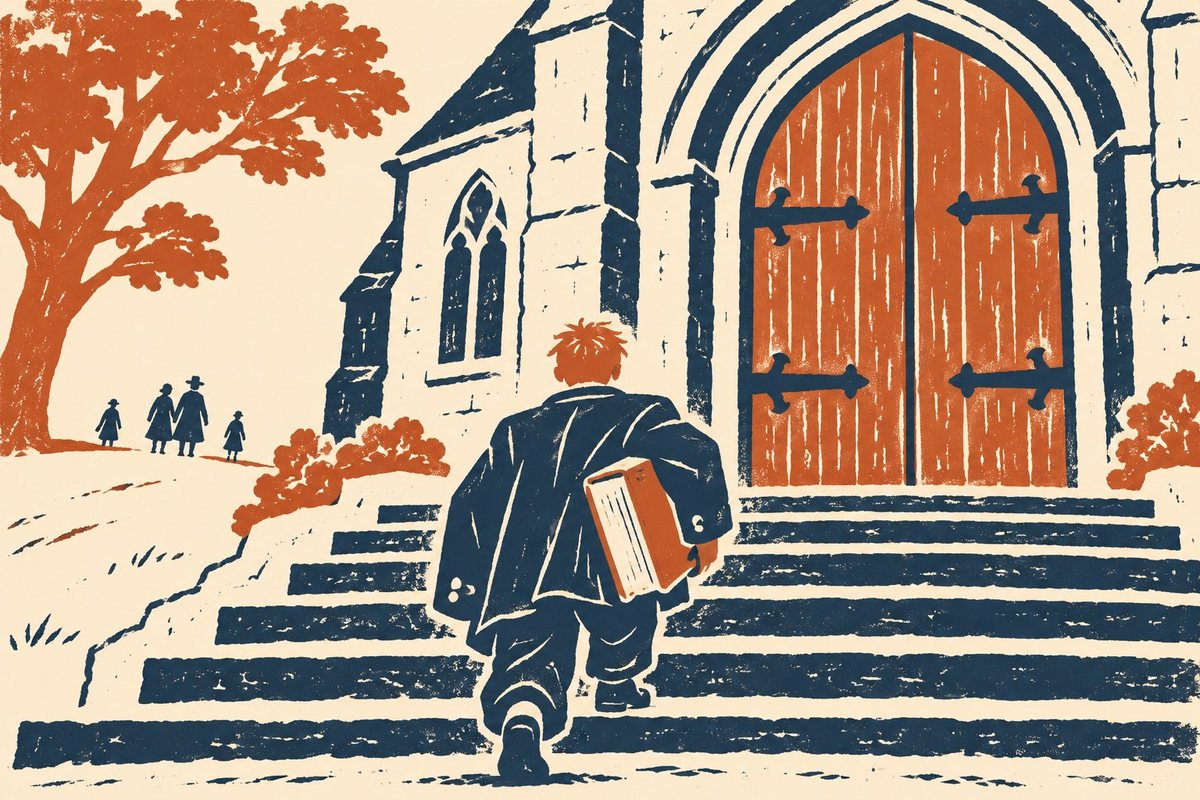
So I carried the biggest Bible I could find. And I’ll confess something to you: I wanted my Bible to look like I really read it. So I’d rough it up a little. I’d rub the cover back and forth to wear it down. I underlined all kinds of things I never actually read. Probably some Levitical dietary law. I have no idea.
And I had a suit. I bought it at Burlington Coat Factory. When I really wanted to impress on a Sunday morning, it was my chocolate-brown suit, with a tie that was a little too wide and a shirt with one of those long, pointy collars. I looked like a little junior pastor. I walked around that church with an attitude you would not believe.
I look back on that kid and think, Who were you trying to impress? What culture were you trying so hard to blend into?
First you behave. Then, after people watch you for a while, maybe you believe. And someday, if you pass, you belong.
Behave, Believe, Belong
Here’s how the unwritten rules worked, in a lot of churches then and in more than a few now.
First you behave. You clean up your life. You clean up your language. You get the clothes right.
Then, after people watch you for a while, maybe you believe. There may not be an official committee, but there’s always a group of people who appointed themselves to it, and they’re watching. Does your life stack up to their list? Do you look the part? Do you vote the same way? Do you drive the same kind of car?
And then someday, if you pass your probation, which by the way is never defined, you belong. You get your card. You’re one of us. And then we can all sit inside the church together, judge the world, lob truth bombs over the wall, and congratulate ourselves on how holy we are.
In reality, all we are is weird and irrelevant. And the last people to know it are us.
I have met so many people who were hurt by a church because they didn’t know the rules. Some were turned away because they wore the wrong clothes or had too many visible tattoos or didn’t take off their hat. Maybe that was a long time ago. But the wounds last, and plenty of people still walk into a church wondering if they’re about to be judged for not fitting in.
Jesus Flipped It
Jesus came and flipped the order completely.
Behave → Believe → Belong
Belong → Believe → Behave
In the church Jesus had in mind, you belong from day one. You show up, and you’re loved and respected and part of us. Out drinking last night? I’m so glad you came here before you went home. Your marriage just fell apart? Thank you for having the courage to be here. Everybody around you has just as much going on in their lives. Some people are just better at hiding it.
Then we do everything we can to help you believe. We teach, we pray, we build relationships, and we nudge you toward Jesus, because believing in him is where the life is.
And then, after you believe, you learn to behave. Your behavior changes, but not because you put on a costume. It changes because the Holy Spirit is transforming you from the inside out.
You can no more clean up your life before you come to Jesus than a paralyzed man could heal himself before he met him. We’ll meet that man in a couple of chapters. But sometimes, in church, that’s exactly what we expect people to do. We expect the impossible.
Why “Dirty”?
So why call it Dirty Church?
Let me be clear about who’s dirty. It’s not those people. It’s us. All of us.
Every one of us was born with a sinful nature. “All have sinned and fall short of the glory of God” (Romans 3:23). The pastor, the person in the front row, the person who hasn’t been to church in twenty years, the person who’s been there every Sunday since they were born. All of us need to be saved.
And salvation is a free gift of God. “For it is by grace you have been saved, through faith, and this is not from yourselves, it is the gift of God, not by works, so that no one can boast” (Ephesians 2:8–9). His grace, our faith. Nothing else. Not your suit. Not your scuffed-up Bible. Not how long you’ve been coming.
All of us are dirty. The only difference between a follower of Jesus and anybody else is that Jesus has saved us and is changing us. That doesn’t make us better. It makes us sinners saved by grace.
And the people in the church who forget they’re dirty? They’re part of the problem.
Myth: You have to clean up your life before you come to church or come to Jesus.
Truth: Nobody can clean themselves up. You belong first. You believe, and then Jesus changes your behavior from the inside out.
Conformed or Transformed
Paul put it this way:
“Do not conform to the pattern of this world, but be transformed by the renewing of your mind.” (Romans 12:2)
Here’s what I didn’t understand as a kid in a brown suit. You can conform to the pattern of the world, and you can also conform to the pattern of the church. You can learn the vocabulary, carry the big Bible and look exactly like everybody else in the room, and still not be changed at all.
Change comes through a relationship with Jesus, not a relationship to a church. Conforming to the image of a church is not the same as being transformed into the image of Jesus.
That’s not a knock on the church. I love the church. I’ve given my life to it. But the church’s job is to point people to Jesus, not to turn them into copies of us.
Let the Rough Edge Drag
My grandpa, the one with the Brut cologne and the vanilla pipe, was a Christian, but he was a little rough around the edges. And sometimes you just let the rough edge drag.
That’s what the church is supposed to be. A place where people with rough edges can show up as they are, and nobody makes them sand themselves down at the door. You belong from day one. Everyone is welcome, no matter what. Jesus will do the sanding, in his time and in his way, and he’s a lot gentler about it than we are.
Not long ago I was meeting with a couple of guys from our staff at a coffee shop. When we got up to leave, I gathered my trash and my motorcycle key, walked over to the trash can while I was talking, and threw the whole thing in. Trash, key and all.
Now, you need to know that I am a germaphobe. This was not an inconvenience. This was a health crisis. I’m thinking I may need to go to the emergency room and get checked out preventively.
So I just stood there, staring into the trash can, not wanting to admit my weakness. And my friend didn’t miss a beat. He smacked me on the back and said, “Hey, want me to get that for you?”
I did it myself. If he’d done it, he would have told everybody about it later. I pulled the trash can out, reached in, grabbed the key, cleaned it off and put it in my pocket. As far as I know, I didn’t die.
But I was reminded that I had a friend who saw the rough edge and the weakness, and instead of judging or exploiting it, he stepped in and said, “How can I help?”
That’s the church.
Who Will Be Here Next?
Here’s what keeps me up at night. Do you know who decides whether the church will still be here for the next generation, for your kids and their kids?
You do. And I do.
Many young adults today are walking away from the faith they grew up with. People call it deconstructing. I’ve talked with a lot of my own kids’ friends about it, and I’ve noticed something. Many of them are deconstructing a faith that was more about looking fine than being faithful. They grew up watching people act like everything was okay when it obviously wasn’t. Sometimes sin seems to win. Sometimes people get cancer, lose a job, get divorced or die. And nobody was honest about it.
The problem wasn’t the faith. The problem was the costume. There was no transparency, no humility, no admitting we’re human and still need Jesus every single day.
The faith we’re supposed to live doesn’t need to be deconstructed. It’s a dependent faith. It’s honest about our scars and our failures. It asks God for help, because we know we can’t do it on our own. And it opens the door wide for anyone who wants to come.
Show me your friends, and I’ll show you your future. Show me a church full of people who let the rough edge drag, and I’ll show you a church that will still be standing for your grandkids.
So how does a church like that actually work? Let’s go to a crowded little house in Capernaum and find out.
Key Truths
- We’re all dirty: born sinful, needing salvation, saved only by God’s grace through faith (Ephesians 2:8–9).
- Many churches run on unwritten rules: behave, then believe, then belong.
- Jesus flipped the order: belong, believe, behave.
- Nobody can clean themselves up before coming to Jesus.
- Change comes through a relationship with Jesus, not a relationship to a church (Romans 12:2).
For Reflection
- What “unwritten rules” did you learn about church growing up, or the first time you walked into one?
- Have you ever tried to look the part, like a kid in a brown suit with a scuffed-up Bible? What were you hoping people would think?
- What’s the difference between being conformed to the image of a church and being transformed into the image of Jesus?
- Who in your life has seen your rough edges and said, “How can I help?” How could you be that kind of friend for someone else?
- Why do you think so many people are walking away from the faith they grew up with? What kind of faith would they find worth keeping?
Let’s Pray
Jesus, thank you for flipping the order. Thank you that we didn’t have to clean ourselves up to come to you. Forgive us for the costumes we’ve worn and the unwritten rules we’ve kept. Help us remember that we’re all dirty and all saved by your grace. Make us a church where people can belong from day one. In Jesus’ name, amen.
Through the Roof
The Chapter at a Glance
- Jesus comes home Mark 2:1–2
- Talked about, not talked to Mark 2:3
- Four faces in the ceiling Mark 2:4–5
The Big Idea · Nobody can clean themselves up before they meet Jesus.
Read First · Mark 2:1–5
1 A few days later, when Jesus again entered Capernaum, the people heard that he had come home. 2 They gathered in such large numbers that there was no room left, not even outside the door, and he preached the word to them. 3 Some men came, bringing to him a paralyzed man, carried by four of them. 4 Since they could not get him to Jesus because of the crowd, they made an opening in the roof above Jesus by digging through it and then lowered the mat the man was lying on. 5 When Jesus saw their faith, he said to the paralyzed man, “Son, your sins are forgiven.”
New International Version
For the rest of this book, we’re going to stay with one simple story. It’s a miracle Jesus did early in his ministry, and it’s told three times in the Gospels: in Matthew 9, Mark 2 and Luke 5. Each account adds a little detail and paints the picture a little more clearly. They never contradict each other. They complement each other.
Here’s something worth remembering whenever you read the Gospels. When you put Matthew, Mark, Luke and John together, you have everything Jesus wants you to know about who he is and what he did. The rest of the New Testament points back to that story and tells us what it means for our lives.
We’re going to live in Mark’s version. Here’s how it starts:
“A few days later, when Jesus again entered Capernaum, the people heard that he had come home. They gathered in such large numbers that there was no room left, not even outside the door, and he preached the word to them.” (Mark 2:1–2)
Jesus Comes Home
You’ve probably heard Jesus called “Jesus of Nazareth.” That was kind of like his last name. He grew up in Nazareth. But things didn’t go well for him there. His own hometown ran him out (Luke 4:28–30). So Jesus adopted a new home base: Capernaum.
Capernaum sat on the northwest shore of the Sea of Galilee, right on the great trade road that ran from Damascus to the coast. Its name means “village of Nahum,” and Nahum means comfort. The Old Testament never mentions it once. But in the Gospels it shows up again and again, because it’s where Jesus kept coming back to. Peter, Andrew, James and John were fishermen from Capernaum. Many of Jesus’ miracles happened there.
It’s like saying, “I used to be from one town, but now I live over here.” You’ve got a good friend with a family home on the edge of town. When you’ve been out all day and you’re worn out, that’s where you go to unplug.
Most scholars believe the house in this story belonged to Simon Peter’s family. The Bible doesn’t say so for certain, but it fits. It was the place Jesus went to regroup with his disciples. Maybe he had a favorite chair. Not a La-Z-Boy. Jesus was never lazy. Maybe an Active-Boy. Maybe there was a spot at the table that everybody knew was his.
Did you have a house like that growing up? A friend’s house where you just felt at home? Maybe your house is that house for your kids’ friends. It’s not where you were born, but it’s where you belong.
That’s what Capernaum was to Jesus. It was a lot like my grandma’s house. Special, but not because of the brick. It was special because of the people who gathered there.
What Kind of House?
I want to help you picture this, because the details matter.
In Jesus’ day, people didn’t move around much. You didn’t buy a starter home, move up when the kids came and downsize when you retired. If your family had any means at all, your great-grandfather built a house, your grandfather added a room, your cousins added another, and it got passed down from generation to generation.
Poor families lived in one-room houses, a square stone box with a little room on the back for the animals. When my wife and I were first married, we lived in an apartment of about 500 square feet. One room. I have great memories of that place. But we didn’t have goats sleeping in the kitchen in winter, and we didn’t have kids sleeping on the floor next to them.
A family that had been in a home for generations had something better. A courtyard out front with benches for visitors. Sometimes a second story. And a good roof. Do you ever look at roofs as you drive through a neighborhood? I do. I like a metal roof. It just looks armored to me. In Jesus’ day, the roof told you everything. A poor family’s roof was branches and mud. A family with a generational home had a roof of clay tiles, a lot like the tiled roofs you still see across the Middle East today. A stairway or ladder ran up the outside of the house, because the roof was the family’s patio. People went up there to pray, to talk in the cool of the evening and, when the weather was nice, to sleep.
So picture a well-built family home with a tile roof and stairs up the outside. That’s where Jesus was. And word got out that he was home.
A Packed House
They came in such large numbers that there was no room left. Not inside. Not in the courtyard. Not even outside the door.
Some came because they wanted to hear him. Some came for the miracles. Some came hoping to catch him saying something they could use against him. Some came full of hope but sure they weren’t churchy enough for someone like him. If you back up and look at this one scene, you see Jesus’ whole ministry in a single room: a crowd, a teacher, people who needed healing, people who were curious, and people in the corner who were plotting.
And Jesus “preached the word to them.” What word? That anyone who wants to come to God can come. No matter what you’ve been through, no matter what happened to you, no matter what you did last year or last night, God loves you, and you are his kind of person.
That was a revolutionary message, and not everyone in the room liked it.
Talked About, Not Talked To
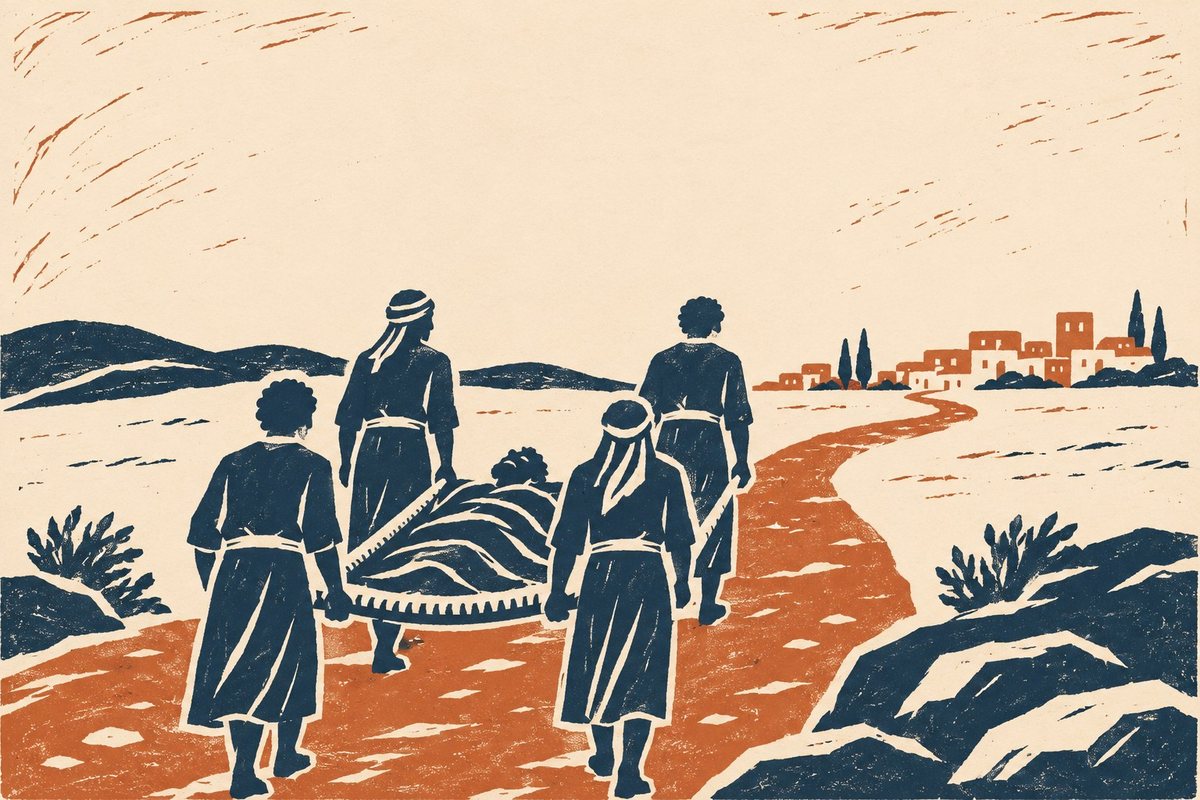
“Some men came, bringing to him a paralyzed man, carried by four of them.” (Mark 2:3)
Many scholars think this man was completely paralyzed, unable to use his arms or his legs. He was completely dependent on other people.
And his culture was brutal to him. In Jesus’ day, if you were blind or paralyzed or sick in a way people didn’t understand, they assumed you had done something to deserve it. Or your parents had. Some kind of cosmic payback. People were afraid that if they got too close, your bad luck would rub off on them, or that other people would judge them for being seen with you.
So people like this man were talked about, but never talked to. Usually they ended up begging by the side of the road. I can picture a father walking past with his kids, pointing at him: “You’d better behave, or that’s what happens to you.” He wasn’t a person to them. He was a prop. An object lesson.
Have you ever felt that way? Maybe not in church. I hope not in church. Maybe in a group of friends or your family. Something happens, and all of a sudden the conversation gets quiet when you walk in, and you realize you’ve gone from being on the prayer chain to being the subject of the prayer chain. Everyone’s suddenly in “bless her heart” mode. You’re on the outside.
This man had lived his whole life there.
And Jesus hated it. So did four of the man’s friends.
He wasn’t a person to them. He was a prop.
Four Faces in the Ceiling
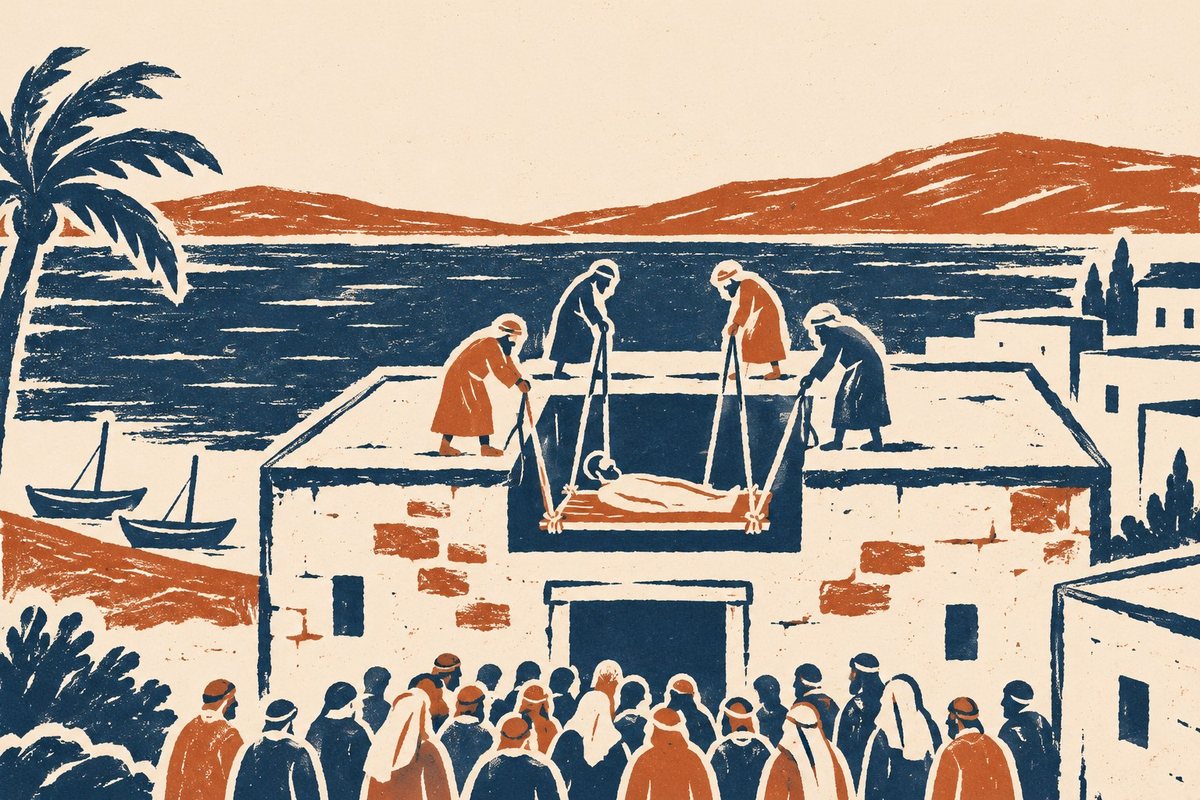
“Since they could not get him to Jesus because of the crowd, they made an opening in the roof above Jesus by digging through it and then lowered the mat the man was lying on.” (Mark 2:4)
Imagine this happening in your church on a Sunday morning. The pastor is preaching. You start hearing scuffling up on the roof. A little drywall falls in the middle of the room. Security is getting alert. We’re all looking around at each other. The scuffling gets louder. Then you see daylight. Then a bigger hole. Then four faces looking down at you.
Then they start lowering a man on a mat right into the middle of the service.
And remember, this is probably Peter’s family home. I can only imagine Peter’s face as somebody pulls up the tiles on Grandpa’s roof.
Nothing like this had ever happened. And it was impossible to ignore.
In my mind, I picture that man about halfway down, hanging over the crowd, swaying a little on his mat. These are people who think that if they touch him, they’ll catch something. And here he is, hanging over their heads in the middle of their worship. If I’m him, part of me is wishing I were anywhere else.
And then, in my imagination, he locks eyes with Jesus. This part isn’t in the text. It’s just how I picture it. I see Jesus smiling at him. Maybe even laughing a little, because it’s quite the situation. And it’s like Jesus is saying, “Don’t look at them. Just look at me.”
That man could no more heal himself before he met Jesus than you or I can clean ourselves up before we meet him. He represents all of us. He represents your friends who don’t know Jesus yet.
A Word About Miracles
A miracle is something God does outside the natural order of things, outside the rhythms and laws God built into the universe to keep it running. It’s supernatural, which means you can’t predict it, control it or produce it on demand.
God still does miracles. But he does them according to his plan, for his purposes and for his glory. Many of us have prayed for miracles. Some of those prayers were for God’s glory. If we’re honest, some of them were for ours. And sometimes God, for reasons we don’t understand yet, has said not yet.
Here’s how the Trinity works in a miracle like this, as simply as I can put it: the Father wills it, the Holy Spirit provides the power, and Jesus carries it out. Three persons, one God, working together.
And in this story, it all begins with what Jesus noticed first:
“When Jesus saw their faith, he said to the paralyzed man, ‘Son, your sins are forgiven.’” (Mark 2:5)
Their faith. Not just the man on the mat. The four friends who carried him, climbed up there and dug through the roof.
Who were these guys? And what would it take for you and me to be friends like that? That’s next.
Key Truths
- Capernaum was Jesus’ adopted home base, and Peter’s family home was likely the house in this story (Mark 2:1).
- In Jesus’ culture, people like the paralyzed man were talked about, not talked to.
- The man couldn’t heal himself before meeting Jesus, just as we can’t clean ourselves up first.
- Jesus responded to the faith of the friends who brought him (Mark 2:5).
For Reflection
- Was there a house where you felt at home growing up, even though it wasn’t yours? What made it feel that way?
- Have you ever been talked about instead of talked to? How did it feel?
- Who are the people in your world today who get talked about but not talked to?
- Picture yourself in this story. Are you in the crowd, on the roof, in the corner, or on the mat?
- What would it look like to dig through a “roof” for someone you love, to get them to Jesus no matter what’s in the way?
Let’s Pray
Father, thank you that Jesus came home to Capernaum, and that he comes close to people everyone else talks about. Open our eyes to the people on the outside in our own world. Give us the courage to bring them close, no matter what it costs. In Jesus’ name, amen.
Four Friends
The Chapter at a Glance
- Level ground the gospel divides and unites
- The four friends compassionate, accepting, loving, faithful
- The windy road Proverbs 3:5–6
The Big Idea · The ground is level at the foot of the cross.
Read First · Matthew 9:35–38
35 Jesus went through all the towns and villages, teaching in their synagogues, proclaiming the good news of the kingdom and healing every disease and sickness. 36 When he saw the crowds, he had compassion on them, because they were harassed and helpless, like sheep without a shepherd. 37 Then he said to his disciples, “The harvest is plentiful but the workers are few. 38 Ask the Lord of the harvest, therefore, to send out workers into his harvest field.”
New International Version
I am easily aggravated. Are you? Maybe it’s my age. Maybe it’s hormones. Maybe it’s middle-aged-man syndrome. But I can get aggravated.
My wife and I walk through our neighborhood for exercise and relaxation. Relaxation. And I can get aggravated walking through my own neighborhood. I see a sign in someone’s yard I don’t agree with. Don’t like them. A few houses down, a political sign. Don’t like them either. Then somebody who mows their lawn and leaves the grass clippings all over the sidewalk. Nope. Then someone sitting on their porch, and I nod and smile, and they don’t smile back. Off the list.
I can walk past hundreds of houses and come home liking about six people. And those six people probably don’t like me.
That’s how we can walk through the world if we’re not careful. We look for reasons to cross people off. They vote differently, dress differently, think differently, live differently. And our list gets so short that we end up with a handful of people just like us. As a church, we get so isolated that we become irrelevant. Instead of being holy and set apart, we’re just weird.
Lines in the Sand
It gets worse. We draw lines in the sand and plant ourselves on one side and decide Jesus must be with us, because we believe these things, so of course he does. And another group plants itself way over on the other side, just as sure that Jesus is with them. We weaponize our faith. We tie it to a nation or a party.
That’s exactly what the religious leaders did in Jesus’ day. The Pharisees and the Sadducees didn’t separate their politics from their faith. They knew what God wanted, because God had to agree with them. And their biggest fights with Jesus came when he said his kingdom wasn’t the kind you could see here, but a spiritual kingdom that was here now and still coming.
Jesus didn’t pick a side of the line. He planted his cross right on it. And he said, here is the level ground. The question isn’t whether I agree with you. The question is whether you’ll agree with me.
That doesn’t mean we stop caring when things are wrong. Sometimes we’re absolutely right that something is wrong. But meeting people at the level ground at the foot of the cross is the only real answer to the turmoil our world is in.
The gospel divides in that Jesus is the only way. It unites in that anyone can come.
The gospel divides. It says Jesus is the only way to God, and that’s not a popular thing to say. But the gospel also unites, because anyone can come. Even the people who aggravate me. Even the people who leave their grass clippings on the sidewalk. Even the people who couldn’t be more different from me if they tried.
Two things help me when I start crossing people off my list. First, people think what they think for a reason. What they believe makes sense to them, even when it doesn’t make sense to me. Second, and you may not like this, I’m not that important. Neither are you. I don’t have to be happy. I don’t have to be comfortable. Things don’t have to go my way. John the Baptist said it best: “He must become greater; I must become less” (John 3:30).
Back to the Roof
The church doesn’t exist just to fill up your bucket so you can survive another week. It doesn’t exist to protect you from the world. It exists to prepare you for the world, so you can be salt and light in your neighborhood, especially with the people you disagree with.
The four men who carried their friend to Jesus show us what that looks like. They defied the culture around them. They didn’t care what the religious people thought. They cared more about their friend than about anything else, and they would do whatever it took for him to meet Jesus.
I see four qualities in them. Every one of them is Christlike, and every one of them is something you and I can become.
1. The Compassionate Friend
Here’s a prayer I pray, and maybe you pray it too: God, break my heart for the world around me.
Break my heart so I don’t carry my ego, my preferences and my opinions so high that I write off everyone else. Break my heart so I can see the people around me the way you do.
When Jesus saw the crowds, the Bible says, “he had compassion on them, because they were harassed and helpless, like sheep without a shepherd” (Matthew 9:36). The word for compassion there means he was moved in his gut. He felt it physically. And instead of pushing him away from people who were nothing like him, it pulled him toward them.
These were people who wanted very different things than Jesus wanted for them. He looked at them and saw that they were beaten down and left for dead. And he said, “The harvest is plentiful but the workers are few” (Matthew 9:37).
A broken, compassionate heart is a Christlike heart. But it’s not a natural heart. It’s not the one you and I wake up with. So pray for it.
2. The Accepting Friend
Accepting is a word that scares a lot of Christians. Accepting what? And right away we start thinking about the list of things that are unacceptable.
We say, “Love the sinner, hate the sin.” And we do love people, as long as their sin, in our opinion, doesn’t make them unlovable.
Here’s what I mean by accepting. I accept somebody just the way they are as a person. I realize they’re probably the way they are for a reason. Maybe it happened to them. Maybe it happened through them. Either way, I can see them as someone who has value to God. And I don’t hate their sin any more than I hate my own. I hate my sin. I hate it in me, and I hate it in other people, because it divides and destroys. But I want to see the person, love them and earn the right to nudge them toward Jesus.
3. The Loving Friend
The Bible’s word here is agape. Agape love wants the best for someone else, and it’s committed to that no matter what. It isn’t based on emotion. It’s a choice. I will do whatever it takes, for as long as it takes, to make sure you can be right with Jesus.
That means being willing to be inconvenienced. It amazes me how quickly Christians can get fired up about what’s wrong with the world, and how apathetic we can be in our own lives. We point out the problem and explain how everybody else should change, but we never take responsibility to be part of the change ourselves.
If you don’t know anyone personally who needs Jesus, you’re too insulated. You need to get out more. And if you do know someone, here’s the question: If you won’t take responsibility to nudge them toward Jesus, who will?
Loving people like that is inconvenient. I love you enough to rearrange my preferences for you. I love you enough to be irritated by you. I love you enough to show up at church so you have someone to sit with, and maybe take you to lunch afterward.
4. The Faithful Friend
The faithful friend doesn’t give up.
You probably have someone in your life you’ve decided is never going to change. Too much water under the bridge. Too far gone.
Let me be careful here. Some people have wounded you deeply. Some have done things to you that were illegal or abusive, and you can’t be around them, and you shouldn’t be. Use your common sense. I’m not talking about them. I’m talking about most people.
The faithful friend sticks around. They’re steady and loyal, to the people in their lives and ultimately to God. I’m going to keep praying. I’m going to keep nudging. I’m going to keep encouraging and loving you for as long as it takes, because you meeting Jesus matters more than anything.
Myth: It’s not really my responsibility whether my friends meet Jesus. Somebody else will tell them.
Truth: The four friends carried their friend all the way to Jesus. If we won’t be inconvenienced for the people in our lives, who will?
The Windy Road
“Trust in the LORD with all your heart and lean not on your own understanding; in all your ways submit to him, and he will make your paths straight.” (Proverbs 3:5–6)
A lot of us have lived a windy road. Some of us are on one right now. And if we take our eyes off Jesus for even a week, we know exactly where that road leads.
Not long ago I led a memorial service for a woman who had been part of our church for only a short time. She came to faith in Jesus in her seventies, after a long, winding life. She sat with me one day in our café and told me her whole story. It was a windy road. Then God opened her eyes and softened her heart, and she gave her life to Christ. She was baptized, and we all celebrated with her. For the last couple of years of her life, she walked a straight path.
At her memorial, people shared stories for about thirty minutes. There were two kinds of stories: the ones from before Jesus and the ones from after. It was one of the most encouraging things I’ve been part of in a long time, because God did a miracle in a life.
And here’s the part I can’t stop thinking about. She had friends who wouldn’t give up on her. People who kept nudging and encouraging, even when she pushed them away. Compassionate, accepting, loving, faithful friends.
The choices you make today determine the person you’ll be tomorrow. They also determine the stories people will tell about you.
Who Is Your Friend on the Mat?
The church that lets the rough edge drag is a church full of friends like these. It understands that life is messy and that a lot of us have walked a windy road. It also understands that when we fix our eyes on Jesus, he makes that road straight.
So here’s my question for you. Who’s your friend on the mat? Who’s the person in your life who can’t get to Jesus on their own? And what roof are you willing to dig through to get them there?
Key Truths
- Jesus planted his cross on our lines in the sand. The ground is level at the foot of the cross.
- The gospel divides (Jesus is the only way) and unites (anyone can come).
- Christlike friends are compassionate, accepting, loving and faithful.
- When we trust the Lord with all our heart, he makes our paths straight (Proverbs 3:5–6).
For Reflection
- What makes you cross people off your list? Be honest.
- Where do you see Christians drawing lines in the sand today? What would it look like to meet people at the level ground of the cross instead?
- Which of the four friends comes most naturally to you: compassionate, accepting, loving or faithful? Which is hardest?
- What does it look like to accept a person without accepting everything they do?
- Who is your friend on the mat? What’s one thing you can do this week to help carry them toward Jesus?
Let’s Pray
Lord, break my heart for what breaks yours. Make me a compassionate, accepting, loving and faithful friend. Show me my friend on the mat, and give me the courage to grab a corner and carry them to you. Trust in you with all my heart, and make my path straight. In Jesus’ name, amen.
“Son, Your Sins Are Forgiven”

The Chapter at a Glance
- The mission left with us we are not Jesus
- “Son” chosen family
- Thoughts, actions and attitudes Mark 2:5–12
The Big Idea · Jesus chooses the people everyone else talks about.
Read First · Mark 2:5–12
5 When Jesus saw their faith, he said to the paralyzed man, “Son, your sins are forgiven.” 6 Now some teachers of the law were sitting there, thinking to themselves, 7 “Why does this fellow talk like that? He’s blaspheming! Who can forgive sins but God alone?” 8 Immediately Jesus knew in his spirit that this was what they were thinking in their hearts, and he said to them, “Why are you thinking these things? 9 Which is easier: to say to this paralyzed man, ‘Your sins are forgiven,’ or to say, ‘Get up, take your mat and walk’? 10 But I want you to know that the Son of Man has authority on earth to forgive sins.” So he said to the man, 11 “I tell you, get up, take your mat and go home.” 12 He got up, took his mat and walked out in full view of them all. This amazed everyone and they praised God, saying, “We have never seen anything like this!”
New International Version
Here’s a foundational idea for this whole book. The church Jesus started doesn’t exist to protect you from the world. You don’t come once a week to fill your bucket, spend it on yourself all week and come back for a refill. You come, and you do get filled. But you’re filled so you can go back out into the world and make a difference the way Jesus would.
Because here’s the reality: Jesus isn’t physically here.
The Holy Spirit is here. He lives in every believer. But Jesus himself died on a cross, rose again and ascended to heaven, where he’s seated at the Father’s right hand, ruling and sustaining all things, and getting ready to come back for us. He isn’t walking our streets the way he walked the roads of Galilee.
So he left the mission with us.
And that’s the problem. He left the mission with people. We’re not Jesus. We don’t think like him. Half the time we don’t act like him. We’re a little selfish. We’re preoccupied. We’re not very self-aware. We say things we shouldn’t. We hurt the people we love. Sometimes we’re part of the problem instead of part of the solution.
And still, the mission is ours. So how do people like us pick up the mission of Jesus? I think this story in Mark 2 shows us.
A Fence Around the Law
In Jesus’ day, there were preachers who wanted to control people, and I think some preachers still do. One of the easiest ways to control people is with rules. Not the rules God gave in Scripture, but rules a church or a leader makes up.
The religious leaders knew God’s law well. But they didn’t trust ordinary people to read it and follow it on their own. So they built a fence around it, a wall of extra rules to keep people from ever getting close to breaking the real ones. Then they built rules about the rules. There were so many that nobody could keep track, and nobody could ever measure up. Nobody but them, because whoever makes the rules gets to win.
Then Jesus walked in and started teaching that anyone could come to God. That destroyed their fence. If people could go straight to God through Jesus, they didn’t need the gatekeepers anymore. The religious leaders were watching Jesus work them out of a job.
Outing Themselves
Now think again about the four friends.
To pick up a paralyzed man, touch him, carry him and be seen with him, they had to step away from the religious leaders who said that would make them unclean. They knew what the enforcers of the rules could do to them. They could be shut out of the synagogue and their whole community. They were rolling the dice and risking everything. They were outing themselves as people who took Jesus at his word.
And then they vandalized somebody’s roof to do it.
I wonder how much faith I have. How much urgency do I really feel? Am I willing to be inconvenienced for the mission of Jesus? Or have I settled into a quiet little philosophy: I’m okay, so it’s okay?
It’s every man for himself, right? It’s not really my responsibility. Somebody will tell them. We’re just friends. We don’t have that kind of relationship.
But when we decide that the people in our lives who don’t know Jesus aren’t worth the risk of nudging them toward him, here’s what we’re really telling them, whether we say it or not: I don’t care enough to tell you the truth.
“Son” means: I choose you. You’re my chosen family.
“Son”
“When Jesus saw their faith, he said to the paralyzed man, ‘Son, your sins are forgiven.’” (Mark 2:5)
Let’s slow down on that word, son.
If I called you “son,” you’d probably think, All right, Dad. Whatever. It sounds a little distant to us. It wasn’t.
All of us have the family we’re born into. Some of us love our families. Some of us say, “Yep, that’s the family I got.” Your mileage may vary. But all of us also have a family we choose. People who aren’t related to us by blood, but we’ve decided they’re family. When you tell someone like that, “You’re family,” it means something. I’ve chosen you. You’ve chosen me. We’re doing life together. You’re my ride-or-die.
That’s what Jesus was saying to a man he may have never met before. A man everybody talked about and nobody talked to. In front of everyone, Jesus looked at him and said, “I choose you. You’re family.”
More Than a Healing
Then Jesus did something nobody expected. He didn’t start with the man’s legs. He started with his sins.
That made the religious leaders furious:
“Now some teachers of the law were sitting there, thinking to themselves, ‘Why does this fellow talk like that? He’s blaspheming! Who can forgive sins but God alone?’” (Mark 2:6–7)
They were right about one thing. Only God can forgive sins. They just couldn’t see who was standing in front of them.
Jesus knew what they were thinking. And he asked them a question:
“Which is easier: to say to this paralyzed man, ‘Your sins are forgiven,’ or to say, ‘Get up, take your mat and walk’? But I want you to know that the Son of Man has authority on earth to forgive sins.” So he said to the man, “I tell you, get up, take your mat and go home.” (Mark 2:9–11)
Anybody can say “your sins are forgiven.” You can’t see that happen. But “get up and walk”? Everybody can see whether that happens or not. So Jesus did the thing they could see, to prove he had done the thing they couldn’t.
“He got up, took his mat and walked out in full view of them all. This amazed everyone and they praised God, saying, ‘We have never seen anything like this!’” (Mark 2:12)
The man who had been carried in walked out carrying the mat that had carried him.
What Is Sin?
Sin isn’t a popular word. But here’s a simple definition: sin is any thought, action or attitude that separates us from God.
The Bible says, “All have sinned and fall short of the glory of God” (Romans 3:23). Everyone. Every person ever born, except Jesus. “The wages of sin is death, but the gift of God is eternal life in Christ Jesus our Lord” (Romans 6:23). And “God so loved the world that he gave his one and only Son, that whoever believes in him shall not perish but have eternal life” (John 3:16).
For someone who doesn’t know Jesus yet, the answer is to admit your sin, believe who Jesus is and choose to follow him. That’s how you get in. And when you want in, Jesus says, “You’re in. You’re family.”
But here’s what convicts me. Those of us who already follow Jesus still sin. And one of our biggest sins is our attitude.
Do I have an attitude that separates me from God? Or from the people God loves and Jesus came to save? Is there anyone so different from me that I’m tempted, in my heart, to dismiss them, ignore them or shut them out?
That attitude separates us from God, and it separates us from the mission he gave us in the first place.
Myth: Sin is only about the bad things I do.
Truth: Sin is any thought, action or attitude that separates us from God, including the attitudes that separate us from the people he loves.
Their Faith
Jesus saw their faith. Faith is confidence in what we hope for and assurance about what we don’t see (Hebrews 11:1). Confidence that Jesus really can forgive sin. That a life really can change. That nobody you know, no matter how bad or how far gone, is beyond the reach of Jesus.
So here’s the question. Are we willing to have our hearts broken and risk it all like those four friends? Are we willing to be like Jesus, who chose to love people who weren’t like him at all and people who didn’t even like him at all?
He never lost sight of the mission. And neither did they.
Key Truths
- Jesus left his mission with people like us, people who aren’t Jesus.
- The four friends risked their reputations to get their friend to Jesus.
- “Son” means chosen family. Jesus chooses the people others talk about.
- Jesus healed the man to show he has authority to forgive sins (Mark 2:10–11).
- Sin is any thought, action or attitude that separates us from God.
For Reflection
- If Jesus left his mission with people like us, what part of that mission is yours this week?
- Where do you hear the “I’m okay, so it’s okay” voice in your own life?
- Who in your life would you call chosen family? What made them family?
- Why do you think Jesus forgave the man’s sins before he healed his body?
- Is there an attitude in you right now that separates you from someone God loves? What would it take to let it go?
Let’s Pray
Jesus, thank you for calling us “son” and “daughter,” your chosen family. Forgive our sins, and forgive the attitudes that separate us from you and from the people you love. Give us the urgency of those four friends. We won’t settle for “I’m okay, so it’s okay.” In Jesus’ name, amen.
Two Men Went Up to Pray
The Chapter at a Glance
- Where Jesus chose to sit an open door, a clear gospel
- Two men, two prayers Luke 18:9–14
- What forgiveness is not and what it is
The Big Idea · The man who knew he was dirty went home clean.
Read First · Luke 18:9–14
9 To some who were confident of their own righteousness and looked down on everyone else, Jesus told this parable: 10 “Two men went up to the temple to pray, one a Pharisee and the other a tax collector. 11 The Pharisee stood by himself and prayed: ‘God, I thank you that I am not like other people—robbers, evildoers, adulterers—or even like this tax collector. 12 I fast twice a week and give a tenth of all I get.’ 13 “But the tax collector stood at a distance. He would not even look up to heaven, but beat his breast and said, ‘God, have mercy on me, a sinner.’ 14 “I tell you that this man, rather than the other, went home justified before God. For all those who exalt themselves will be humbled, and those who humble themselves will be exalted.”
New International Version
Before we go any further, I want you to know what makes me tick. Not just as the person writing this book, but as a follower of Jesus and a pastor.
I believe, with absolute conviction, that Scripture is true. It is our final authority for what we believe and how we live, and it’s as true today, whatever our culture is doing, as it was the day it was written.
I believe Jesus is the Son of God. I believe he is God. He came to earth as a real person, fully God and fully man at the same time. He lived a perfect, sinless life. He took the sins of the world on himself and died on the cross to pay a price you and I could never pay. He rose again and defeated sin, Satan and death once and for all, so that anyone who believes in him won’t spend eternity separated from God, but will spend it with him in heaven.
I believe Jesus is the only way to God. When he said, “I am the way and the truth and the life. No one comes to the Father except through me” (John 14:6), he meant it.
And I believe anyone can come.
That’s where I draw a distinction. Somewhere along the way, a lot of churches decided that only certain people could come, and the rest made us a little uncomfortable.
Where Jesus Chose to Sit
Here’s how I picture Jesus’ ministry.
Imagine walking into a room with one aisle down the middle. On one side are all the people who agree with you, the people you’re comfortable with, your people. On the other side is everybody else. The people you can’t relate to. The people who make you think, How in the world could anybody think that way?
The room is already divided. Everybody’s already seated. You’re standing in the back.
If you sit with your people, everyone will know you’re one of them. If you sit on the other side, your own people might never forgive you.
Jesus walked into a room like that and sat down with the people the religious crowd couldn’t stand. Not to agree with everything they did, but to start a conversation that didn’t divide. A conversation that brought people together at the foot of the cross. And where he chose to sit made some people hate him so much that they wanted him dead. In the end, he stretched out his arms and died. For everybody, on both sides of the aisle.
We live in a world where we want to win, and when we win, somebody else has to lose. As long as I’m right, I’m okay. And somewhere in the scuffle, the mission gets lost.
So how do we earn the right to share our faith? How do we become a voice people will actually listen to? Love that is only talked about won’t do it. Love has to be demonstrated. Jesus showed his love by where he chose to sit.
A Story for the Self-Righteous
Jesus told a story once, and before he even started, Luke tells us exactly who it was for:
“To some who were confident of their own righteousness and looked down on everyone else, Jesus told this parable.” (Luke 18:9)
When I first read that, my reaction was, Yeah! All those self-righteous people who look down on everybody else, they’d better listen up. Jesus is about to let them have it.
And then I took a step back. Oh. Oh, wait.
Am I confident in my own righteousness? Do I think I’m better than somebody because I’m right and they’re wrong? Because I’ve had experiences they haven’t?
Here’s the scary thing about self-righteous people. They are very rarely self-aware. They can look in a mirror and never see it. But everybody around them sees it.
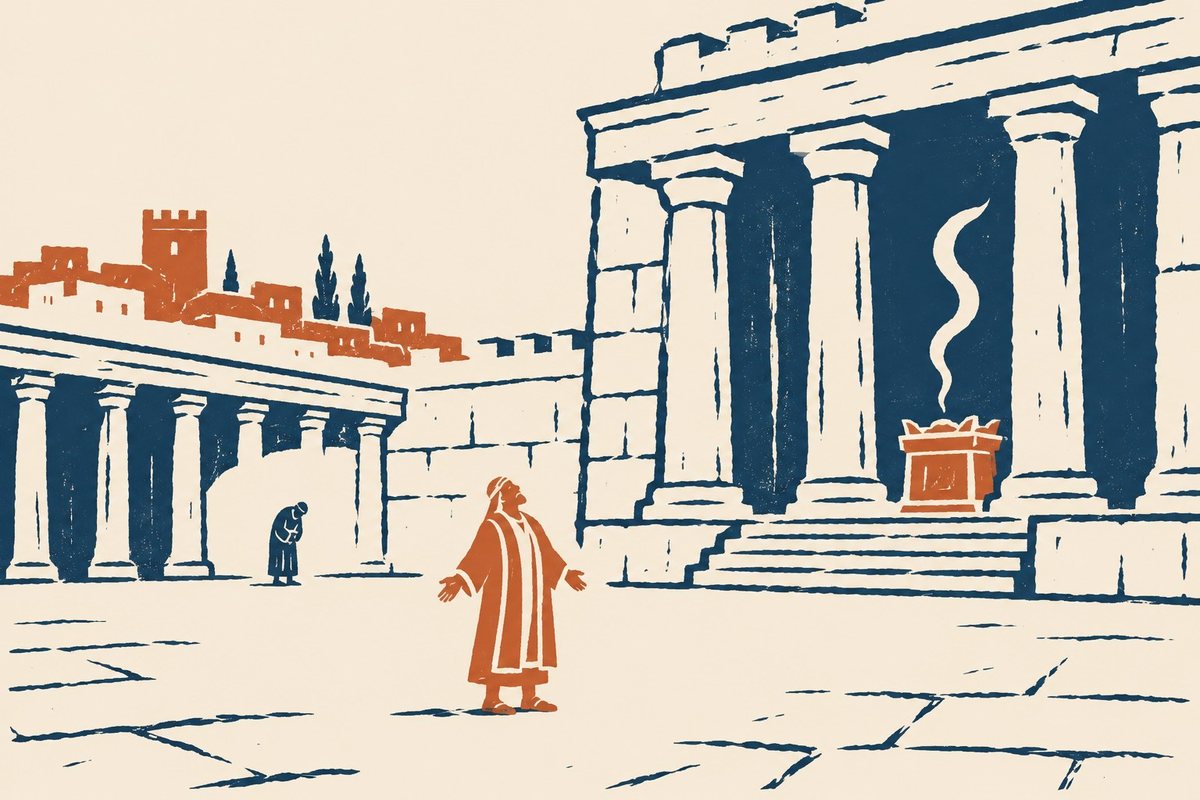
“Two men went up to the temple to pray, one a Pharisee and the other a tax collector.” (Luke 18:10)
A parable is a made-up story laid alongside a true principle to make a point. And Jesus picked two characters from opposite ends of the world his listeners knew.
Jewish worshipers went to the temple to pray at set times each day, morning and afternoon, when the incense was burned and the sacrifices offered. They prayed out in the open courtyards, and as the smoke of the incense rose, it was a picture of their prayers rising to God.
The Pharisee was a respected religious leader. One of the rule makers. Everybody looked up to him.
The tax collector was the lowest of the low. He worked for the occupying Roman government and squeezed his own people for money. He was a traitor. Think of the person who got your grandmother evicted from her home. Everybody had been raised not to like this guy.
The Pharisee’s Résumé
“The Pharisee stood by himself and prayed: ‘God, I thank you that I am not like other people—robbers, evildoers, adulterers—or even like this tax collector.’” (Luke 18:11)
Can you imagine a prayer like that? God, thank you that I’m not like these other people.
Before we laugh at him, how many of us have thought something like that in the last few weeks?
If he’d stopped and said, God, thank you for saving me and not leaving me the way I was, that would have been a great prayer. But that’s not where he was going. He started naming people. Robbers. Evildoers, which covers just about everybody. Adulterers. And then, even like this tax collector, using a real person standing right there as his example. A person, not a prop.
Then he read God his résumé:
“I fast twice a week and give a tenth of all I get.” (Luke 18:12)
God’s law only required one day of fasting a year, on the Day of Atonement. But many Pharisees fasted twice a week, on Mondays and Thursdays, which also happened to be market days, when everybody was in town to see them looking hungry and holy. And they tithed down to the tiniest herb seeds in their gardens, so everyone could see how spiritual they were (Matthew 23:23).
Giving matters, by the way. Generous, sacrificial giving is part of following Jesus. But this man wasn’t worshiping. He was performing.
He forgot he was dirty.
He forgot he was dirty. And the people in the church who forget they’re dirty are part of the problem.
The Man in the Back
“But the tax collector stood at a distance. He would not even look up to heaven, but beat his breast and said, ‘God, have mercy on me, a sinner.’” (Luke 18:13)
That word but is huge.
The tax collector stood at the back, where nobody would notice him. He didn’t think he should be there. He didn’t feel like he belonged. He wouldn’t even lift his eyes.
And he beat his chest. To us that might look strange, but in that culture it was an expression of the deepest grief, something men almost never did. It shows up only one other time in the New Testament: when the crowd at the cross realized, too late, what they had done to Jesus (Luke 23:48). That’s how broken this man was.
He came in expecting to be kicked on the way in, because he knew he deserved it. I understand that man. Maybe you do too.
God, have mercy on me, a sinner.
He described himself exactly right. Then Jesus delivered the twist:
“I tell you that this man, rather than the other, went home justified before God. For all those who exalt themselves will be humbled, and those who humble themselves will be exalted.” (Luke 18:14)
The churchiest man in the room went home the same way he came. The man who knew he was dirty went home clean.
What Forgiveness Is Not
So what does this story teach us about forgiveness?
Being good does not equal forgiveness. Being good just leads to comparing yourself with someone else, and needing to win. It puts the job of your salvation back on you. Scripture never says that being good earns forgiveness.
Being smart does not equal forgiveness. The Pharisees knew every Bible story and every right answer. They could dazzle you. Jesus called them whitewashed tombs: beautiful on the outside, dead on the inside (Matthew 23:27).
Being in the right place does not equal forgiveness. The Pharisee was standing in the temple. So was the tax collector. Location didn’t save either of them.
Salvation through Jesus equals forgiveness. That’s it.
What’s the greatest thing Christianity has to offer the world? Not a moral code. Not a political platform. Not even inner peace, though peace comes with it. The greatest thing we have to offer is forgiveness of sin and a brand-new life. Old becomes new. Dead becomes alive. Lost becomes found.
Myth: If I’m good enough, smart enough and show up in the right places, God will accept me.
Truth: Only Jesus forgives. The man who knew he was dirty went home clean.
Too Good to Be True
Years ago I started a church in Marin County, California, just north of San Francisco, where very few people went to church. The people were smart, well educated and successful, and most of them had never set foot in a church.
I remember telling the story of Jesus to one man who sat on the board of a company whose products are probably all over your house right now. Nobody had ever connected the dots for him: sin, a Savior, forgiveness, a new life. And when it clicked, his first response was, “I have to tell my wife. I have to tell my kids.”
That happened again and again. People would bring their friends to me and say, “Tell them what you told me. It’s almost too good to be true.”
That church grew because people brought their friends to Jesus. They remembered what they had been without him, and they couldn’t keep it to themselves.
Outing Yourself
That’s hard for a lot of us. When you start nudging the people in your life toward Jesus, you out yourself as a Christian. And then they’re going to notice all the ways your life doesn’t measure up to Jesus.
When they point it out, here’s what you get to say: You’re right. I’m not perfect. I haven’t arrived. But I’m following Jesus, and he’s changing me.
That takes humility and honesty. It’s a lot easier to lob truth bombs over the fence and hope nobody throws one back. But the man in the back of the temple shows us the way. He knew he was dirty. And that’s exactly the person Jesus sends home clean.
Key Truths
- Jesus is the only way to God, and anyone can come.
- Self-righteous people are rarely self-aware (Luke 18:9).
- Being good, smart or in the right place doesn’t equal forgiveness. Only salvation through Jesus does.
- The man who knew he was dirty went home clean (Luke 18:14).
For Reflection
- In the room with one aisle, which side would you naturally sit on? Who’s on the other side?
- Where might you be “confident of your own righteousness” without realizing it?
- Which do you lean on most: being good, being smart or being in the right place?
- When has someone pointed out where your life doesn’t match Jesus? How did you respond?
- Who is one person in your life who might say, “That’s almost too good to be true,” if they really heard the gospel?
Let’s Pray
God, have mercy on me, a sinner. Keep me from ever forgetting that I’m dirty. Keep me from thinking I’m better than anyone else. Thank you that forgiveness doesn’t come from being good, smart or in the right place, but from Jesus alone. Help me tell someone today that it really is that good. In Jesus’ name, amen.
Costumes
The Chapter at a Glance
- Playing the part costumes are for kids
- Three challenges legalism, culturalism, traditionalism
- In full view Mark 2:11–12
The Big Idea · A costume changes the outside. Jesus changes the inside.
Read First · Mark 2:10–12
10 “But I want you to know that the Son of Man has authority on earth to forgive sins.” So he said to the man, 11 “I tell you, get up, take your mat and go home.” 12 He got up, took his mat and walked out in full view of them all. This amazed everyone and they praised God, saying, “We have never seen anything like this!”
New International Version
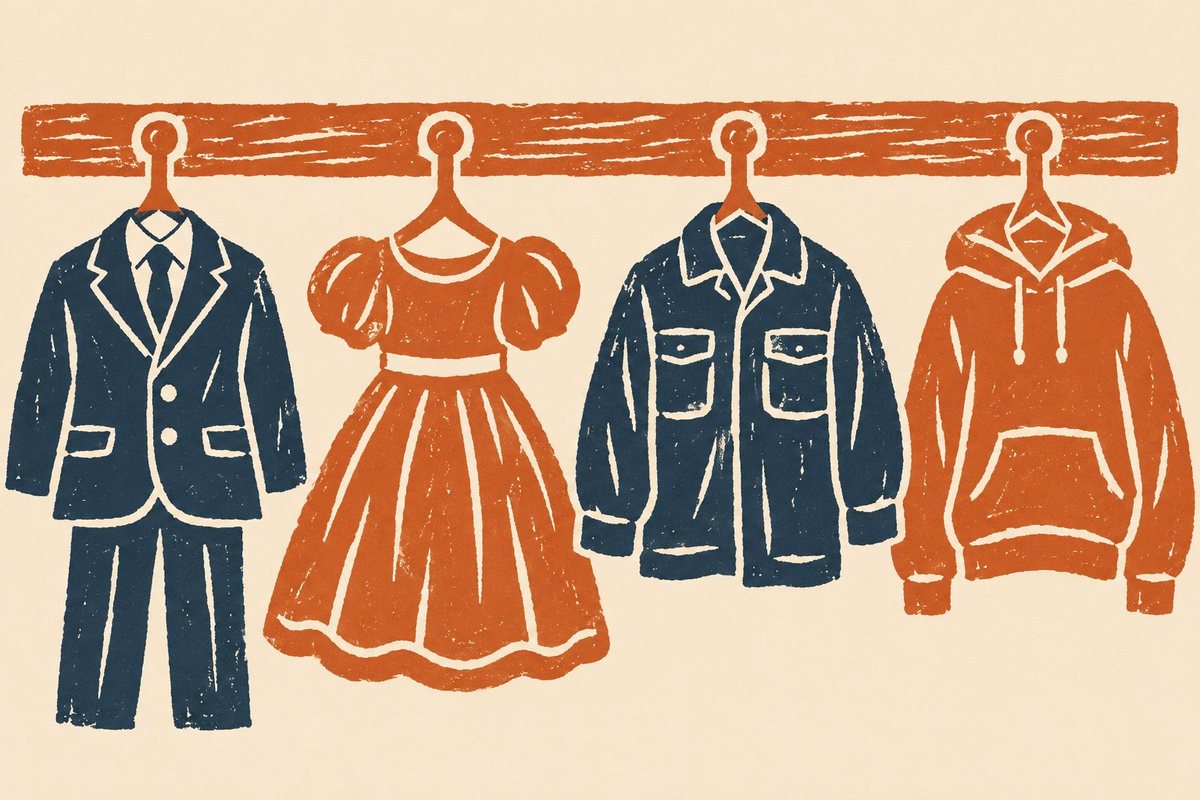
My granddaughter is almost four, and she loves to dress up. Not long ago she went to see a movie based on one of her favorite cartoons, and she went dressed as one of the characters. I couldn’t tell you which one. I only watch that show when I’m with her, and even then I’m not paying attention. But she knew exactly who she was.
When I buy her a princess dress, she is a princess. Reality doesn’t matter. Who she is once she takes the dress off and puts her play clothes back on doesn’t matter. When a little kid puts on a costume, they become the part.
And when you’re three or four, that’s exactly what you’re supposed to do.
But when you grow up, and especially when you become a follower of Jesus, you can’t just put on the costume and play the part anymore.
The trouble is, some churches expect exactly that. You have to look the part before you can come in and be a part. Behave first. Then believe, while people watch you, sometimes for years. Then maybe, someday, belong.
Jesus flipped that. If you want to belong, you belong. Come follow me. As you follow me, you’ll believe in me. And when you believe in me, your behavior will change. Behavior doesn’t come from a costume. It comes from who we are, from our decision to follow Christ and from the Holy Spirit living in us and teaching us how to think and live.
Three Challenges
If you’ve been around church or religion at any point in your life, you’ll face three big challenges along the way. Every group of people deals with some version of these. But in the church they’re more dangerous, because so much more is at stake.
Legalism
Legalism is a faith that depends on following the rules.
The Pharisees were all about the rules. They made up rules to make sure you kept the rules. Then they made up rules to make sure you kept the rules that made sure you kept the rules. And they had people following you around to see if you were keeping them.
Who gets to make the rules? Who gets to enforce them? Who gets to decide who fits and who doesn’t? They did. And Jesus turned that whole system on its head.
Culturalism
Culturalism is letting culture redefine what Scripture means.
We live in a marketplace of ideas, all competing for how you see the world, how you see Jesus and what you think your role is. Culture affects how we apply Scripture. It never changes what Scripture means. I believe the Bible is true and that it’s our final authority, then and now. The way we live it out may look different from one place and time to another. But the heart of God’s Word stays the same forever.
Culture is always trying to bend the church to fit it, to reinvent Jesus, and even to redefine what’s good. People say, “I’m a good person,” or, “We need to do good.” But look back through history. Every age has defined good its own way, and sometimes it has gotten it horribly wrong. Not long ago in this country, slavery was considered acceptable by most people, including most of the church. We know now how evil that was. So who gets to define good? Culture certainly shouldn’t.
Traditionalism
Traditionalism says, This is how we’ve always done it, so this is how we’ll always do it.
That’s Grandma’s house. When Grandpa changed his house, he had to deal with me. I wanted to keep everything the way it was, because it reminded me of safe, simple times. When it comes to Grandma’s house, that’s fine. When it comes to the church, it’s fatal. We live in a world that’s constantly changing, and when we chase the past, we miss the chance to matter in the present.
Myth: Following Jesus means learning the rules, the vocabulary and the look, and putting them on.
Truth: A costume changes the outside for an hour. Jesus changes us from the inside, all week long (Romans 12:2).
The Real Test
Followers of Jesus do live differently. But here’s how you can tell whether that’s real.
It’s not what you post on social media. It’s not how you argue with people you barely know. It’s not the conversation you have with a cashier who sees the world differently.
It starts with the person you wake up next to in the morning, if you wake up next to somebody. It’s the people at your breakfast table, the person you hand a Pop-Tart to on their way out the door. It’s the first people you see when you get to work, or the people you see at the gym every day. It’s the people closest to you. They’re the ones who see your life up close and know whether something about you is different.
That’s hard. It’s so much easier to figure out what a Christian costume looks like, buy one and put it on. Some people get very good at it. On Sunday morning it’s laid out ahead of time. It goes on for the hour or so we’re together. Then it comes right back off for the rest of the week.
Paul told us not to do that: “Do not conform to the pattern of this world, but be transformed by the renewing of your mind” (Romans 12:2).
Don’t just put on a costume. Most of us already change costumes all week long. A work costume, a gym costume, a going-out costume, and then a church costume on Sunday. Paul says let God change you on the inside instead. Let the Spirit renew the way you think. And then, he says, “you will be able to test and approve what God’s will is—his good, pleasing and perfect will.”
In Full View
Let’s go back to the house in Capernaum one last time.
The man was lowered down through the roof. Jesus looked at him and called him son. He forgave his sins. And then he said:
“I tell you, get up, take your mat and go home.” He got up, took his mat and walked out in full view of them all. This amazed everyone and they praised God, saying, “We have never seen anything like this!” (Mark 2:11–12)
He walked out in full view of them all. The same people who had talked about him and never talked to him watched him walk out on his own two feet.
Think about everyone in that room. The religious leaders were horrified. He can’t do that. Who does he think he is? They were losing their crowd and their control. The skeptics were just looking for the next show: One more miracle. Let’s follow him to the next town. The people who had been hoping Jesus was who he said he was got drawn in a little closer, their hearts a little softer. The disciples’ faith got stronger.
And the man who had been paralyzed? He went from being a prop to being a person. Somebody nobody would touch became somebody nobody could ignore.
He belonged. Jesus made that clear in front of everyone. He believed. And his life, and the lives of the people watching, changed. Belong. Believe. Behave.
That’s the order. And it doesn’t happen by putting on a costume. It happens when you meet Jesus.
Key Truths
- Costumes are for kids. Jesus wants to transform us, not dress us up (Romans 12:2).
- Three challenges pull a church off course: legalism, culturalism and traditionalism.
- The real test of faith is how the people closest to you see your life.
- The man walked out “in full view of them all.” Jesus changes people from the inside out (Mark 2:12).
For Reflection
- What “costumes” do you wear during a typical week? Which one is hardest to take off?
- Which of the three challenges do you think your church, or you, struggles with most: legalism, culturalism or traditionalism?
- Can you think of something your culture calls good that Scripture would question? Or something Scripture calls good that culture questions?
- If you asked the people closest to you whether Jesus is changing you, what would they say?
- The man walked out in full view of everyone. What would it look like for your faith to be seen, not as a costume, but as a changed life?
Let’s Pray
Father, we don’t want to wear a costume. We want to be changed. Renew our minds. Guard us from legalism, culturalism and traditionalism. Let the people closest to us see Jesus changing us, not just on Sunday, but all week long. In Jesus’ name, amen.
The Shepherd’s Voice
The Chapter at a Glance
- The danger in here flapping my wings
- The Good Shepherd John 10:1–11
- Why we follow trust him, love him, like him
- How we follow five application points
The Big Idea · There’s a difference between believing in God and believing God.
Read First · John 10:1–5, 9–11
1 “Very truly I tell you Pharisees, anyone who does not enter the sheep pen by the gate, but climbs in by some other way, is a thief and a robber. 2 The one who enters by the gate is the shepherd of the sheep. 3 The gatekeeper opens the gate for him, and the sheep listen to his voice. He calls his own sheep by name and leads them out. 4 When he has brought out all his own, he goes on ahead of them, and his sheep follow him because they know his voice. 5 But they will never follow a stranger; in fact, they will run away from him because they do not recognize a stranger’s voice.” 9 “I am the gate; whoever enters through me will be saved. They will come in and go out, and find pasture. 10 The thief comes only to steal and kill and destroy; I have come that they may have life, and have it to the full. 11 I am the good shepherd. The good shepherd lays down his life for the sheep.”
New International Version
My wife and I walk the trails near our home most evenings. And on those trails live my nemesis: the geese.
One evening we came around a bend and there were two of them on the path, a bigger one and a slightly smaller one. The little one was busy eating, completely unaware of us. The big one was honking at it. Honk, honk, honk. Nothing. The little one kept eating. We got closer. More honking. Finally the big goose waddled over, flapped its wings and chased the little one right off the path.
“I wonder what that was about,” I said.
My wife didn’t hesitate. “Oh, they’re married.”
“All right,” I said. “Tell me what you’re thinking.”
“The big goose is the husband. The little one is the wife. She has no idea there’s danger coming, and he’s trying to tell her to get off the path. She won’t pay attention until he chases her off.”
I could live with that.
The next day we were walking out of a store, and a man approached us. “Hey.” I ignored him. “Hey.“ He wasn’t going away. So I put on my angry eyes, like Mr. Potato Head in Toy Story. My wife was holding my left arm, and instead of doing what she’s supposed to do, which is let go and step away, she held on tighter.
It turned out he just wanted some money. No big deal. But afterward I lectured her. “When something like that happens, let go of me. Walk away. Get out of the way. Your weapon is your phone. If something happens and I’m worried about you, I can’t handle the situation.”
Right in the middle of my lecture, she started laughing.
“Why are you laughing?”
“Because I was right about the geese.”
She was right about the geese.
The Danger in Here
Sometimes it’s my job to flap my wings and let you know there’s danger. And there is danger out there. There’s a lot going on in our world that’s stressful and confusing. A lot of voices are shouting at you about what to think and how to feel, and whether to be afraid.
But I’m less worried about the danger out there than the danger in here. I know how fast my heart, my attitude and my outlook can drift. Before I know it, I’m cynical and negative, and instead of pointing people to hope, I’m part of the problem.
That’s the danger I can actually do something about. So how does a follower of Jesus stay on the path?
The Sheep Pen
Jesus told a story about sheep. Not a parable, more of an illustration, the kind of everyday picture his listeners would recognize instantly. Like me telling you about walking out of a store.
Shepherds were part of Israel’s story. Abraham, Isaac, Jacob, Moses and David were shepherds. The prophet Ezekiel described God himself as the shepherd of his people (Ezekiel 34). But by Jesus’ day, shepherds had become rough characters with a sketchy reputation. That didn’t bother Jesus at all. Everybody is his kind of person, even people who aren’t churchy.
Most villages had a shared sheep pen, a stone corral with one opening, and a gatekeeper the village hired to watch it. Different shepherds would bring their flocks in at night. Sheep need a lot of help. They get shaggy, snag their wool on thorns and wander off cliffs if they aren’t following the sheep in front of them. I can relate.
When the shepherd led his flock into the pen, he stood at the opening with his staff. He’d stop each sheep and check it over from nose to tail, and then lift his staff and let it through. Inside the pen, the sheep were safe.
And the shepherd knew his sheep. He’d named them. You name your pets, right? Almost nobody has a dog named Dog. We have a standard poodle named Daisy Duke and a thirteen-pound mutt named Baxter. The sheep knew the shepherd’s voice, and they wouldn’t follow anyone else.
“Very truly I tell you Pharisees, anyone who does not enter the sheep pen by the gate, but climbs in by some other way, is a thief and a robber. The one who enters by the gate is the shepherd of the sheep. The gatekeeper opens the gate for him, and the sheep listen to his voice. He calls his own sheep by name and leads them out. When he has brought out all his own, he goes on ahead of them, and his sheep follow him because they know his voice.” (John 10:1–4)
Jesus was talking about the religious leaders. They’d climbed over the wall, and with all their legalism, culturalism and traditionalism, they’d been stealing the joy of knowing God from the people.
Then Jesus said it plainly:
“I am the gate; whoever enters through me will be saved. They will come in and go out, and find pasture. The thief comes only to steal and kill and destroy; I have come that they may have life, and have it to the full. I am the good shepherd. The good shepherd lays down his life for the sheep.” (John 10:9–11)
Sheep follow the shepherd because they know his voice. They have a relationship with him.
Why We Follow
So why does a person’s behavior change after they meet Jesus? Why would we start doing things we never did before and stop doing things we always did? Why would we start thinking and living differently, as a spouse, a parent, a son or daughter, a coworker?
Not because we put on a costume. Because we follow the Shepherd. And here’s why.
Because We Trust Him
Most people will tell you they believe in God. Yeah, God exists. I’m not an atheist. Congratulations. What’s next?
There’s a difference between believing in God and believing God.
Do you believe he loves you? Do you believe you’re his kind of person? Do you believe that even though he knows everything you’ve ever done and thought, he chose you anyway? That Jesus died for you anyway? That he has a plan for your life far better than anything you could come up with? Do you believe God is who he says he is, and that he’ll do what he says he’ll do?
That’s trusting him. That’s taking God at his word.
Because We Love Him
The love the New Testament talks about is agape. It isn’t the flip-floppy feeling in your stomach when you fall in love or see a new car. It’s the love of choice and commitment. This is who I am, and I’m staying.
You won’t always feel it. If we go by our feelings, they’ll lead us out into the middle of nowhere and leave us there. “The heart is deceitful above all things,” Jeremiah says (Jeremiah 17:9). “Follow your heart” might be some of the worst advice you’ll ever get. My heart almost always wants what I want, and that’s usually not what Jesus wants.
I came across some research on couples who had stayed married for decades, and what they’d learned along the way. To me it sounds a lot like agape love.
- They accepted each other’s quirks instead of trying to fix them.
- They let some conflicts go instead of digging into every detail.
- One of them was quick to make peace. In our marriage, that’s almost always my wife.
- They saw it as the two of them against the world.
- They learned to wait out the hard seasons, because storms come and go.
That’s what it looks like to choose to stay. It’s what it looks like to love God too.
Because We Like Him
Here’s a question that might sound a little irreverent: Do you like God?
If I told you Jesus wanted to meet you for coffee Tuesday morning, some of you would sweat it out until then. You’d figure you were about to get called on the carpet, with a list of everything you’d done wrong.
Not long ago I went to Topgolf for the first time with a couple of friends, one I’d known a long time and one I’d just met. We spent an hour and a half hitting balls and giving each other a hard time. Afterward somebody started a group text: That was fun. We need to do it again. Why? Because we liked each other.
That’s how someone who knows the Shepherd’s voice follows him. Not out of fear. They want to be with him. They know he’s leading them somewhere good.
There’s a difference between believing in God and believing God.
How We Follow
So how do you know whether you’re on the right path? Here are five ways to stay close to the Shepherd.
1. Choose your friends carefully. Show me your friends, and I’ll show you your future. My wife is my workout partner, and she’s great. But if I’m lying on the bench and the bar is coming down on my chest, she is not lifting that weight off of me. Not for any reason. I need somebody in my life who can do the heavy lifting when the weight of life is about to crush me. I’ve watched so many people blow up their lives, and the first thing they always do is push away the friends who will tell them the truth. That’s why small groups matter so much.
2. Develop your own convictions. Don’t just borrow somebody else’s. Start with them if you need to, but ask why. Why do I believe this? Why did my grandma believe it? Why did my pastor teach it? Some things in our faith are non-negotiable, and I’ve told you what those are. But so much more is worth investigating for yourself.
3. Use an ellipsis. You know what an ellipsis is: dot, dot, dot. On the essentials, put a period. On a lot of other things, I put an ellipsis. This is what I believe, and this is why… but I might be wrong. It’s not worth dividing over. And be careful not to judge everyone else by the calls you’ve made for yourself. That’s how we end up building the fence around the law all over again. (If you’re a parent, you do get to set the rules for your kids. Just make sure you can show them where Jesus says it.)
4. Your faith is personal, but it’s not private. The people who should know you follow Jesus are the people closest to you. They don’t need to think you’re perfect. They need to see that you’re trying. When they say, “You’re not who you say you are,” you can say, “You’re right. But I’m not who I was yesterday, and I hope I’m not today who I’ll be tomorrow.”
5. Live for an audience of one. You don’t have to worry about what religious people think. Have people in your life who can give you honest feedback, absolutely. But in the end, you answer to Jesus.
Who Are You Bringing?
Belong. Believe. Behave. That’s the church in a nutshell. That’s the dirty church.
So here’s my question. Who are you bringing?
I want to meet your friends who don’t know Jesus. Not because I want something from them. My number one goal isn’t a big church. It’s to help you nudge the people you love toward Jesus, so they can experience what you’ve experienced.
Just because I’m okay doesn’t mean it’s okay. Maybe God has you on a mission. Maybe there’s a friend on a mat, and a roof with your name on it.
“Trust in the LORD with all your heart and lean not on your own understanding; in all your ways submit to him, and he will make your paths straight.” (Proverbs 3:5–6)
Key Truths
- The danger I can do something about is the danger in my own heart.
- Jesus is the gate and the Good Shepherd, and his sheep know his voice (John 10:9–11).
- We follow because we trust him, we love him, and we like him.
- Choose your friends carefully, develop your own convictions, use an ellipsis, live your faith in front of the people closest to you, and live for an audience of one.
For Reflection
- What “danger in here” do you most need to watch for: cynicism, negativity, fear or something else?
- Do you believe in God, or do you believe God? What’s the difference in your life?
- Do you like God? What would change if you pictured meeting Jesus for coffee as something to look forward to?
- Who can do the heavy lifting in your life when the weight gets too much?
- Which of your convictions deserves a period, and which ones need an ellipsis?
- Who are you bringing?
Let’s Pray
Good Shepherd, we want to know your voice and follow it. Help us trust you, love you and genuinely like you. Surround us with friends who can carry the weight. Guard our hearts from the danger within. And use us to bring someone we love to you. In Jesus’ name, amen.
Closing: Let the Rough Edge Drag
Every summer, my grandpa’s house was the same. Same ivy. Same white couch under the same plastic cover. Same Hee Haw on the same TV. I loved it, and I counted on it.
And then one year it changed, and I was furious, and Grandpa said, “Ricky, it’s my house.”
He was right. And after all these years and all these pages, I think I finally understand what he was telling me.
The church isn’t my house. It isn’t yours either. It’s His. Jesus said, “I will build my church,” and he’s still building it. He’s always knocking out a wall and making room for one more. Sometimes he even lets somebody tear a hole in the roof.
What the Church Is For
The church is for sinners. People saved by grace through faith. Jesus said, “The Son of Man came to seek and to save the lost” (Luke 19:10). That’s who we are, and that’s who we’re here for.
We gather to grow together and become more like Jesus. And then we partner with him to share our faith with the world. That starts with the people closest to us: the person we wake up next to, the people we have breakfast with, the ones we see first when we get to work. From there it works its way out, the same way Jesus told his first followers it would, starting at home and reaching “to the ends of the earth” (Acts 1:8).
So here’s what I hope you’ll take with you.
We’re all dirty. Every one of us. Born sinful, needing a Savior, saved only by God’s grace through faith. Not those people. Us. The minute we forget that, we start building fences and checking costumes at the door, and we become part of the problem.
You can belong from day one. Come as you are. If you’ve got a rough edge, let it drag. Everyone is welcome, no matter what.
Believing comes next. Not in a church, not in a set of rules, but in Jesus, the Son of the living God, who forgives sins and calls the people nobody talks to “son.”
And then, over time, the Shepherd changes how you live. Not with a costume, but from the inside out. Change comes through a relationship with Jesus, not a relationship to a church.
Belong. Believe. Behave.
The ground is level at the foot of the cross. Grab a corner of the mat. Somebody you love is waiting to be carried.
Grandpa was right. It’s not my house. It’s His. And he is always making room for one more.
Scripture in This Book
Every chapter follows one message in the series, and every message stays close to one story in Mark 2. Here are the main passages, chapter by chapter.
Introduction · Mark 2:1–12; Romans 3:23; Ephesians 2:8–9
Chapter 1 · Matthew 16:13–18; 1 Corinthians 3:16
Chapter 2 · Romans 12:1–2; Romans 3:23; Ephesians 2:8–9
Chapter 3 · Mark 2:1–5; Luke 4:28–30
Chapter 4 · Mark 2:3–5; Matthew 9:35–38; John 3:30; Proverbs 3:5–6
Chapter 5 · Mark 2:5–12; Romans 3:23; Romans 6:23; John 3:16; Hebrews 11:1
Chapter 6 · Luke 18:9–14; John 14:6; Matthew 23:23, 27; Luke 23:48
Chapter 7 · Mark 2:10–12; Romans 12:2
Chapter 8 · John 10:1–11; Ezekiel 34; Jeremiah 17:9; Proverbs 3:5–6
Closing · Matthew 16:18; Luke 19:10; Acts 1:8
How to Follow Jesus · Romans 3:23; Romans 5:8; Ephesians 2:8–9; 1 John 1:9
All Scripture quotations are from the New International Version (NIV).
How to Follow Jesus
This whole book has been about a church where anyone can come. So here’s the most important thing I can tell you: Jesus came for you. “The Son of Man came to seek and to save the lost.” (Luke 19:10)
Following Jesus isn’t a costume you put on. It’s a relationship.
It starts when you admit you’re dirty. We all are. “All have sinned and fall short of the glory of God.” (Romans 3:23) You may not be a terrible person, but one sin or a million, it doesn’t matter. You can’t clean yourself up, any more than a paralyzed man could heal himself.
Here’s the good news. God didn’t wait for you to clean up first. “But God demonstrates his own love for us in this: While we were still sinners, Christ died for us.” (Romans 5:8) Salvation is a free gift. His grace, your faith, nothing else. (Ephesians 2:8–9)
So you confess your sin and ask for forgiveness. “If we confess our sins, he is faithful and just and will forgive us our sins and purify us from all unrighteousness.” (1 John 1:9) If you ask, you receive it.
Then you make a simple commitment: I believe Jesus is the Son of God, who died for me and rose again, and I’m going to follow him. Not perfectly. None of us does. But every day, letting him change me from the inside out.
If you’ve made that decision, tell someone. Tell a pastor, a friend who follows Jesus, or a church near you. You belong from day one, and you weren’t meant to do this alone.
About the Author

Rick Melick has served as senior pastor of Capitol City Church in Des Moines, Iowa, since November 2016. A pastor for more than three decades, he has planted churches in San Anselmo, California, and Cotter, Arkansas, and has served churches in Texas, Tennessee and Washington. In 2017 he founded City Serve DSM, a nonprofit that brings businesses, schools and community organizations together to serve the teachers, first responders and military personnel of Greater Des Moines. He also serves as a chaplain with the Iowa State Patrol.
Rick studied at The Criswell College and Golden Gate Baptist Theological Seminary, and did doctoral work at San Francisco Theological Seminary and Midwestern Baptist Theological Seminary. He and his wife have been married since 1989. They have two grown sons, two daughters-in-law, and grandchildren who call him Bapo.
Rick believes the ground is level at the foot of the cross, and that anyone who wants to come can come.